
What Colour Pillows Go With a Grey Sofa? (Kenyan Homes Edition)
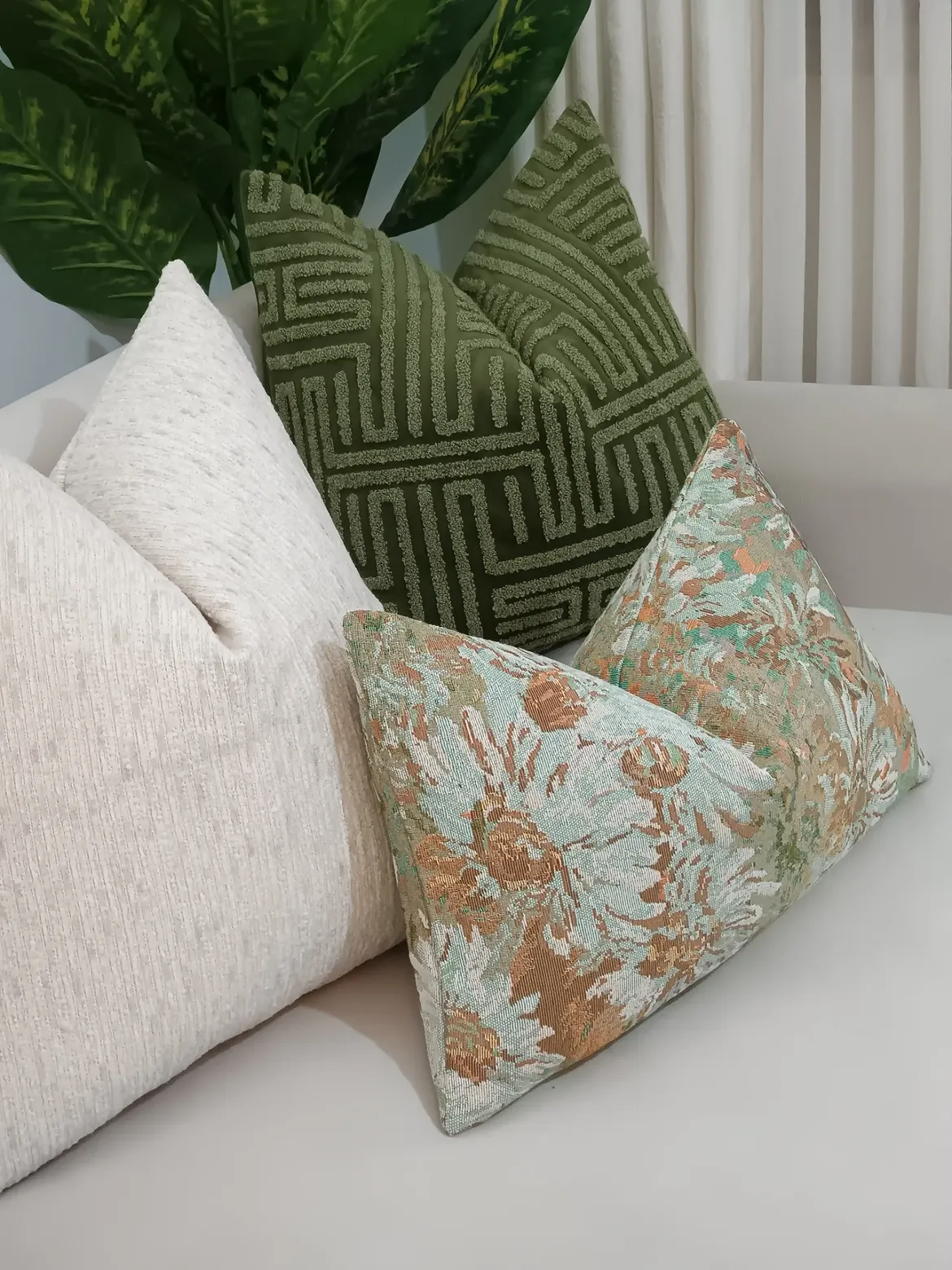
Grey is the best-selling sofa colour in Kenya, which is exactly why so many living rooms feel a little flat. Grey is a brilliant, flexible base — but on its own it is quiet to the point of dull. The cushions are what wake it up.
The trouble is that almost every “pillows for a grey couch” guide online is written for Northern light and Western sizes. Under Nairobi’s strong, high, near-white daylight, colours behave differently — some sing, some vanish. This guide is the Kenyan version: which colours actually work on grey here, how to read your own grey, eight recipes to copy, and why texture matters even more than colour on a grey sofa.
The quick answer: best pillow colours for a grey sofa
Grey is neutral, so it welcomes almost any colour. That is the blessing and the trap: because everything “works,” people add a bit of everything, and the sofa ends up looking like a pile of leftovers. The fix is to choose one accent family and support it with neutrals.
Here are the colours that perform best on grey in a Kenyan living room, and what each one does to the mood of the room.
| Accent colour | What it does to grey | Mood |
|---|---|---|
| Mustard yellow | Warms a cool grey instantly | Bright, welcoming |
| Terracotta / rust | Adds earthy warmth | Grounded, cosy |
| Teal / emerald | Adds depth and richness | Elegant, considered |
| Navy blue | Sharpens and anchors grey | Crisp, tailored |
| Blush pink | Softens a hard grey | Gentle, modern |
| Cream / white | Keeps grey calm and airy | Serene, minimal |
| Olive / sage | Brings in nature, pairs with wood | Calm, organic |
| Charcoal (tonal) | Deepens grey without new colour | Sophisticated, quiet |
If you are still choosing the sofa itself, grey remains the safest long-term base precisely because it takes all of the above — see the range of sofa sets in Kenya to compare shades before you commit.
Warm grey vs cool grey: which do you own?
This is the step nearly everyone skips, and it is the reason some cushion combinations look “off” for no obvious reason. Not all greys are the same. Getting this right is half the battle.
The phone-photo trick
Lay a plain white sheet or pillowcase next to your sofa and photograph both together in daylight, near a window but out of direct sun. Against true white, the undertone reveals itself: if the grey leans brown, beige or slightly warm, you have a warm grey (greige). If it leans blue, slate or cool, you have a cool grey. Do this before you buy a single cushion.
| Your grey | Undertone | Accents that sing | Accents to avoid |
|---|---|---|---|
| Warm grey (greige) | Beige / brown | Terracotta, mustard, olive, cream, caramel | Icy blue, cool pink |
| Cool grey | Blue / slate | Teal, navy, blush, emerald, crisp white | Warm orange-yellows can muddy it |
| True neutral grey | None strongly | Almost anything — the most flexible | Only clashing multi-colour piles |

Earthy neutrals and terracotta on a warm greige sofa — the undertone and the accent agree.
Why Kenyan light changes the answer
Most pillow-colour advice online comes from the US or UK, where softer, lower light flatters delicate pastels. Kenya’s light is a different instrument entirely — high, intense and neutral in temperature, especially between 11am and 3pm.
Two things follow. First, bold colours look bolder here, so you can commit to a mustard or a teal without it feeling loud. Second, pale pastels lose their colour under strong midday light — that dusty pink or powder blue that looks perfect in a catalogue can read as washed-out grey by lunchtime. Choose the deeper, more saturated version of any colour you love: blush over baby pink, teal over sky blue, mustard over pale lemon.
8 pillow colour recipes for a grey sofa (Kenyan homes)
Eight combinations you can copy exactly. Each assumes five cushions on a 3-seater — for other sofa sizes, use the counts in our guide to styling cushions on a sofa.
1. Mustard + charcoal + cream (the reliable one)
Two mustard, two cream, one charcoal texture. The single most fail-safe combination for grey under Kenyan light — warm, bright and impossible to get wrong.
2. Terracotta + cream (warm grey)
Two terracotta, two cream, one caramel woven. Best on a warm greige sofa; echoes the clay and murram tones outside your window.
3. Teal + navy + white (cool grey)
One teal, one navy, two white, one grey tonal. Rich and tailored — ideal for a cool grey sofa in a formal sitting room.
4. Blush + grey + gold (soft modern)
Two blush, two grey tonal, one mustard or gold texture. Softens a hard grey without going fully feminine — a favourite in Nairobi apartments.
5. Olive + cream + wood tones
Two olive, two cream, one knit texture, styled near wooden furniture. Calm and organic; pairs beautifully with a wooden coffee table.
6. Tonal grey + charcoal (quiet luxury)
Three shades of grey plus one charcoal, all different textures — velvet, boucle, knit. No new colour at all; depth comes entirely from texture. The most sophisticated, minimal option.
7. Emerald + blush + cream (statement)
One emerald, one blush, two cream, one gold. A bolder, jewel-toned scheme for those who want the grey sofa to feel designed rather than safe.
8. Black + white + one accent (graphic)
Two black-and-white pattern, two plain white, one strong accent (mustard or teal). Crisp and contemporary, and it suits a monochrome room where one colour does all the talking.
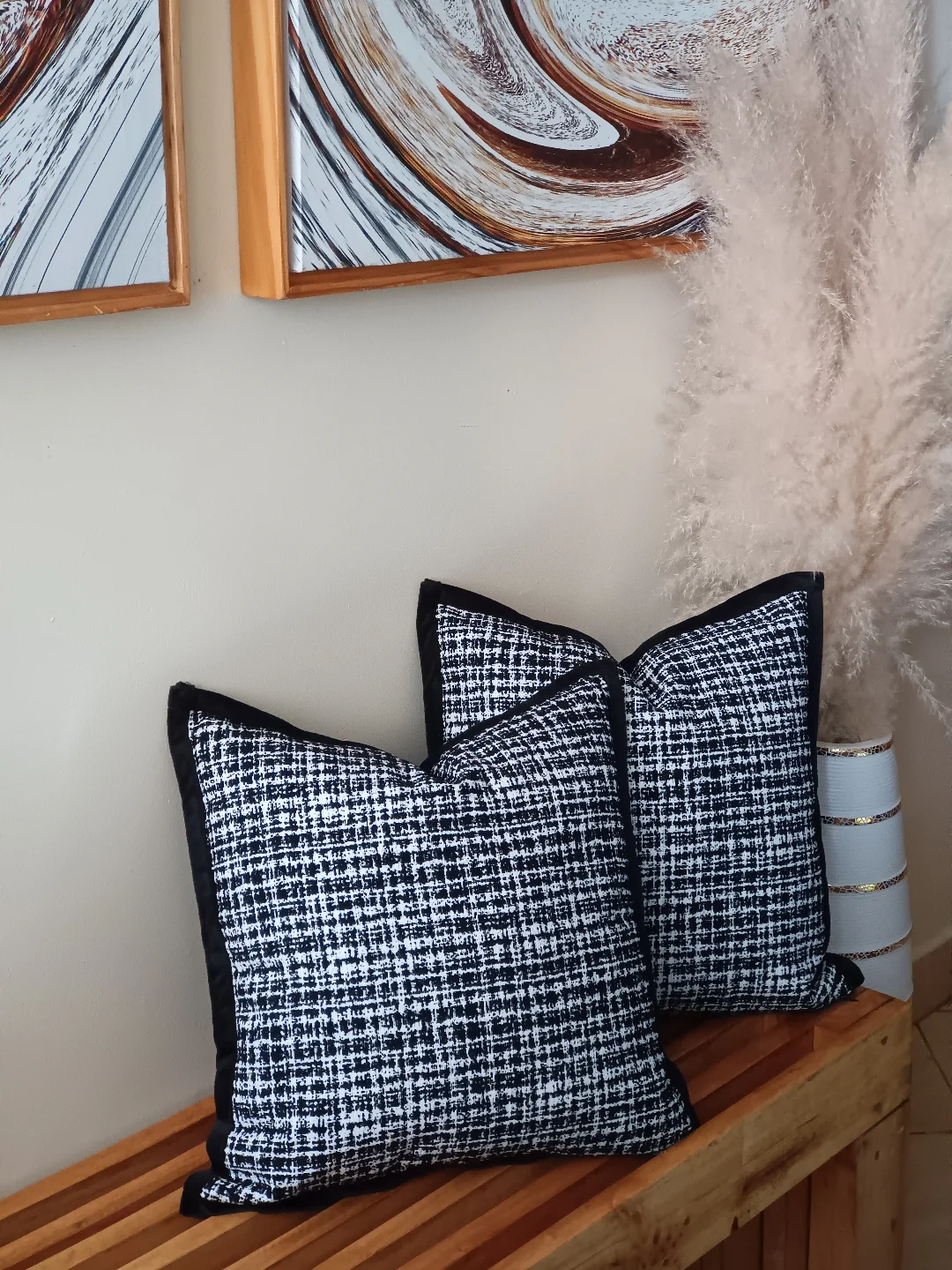
Recipe 6 in action: three greys and a charcoal, carried entirely by texture, not colour.
Texture matters more on grey than any other sofa
This is the secret that separates a styled grey sofa from a dull one. Because grey is a low-contrast, low-energy colour, smooth flat cotton cushions have nothing to push against — they sink into the grey and vanish. Texture is what gives grey something to react to.
Reach for velvet (catches light and deepens colour), boucle (soft, nubby, very current), knit (cosy and casual), and woven or jacquard (pattern without extra colour). A knot or smocked cushion adds sculptural shape. The rule: even if you keep everything one colour, use at least three different textures. On grey, texture does the work colour does elsewhere.
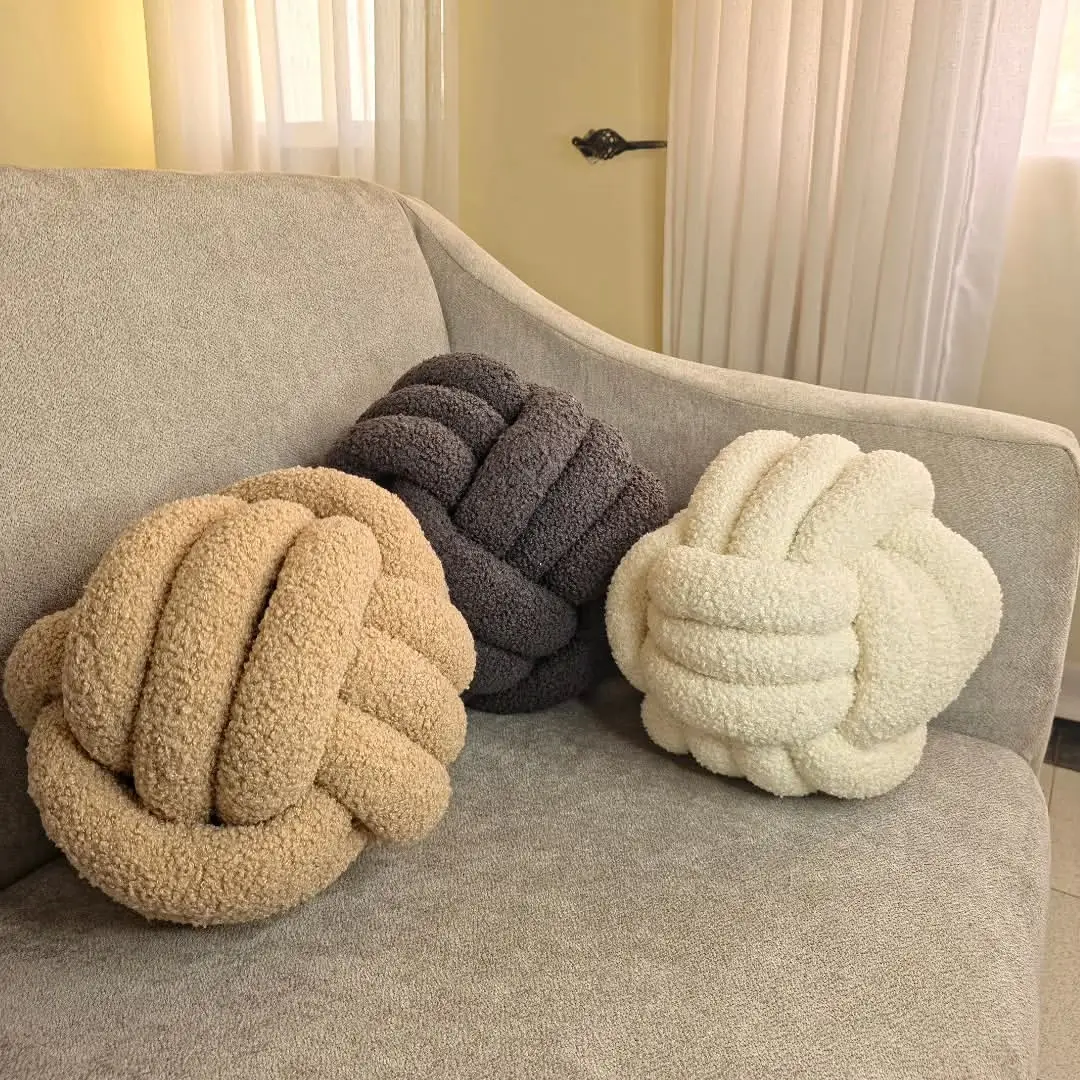
A knot cushion adds shape where colour alone would fall flat against grey.
In our Ngara workshop, the grey sofas that come back looking tired almost always have flat, same-texture cushions on them. The ones that still look good years later mixed velvet, knit and weave from the start — the colour barely mattered, the texture did everything.
How many pillows on a grey sofa?
Grey’s neutrality is forgiving: because the base is quiet, you can layer more generously than on a bold sofa without the room feeling cluttered. Five on a 3-seater is the sweet spot, built from three sizes — 60×60cm at the back, 50×50cm in the middle, a 45×45cm or lumbar in front.
An L-shape grey sofa — one of the most popular combinations sold in Nairobi — needs more than people expect: seven to nine cushions, piled into the corner. See L-shape and corner sofas for the shapes these counts suit.
Grey sofa, cushions and the rest of the room
Cushions are the start, not the whole scheme. Tie your grey sofa to the room by repeating your accent colour somewhere else — a rug, curtains, or a piece of art. If your cushions bring in mustard, a mustard stripe in the rug or a single mustard vase closes the loop and makes the room read as deliberate.
Curtains are the common sticking point: they should coordinate with the sofa and cushions, not match the sofa exactly. Pick a curtain tone from your cushion accent or keep them a soft neutral so the cushions stay the star. For pulling the whole living room together — sofa, cushions, rug, curtains and coffee table — our full sofa-matching guide covers the wider palette.
Pick one accent colour and repeat it three times in the room — cushions, then one more soft furnishing, then one hard object. Three touches of a single colour reads as “designed”; one touch reads as “random,” and five colours reads as “chaos.”
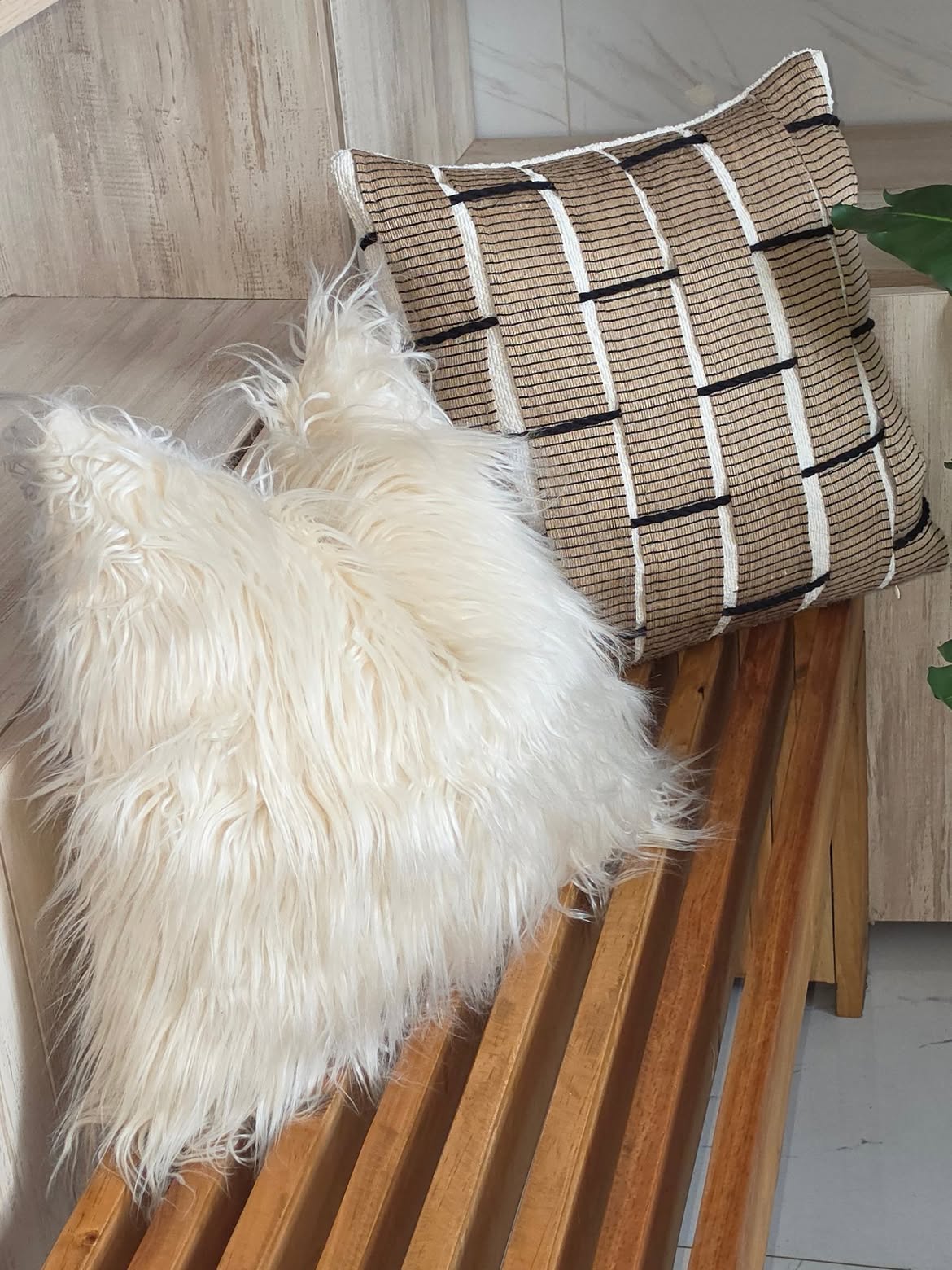
Repeat the accent beyond the sofa — in the rug or a single object — and the room looks collected, not decorated.
Cushions cut to match your grey sofa
Send us a photo of your grey sofa on WhatsApp and we will match the undertone, colour and texture — so your cushions sit right instead of fighting the grey.
Frequently asked questions
What colour goes with a dark grey couch?
A dark grey couch takes bright, high-contrast accents best: mustard yellow, teal, emerald, blush and crisp white all pop against it. Add cream or light grey cushions to lift the darkness, and use at least one textured cover — velvet or knit — so the cushions do not disappear into the deep grey.
How many pillows on a grey 3-seater?
Five cushions suit a grey 3-seater: two 60×60cm at the outer corners, two 50×50cm in front, and one 45×45cm or lumbar. Grey’s calm base carries a full arrangement well without looking busy. Use three or four different textures so the cushions stand out against the flat grey.
Should pillows match the curtains?
No — they should coordinate, not match exactly. Matching cushions and curtains to the same fabric looks flat and dated. Instead, pull one colour from your cushions into the curtains, or keep curtains a soft neutral so the cushions stay the accent. Repetition, not duplication, is what looks designed.

Add a review
Your email address will not be published. Required fields are marked *