Hardwood Furniture in Kenya: Mahogany, Mvule, Meru Oak & Mango Explained
Most furniture sold in Kenya is board — MDF, chipboard or plywood, wrapped in a printed finish that looks like timber. It is cheaper to make, easier to cut, and it can look genuinely good on delivery day. It is also not wood, and it behaves nothing like wood after two years in a Kenyan home.
We build in solid hardwood instead. This page explains exactly which four timbers we use, how they differ, what each is best for, and why a properly dried piece of real wood is a fundamentally different purchase from a board unit at a similar price.
What counts as hardwood furniture?
The distinction matters because both are commonly described as "wooden". Three tests separate them:
- The grain wraps around edges. On solid timber the pattern continues over every corner and onto the underside. On board it stops at a seam.
- The weight is obvious. Solid hardwood is heavy for its size; board is noticeably lighter and sounds hollow when tapped.
- It can be repaired. Solid wood is sanded and refinished. A swollen or chipped board panel is replaced, not repaired.
Board is not worthless — it takes smooth modern finishes well and keeps prices down. But it is a different product with a different lifespan, which we cover in our comparison of solid wood against MDF.
The four hardwoods we build with
African mahogany
The classic cabinet timber — deep reddish-brown, fine and uniform in grain, stable, and exceptionally workable for detailed doors and mouldings.1 It is the wood to choose when you want a piece to look formal and to match other dark furniture.
One point of honesty that most sellers skip: true mahogany (Swietenia mahagoni) is endangered and its trade is restricted, so almost all mahogany furniture sold anywhere today uses African or Philippine species instead.1 Ours is African mahogany. If a seller implies their mahogany is the original Central American species at an ordinary price, treat that as a warning sign.
Mvule (African teak)
Mvule (Milicia excelsa) is East Africa's heavyweight. Natural oils in the timber give it strong resistance to decay and water, and it holds up to humidity and pests better than anything else on this list.2 Freshly cut it is yellowish; it deepens to a rich golden-brown as it ages.
Meru oak
Prized for an attractive, characterful grain and good tolerance of moisture, which is why Kenyan furniture guidance recommends it for pieces exposed to water.2 It is lighter in tone than mahogany and suits brighter interiors.
Mango
The surprise of the four. Mango (Mangifera indica) comes from trees harvested after roughly fifteen to twenty years, once they stop bearing fruit — so the timber is a by-product of fruit farming rather than a reason to fell a forest tree.3 It is golden brown, often with dramatic streaks of pink, grey or black caused by spalting, and every board is different.
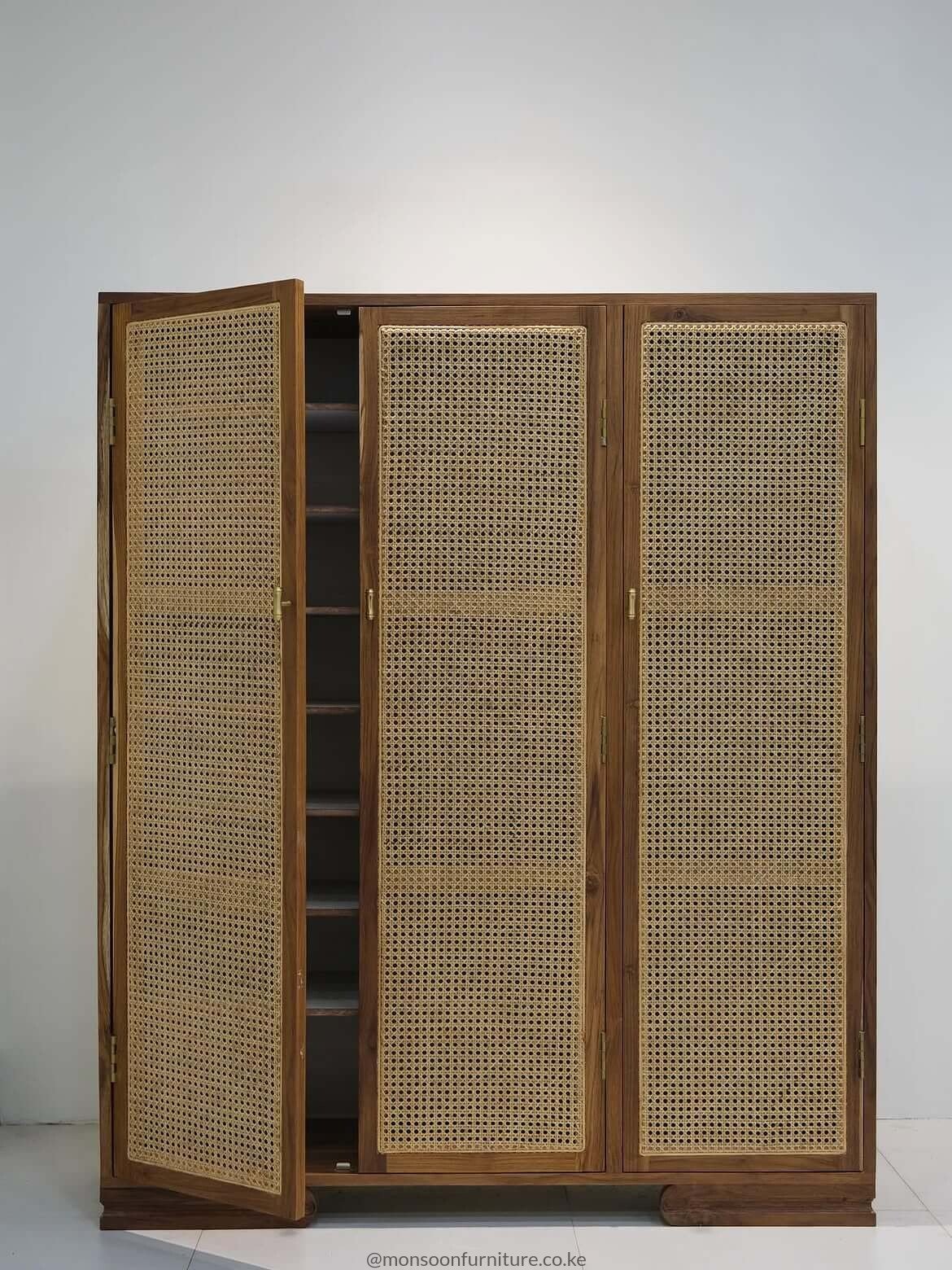
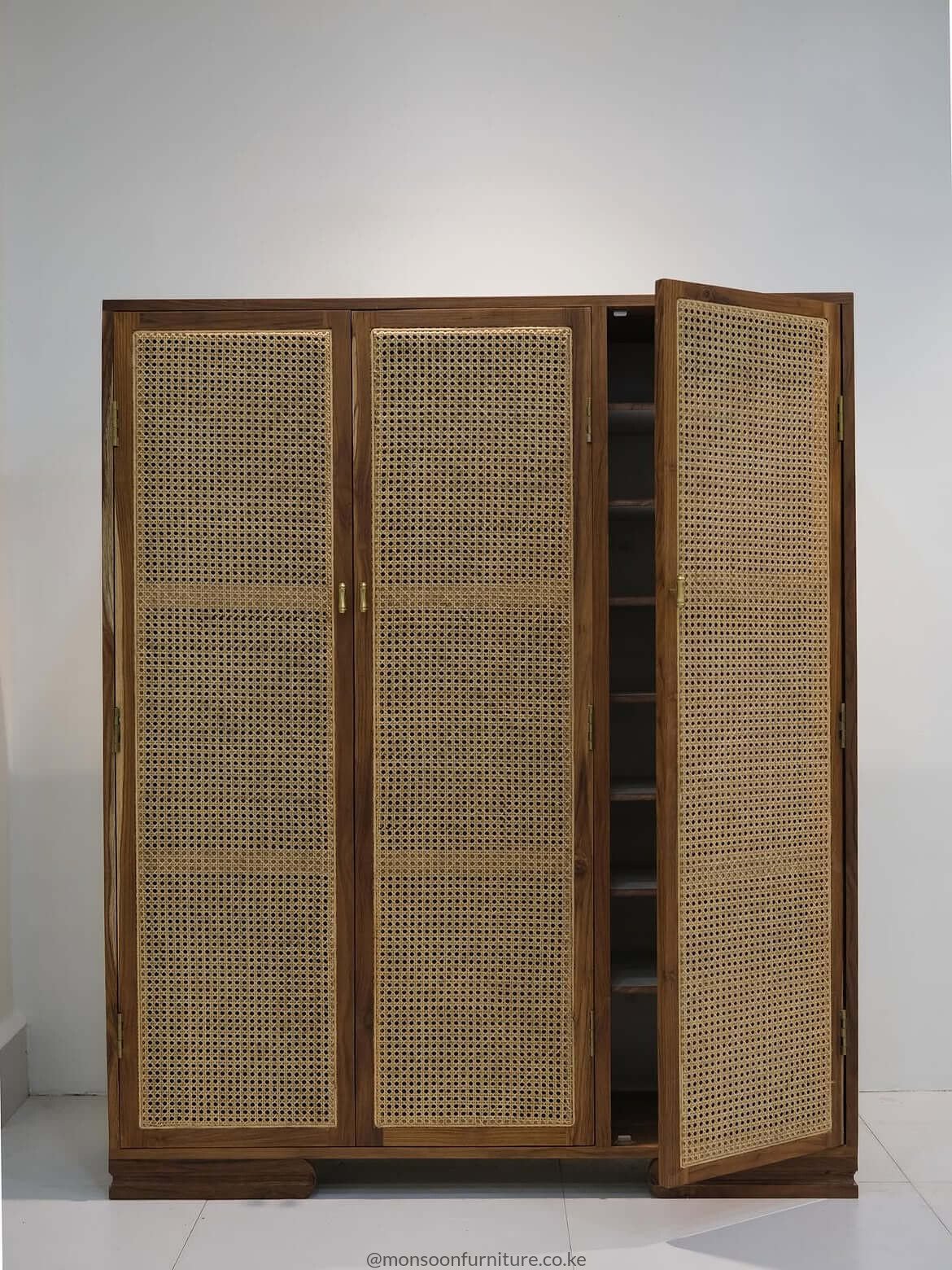
Open a solid-wood piece and the timber continues inside — grain on the shelves, the edges and the back.
How hard is each wood?
The Janka scale measures how much force a wood resists before denting — a fair proxy for how well furniture survives daily knocks. The results surprise most buyers:
| Wood | Janka hardness | Colour | Standout quality |
|---|---|---|---|
| Mango | ~1,070–1,120 lbf | Golden brown, spalted streaks | Hardest of the four; best value |
| Mvule | Dense and oily | Golden-brown, deepens with age | Best water and decay resistance |
| Meru oak | Firm, characterful | Lighter, varied grain | Water-tolerant with a bright tone |
| African mahogany | ~800–900 lbf | Deep reddish-brown | Finest grain; best for detailed work |
| MDF / board | No rating — not timber | Printed finish | Cheapest; swells if it gets wet |
Two things follow from that table. First, hardness and price are not the same thing — mango outranks mahogany on the scale while costing less, because mango trees are plentiful and fast-growing. Second, mahogany's lower hardness is not a fault: its fine grain is precisely what makes it the best of the four for carved detail and crisp mouldings.
Which wood for which piece?
| You want… | Best wood | Why |
|---|---|---|
| A piece near damp — entryway, coastal home | Mvule | Natural oils resist water and decay |
| Formal dining or bedroom furniture | African mahogany | Fine grain takes detail and polish |
| A brighter, lighter room | Meru oak | Lighter tone, characterful grain |
| Best value without dropping to board | Mango | Hardest of the four, lowest cost |
| Something unique in every piece | Mango | Spalting makes each board different |
| Outdoor or unprotected use | Mvule (finished) | Mango is only moderately rot-resistant |
Mango is moderately rot-resistant rather than highly so, and untreated it can attract termites and fungal attack. Properly treated and finished, it is excellent indoor furniture that lasts decades — but for a piece living outdoors or in constant damp, mvule is the better choice. We would rather tell you that than sell you the wrong wood.
Why drying matters more than the species
This is the part of hardwood furniture nobody advertises, and it causes more failures than species choice ever does.
Freshly cut timber is full of moisture. As that moisture leaves, the wood shrinks and moves. If a piece is built before the timber has stabilised, the movement happens in your living room instead of the timber yard — joints loosen, tabletops cup, panels split along the grain. It is the single most common reason a "solid wood" piece disappoints.
The fix is seasoning the wood properly before anything is cut. Our timber comes from a licensed supplier with drying and prepping machinery, which means the boards arrive dimensionally stable rather than needing to settle after they have already become furniture.
It is worth asking any seller two questions: where the timber comes from, and whether it was dried before use. A confident, specific answer is a good sign. A vague one usually means nobody knows.
Sourcing hardwood in Kenya
Kenya's forest cover stands at about 7.4 per cent of land area, down from roughly 12 per cent fifty years ago.4 The 2018 moratorium on logging in public and community forests was a response to that decline, and it reshaped the timber market: prices rose sharply during the ban, with sawn pine up nearly 29 per cent.4
In October 2025 the government lifted the ban for mature trees only, harvested under Kenya Forest Service oversight, with permits required to transport forest products.4 Alongside it came a push to reduce imported furniture and build more locally.
What this means for you as a buyer is simple. Legally sourced, properly dried hardwood has a floor price, and that floor is not low. When a piece is advertised as solid hardwood at board-furniture prices, the likeliest explanations are that it is not solid hardwood, not properly dried, or not legitimately sourced.
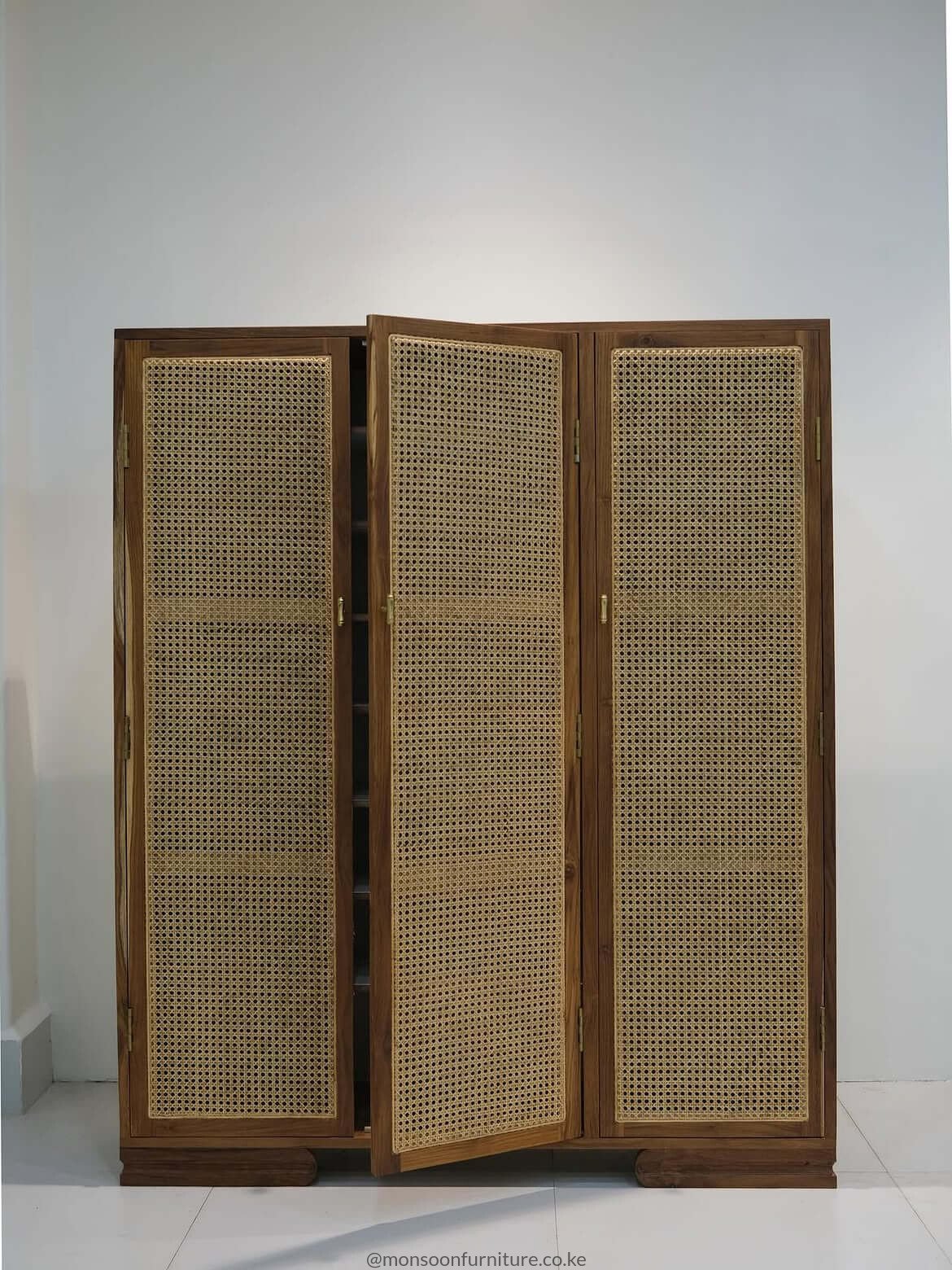
Seasoned timber, cut and joined properly — the reason a hardwood piece still sits square years later.
What hardwood furniture costs
There is no single "hardwood price", because a compact side unit and a six-seater dining set are different amounts of timber and different amounts of work. What drives the figure:
| Factor | Effect on price |
|---|---|
| Size | The biggest factor — more timber, more cost |
| Species | Mango is the value option; mvule and mahogany sit higher |
| Joinery and detail | Drawers, doors, carving and fluting all add workshop hours |
| Finish | Natural oil, stain or lacquer, and how many coats |
| Custom sizing | Built to your measurements rather than a standard run |
Exact prices are listed on every product page, and the material is stated there too — so you can see what a specific piece is made from before you buy. Browse the range in our full collection, or read our guide to wooden TV stands and wooden shoe racks for category-level pricing.
Caring for hardwood in a Kenyan home
- Dust weekly with a dry or barely damp cloth — Nairobi dust is fine and abrasive.
- Wipe spills straight away. Standing water is the enemy of any finish.
- Avoid all-day direct sun, which fades timber tone unevenly over a year or two.
- Re-oil or polish once or twice a year to feed the wood and keep its lustre.
- Keep rooms ventilated. Finished hardwood resists pests, but damp still-air corners help nobody.
Do that and a hardwood piece will outlast several board replacements — and can be brought back to looking new decades later, which is something no MDF unit can offer.
Furniture built from real wood
Tell us the piece, the room and the look you want, and we'll recommend the right hardwood — mahogany, mvule, Meru oak or mango — and build it to your measurements. Free delivery within Nairobi.
Frequently asked questions
Which is the best hardwood for furniture in Kenya?
It depends on the piece. Mvule is best where moisture is a factor, African mahogany for formal furniture with fine detail, Meru oak for a lighter tone, and mango for the best value — it is the hardest of the four on the Janka scale while costing less than mahogany or mvule.
Is mango wood as good as mahogany?
For hardness, mango is actually higher — around 1,070–1,120 on the Janka scale against roughly 800–900 for mahogany. Mahogany wins on grain fineness and suitability for carved detail. Mango is only moderately rot-resistant, so it suits indoor furniture rather than damp or outdoor use.
Is your mahogany real mahogany?
We use African mahogany. True mahogany, Swietenia mahagoni, is endangered and trade-restricted, so essentially all mahogany furniture sold today uses African or Philippine species. Any seller offering genuine Swietenia at an ordinary price should be questioned closely.
Why is hardwood furniture more expensive than MDF?
Because the raw material costs more and takes longer to prepare. Kenyan hardwood supply is controlled — logging is permitted only for mature trees under Kenya Forest Service oversight, with transport permits required — and timber must be properly dried before use. Hardwood at board-furniture prices is a warning sign.
Does hardwood furniture warp in Kenya?
Properly dried hardwood should not. Warping, splitting and loose joints happen when timber is built into furniture before it has been seasoned, so the wood moves in your home instead of the yard. We buy from a licensed supplier with drying and prepping machinery so the timber is stable before it is cut.
Sources:
1. Hardwood buyer guidance on Janka hardness for mango and mahogany, and on trade restrictions affecting Swietenia mahagoni.
2. Kenyan timber and furniture guidance on mvule (Milicia excelsa) and Meru oak — grain, colour and water resistance.
3. Timber references on mango (Mangifera indica) as a by-product of fruit farming, its spalted grain and its moderate rot resistance.
4. Kenyan reporting on the 2018 logging moratorium, its partial lifting in October 2025 for mature trees under Kenya Forest Service supervision, permit requirements, timber price movements and national forest cover.
Janka figures are published averages and vary by sample. Wood colour and grain differ from piece to piece — timber is a natural material. Prices are shown on individual product pages and change over time.

Add a review
Your email address will not be published. Required fields are marked *