
TV Stand Sizes in Feet: 5ft, 6ft & 180cm Units Explained
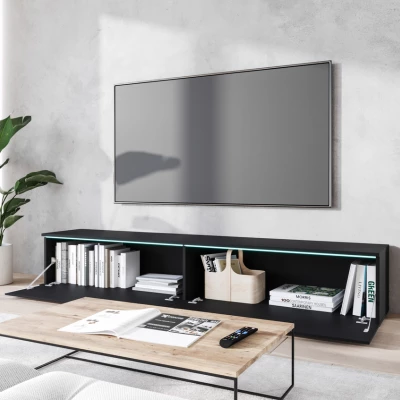
Buying a TV stand in Kenya means juggling three different units of measurement at once. Sellers advertise in feet — “6ft floating TV stand” — televisions are sold in inches, and the furniture itself is built in centimetres. Nobody converts between them for you.
This page does. It is a straight reference: what each foot size means in centimetres, which television it fits, and how to check it against your wall before you order.
Feet to centimetres: the conversion table
| Advertised size | Exact | Usually built at | In inches |
|---|---|---|---|
| 4ft | 121.9cm | 120cm | ~48″ |
| 5ft | 152.4cm | 150cm | ~59″ |
| 6ft | 182.9cm | 180cm | ~72″ |
| 7ft | 213.4cm | 210cm | ~84″ |
| 8ft | 243.8cm | 240cm | ~96″ |
That rounding matters more than it looks. A “6ft” stand built at 180cm is nearly 3cm shorter than a true six feet — irrelevant in an open room, but worth knowing if you are fitting a unit into an alcove with only a centimetre or two to spare.
Which TV fits which size?
The confusion here is that a “55-inch” TV is not 55 inches wide — that figure is the screen diagonal. The body of a 55-inch television is roughly 123cm across. Add 15cm of clear stand on each side and you need at least 153cm, which is why a 5ft (152cm) unit is marginal for a 55-inch screen and a 6ft is the safe answer.
| TV size | Actual TV width | Minimum stand | Best fit |
|---|---|---|---|
| 32″ | ~73cm | ~103cm | 4ft (120cm) |
| 43″ | ~96cm | ~126cm | 4ft–5ft |
| 50″ | ~112cm | ~142cm | 5ft (150cm) |
| 55″ | ~123cm | ~153cm | 6ft (180cm) |
| 65″ | ~145cm | ~175cm | 6ft (180cm) |
| 75″ | ~167cm | ~197cm | 7ft (210cm) |
A 5ft stand measures 152cm and a 55-inch TV needs 153cm to sit properly. On paper they almost match, which is why this pairing gets bought constantly — and why the screen ends up flush with the stand’s edges instead of anchored on it. If you own a 55-inch television, go to 6ft.
Why Kenyan sellers list in feet
It is the same habit that produces the 4×6, 5×6 and 6×6 bed sizes every Kenyan household knows. Workshop measurements have historically been imperial, and the language stuck even as materials moved to metric.
The practical consequence: in one collection you will see a 150cm teak stand, a 180cm wall-mounted cabinet, a 6ft storage console and a 5ft floating unit — four items described in two systems. They are not different kinds of measurement, just different labels for the same lengths.
- Convert everything to centimetres first. It is the only way to compare two listings fairly.
- Ask for the exact figure when the difference matters — “6ft” could be 180cm or 183cm.
- Measure your TV’s width in centimetres, not by its inch label.
Checking the size against your wall
A stand can be correct for the screen and still wrong for the room. Two checks:
Proportion. A 6ft unit on a 2-metre wall leaves only about 10cm at each side and looks crammed. The same unit on a 3-metre wall sits comfortably. Where space allows, aim for a visible margin of 30–50cm at each end.
Obstructions. Measure the usable run, not the wall. A door that opens into the corner, a window sill, or a socket you need to reach all shorten the space a stand can actually occupy.
For height, depth and the other sizing rules — how high the screen should sit, how deep a unit needs to be — see our TV stand size guide, which covers those in full.
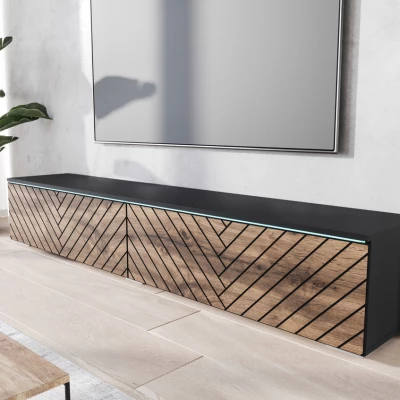
180cm — the “6ft” size that carries 55 and 65-inch screens with room to spare.
Sizes for floating and wall-mounted units
The one difference is depth rather than length. Because a floating unit carries less and sits against the wall, it is often built shallower than a standing console — useful in a narrow sitting room, but it means less surface for equipment.
Length, though, works identically: measure the screen, add 15cm each side, convert to feet, and choose the next size up. Our guide to floating TV stands covers the wall and fixing questions those units raise.
When no standard size fits
Standard sizes exist because most walls are roughly similar. Where yours is not — a 165cm alcove, a 4-metre open-plan wall, a chimney breast to work around — building to measure removes the compromise entirely.
It is also the route to take if you want the unit to align with something else in the room: a TV wall design where panelling, console and shelving are all set out to one plan, rather than a stand chosen to fit around a wall.
Quick reference
| Question | Answer |
|---|---|
| How long is a 5ft TV stand? | About 152cm — usually built at 150cm |
| How long is a 6ft TV stand? | About 183cm — usually built at 180cm |
| What size for a 55-inch TV? | 6ft / 180cm |
| What size for a 65-inch TV? | 6ft / 180cm minimum |
| What size for a 75-inch TV? | 7ft / 210cm |
| Clearance either side of the screen? | At least 15cm |
| Visible wall at each end? | 30–50cm where space allows |
With the length settled, the remaining choices are material and design — covered in our guide to wooden TV stands in Kenya.
Know your size, find the stand
Send your TV size and wall measurement on WhatsApp and we’ll tell you which length fits — or build one to your exact centimetres. Free delivery within Nairobi.
Frequently asked questions
How many centimetres is a 6ft TV stand?
A 6ft TV stand is 182.9cm, though Kenyan units advertised as 6ft are commonly built at 180cm. The few centimetres of rounding rarely matter on an open wall, but check the exact figure if you are fitting the unit into an alcove or between fixed obstructions.
What size TV stand do I need for a 55-inch TV?
Choose a 6ft (180cm) stand for a 55-inch television. The body of a 55-inch TV is about 123cm wide, and allowing 15cm clear on each side means you need at least 153cm. A 5ft stand measures only 152cm, so it leaves the screen flush with the edges.
Is a 5ft TV stand big enough for a 65-inch TV?
No. A 65-inch television is about 145cm wide and needs a stand of at least 175cm, so a 5ft (152cm) unit is too short and the screen would overhang. Choose a 6ft (180cm) stand as a minimum, or 7ft if you want a more generous margin.
Why are TV stands sold in feet in Kenya?
Kenyan carpentry has long worked in imperial measurements, the same convention behind bed sizes like 5×6 and 6×6. Manufactured and imported units are specified in centimetres, so both systems appear together in one catalogue. Convert everything to centimetres before comparing two listings.
Television width figures are typical for modern flat screens and vary slightly by brand and bezel. Advertised foot sizes are commonly rounded to the nearest tidy centimetre figure — confirm exact dimensions for a specific unit before ordering, especially for alcoves or tight fits.

Add a review
Your email address will not be published. Required fields are marked *