
Shoe Racks in Kenya: Designs, Types & Prices (2026)
Every Kenyan home has the same pile-up by the front door. Shoes accumulate faster than anywhere else in the house — work shoes, school shoes, sandals, the pair you only wear on Sundays — and without somewhere proper to put them, the entryway becomes the untidiest part of an otherwise tidy home.
A shoe rack fixes that in one purchase. But “shoe rack” covers everything from a KSh 500 wire frame that sags in six months to a solid wooden cabinet that hides thirty pairs and looks like furniture. This guide covers every type, how many pairs each holds, what materials survive Kenyan conditions, real 2026 prices, and how to choose the right one for your space.
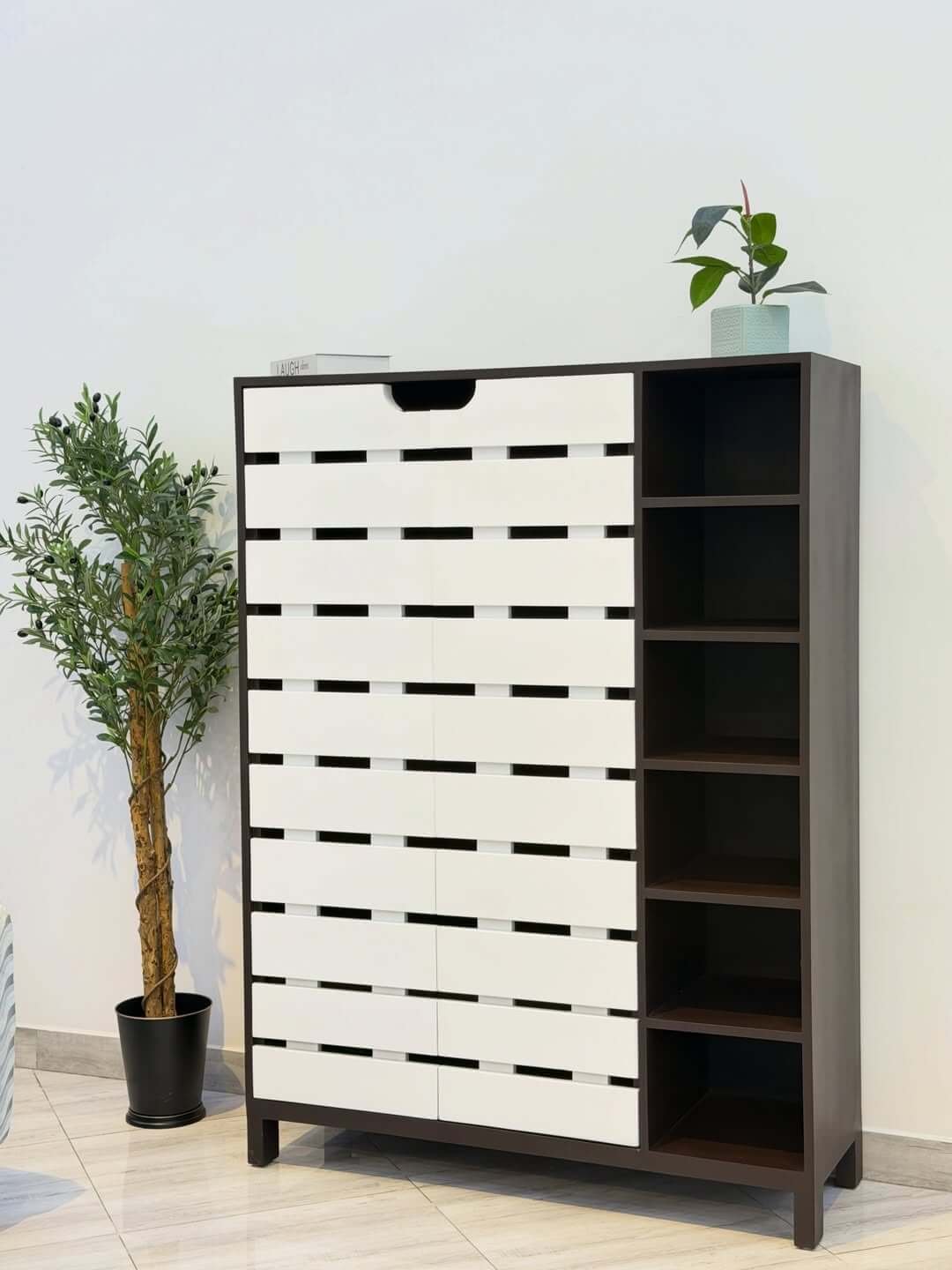
A slatted shoe rack with open side shelves — storage that reads as furniture, not a utility item.
What types of shoe racks are there?
Choosing well starts with knowing what actually exists. Each type solves a different problem:
| Type | What it is | Best for |
|---|---|---|
| Open tiered rack | Shelves on an open frame; shoes visible | Daily-wear shoes; fast access; airing damp shoes |
| Closed shoe cabinet | Shelving behind full doors | A clean entryway; hiding clutter; dust protection |
| Tilt-out / flip cabinet | Bins that tilt forward to reveal shoes | Narrow hallways — very slim footprint |
| Shoe bench | Cushioned seat with shoe storage beneath | Entryways where you sit to put shoes on |
| Tall dual-column unit | Two columns of shelves, often with a drawer | Big collections in a small floor area |
Most Kenyan homes end up with one of the first two. The rest solve specific problems — a corridor too narrow for a standard cabinet, or an entryway where everyone sits on the floor to lace up. You can see all five styles side by side in our shoe racks collection.
Some units combine both approaches — open shelves on one side, a panelled section on the other.
Shoe rack or shoe cabinet — which should you choose?
This is the decision most buyers get wrong, and it comes down to a trade-off between access and appearance.
An open rack keeps everything visible and reachable — good when four people are leaving the house at once, and better for shoes that come in wet. The cost is that your shoes are part of the room’s décor, whether you like it or not.
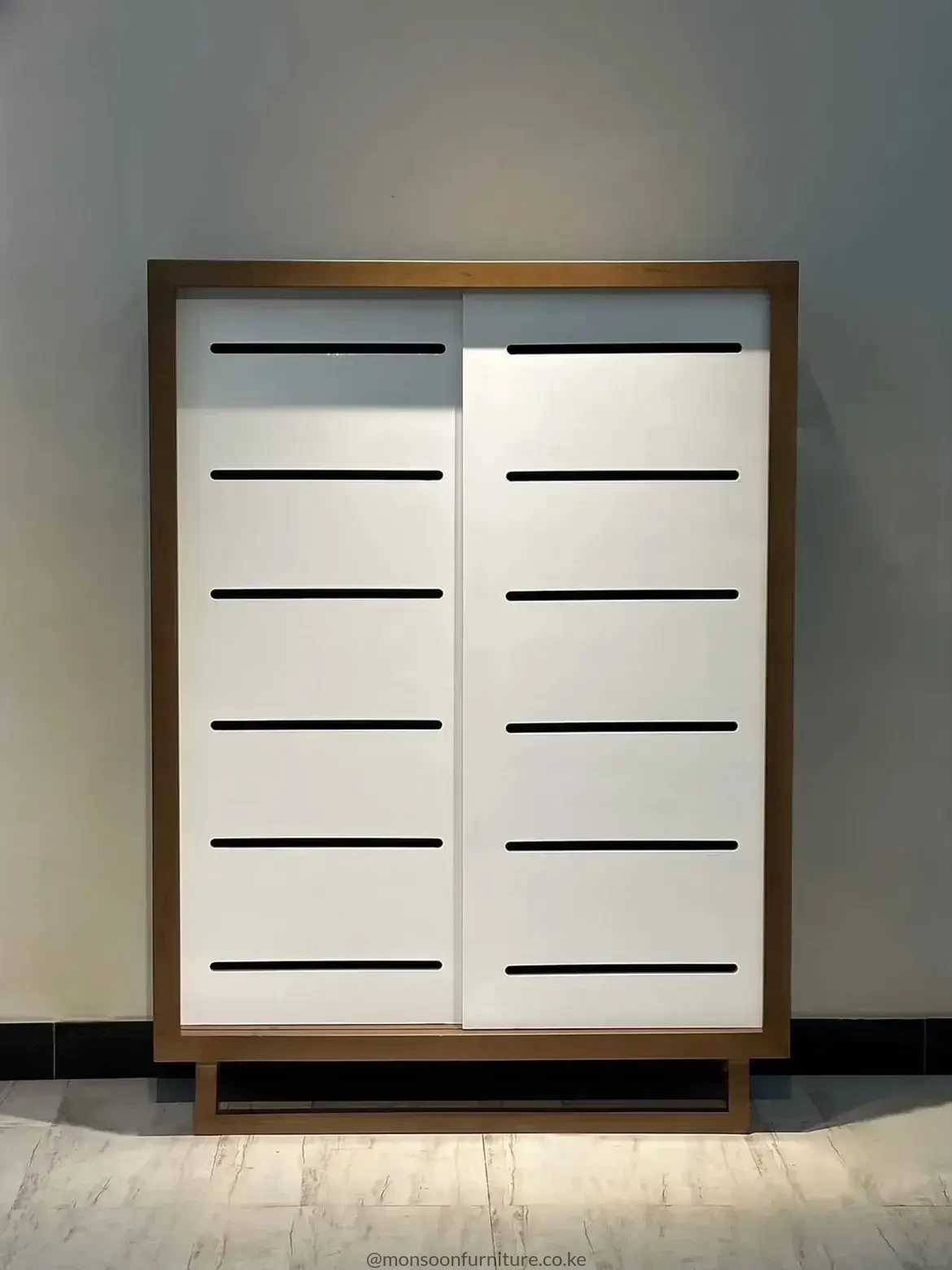
A closed cabinet hides everything behind doors. Your entrance looks calm, shoes stay dust-free, and the piece reads as furniture rather than storage. The trade-off is airflow: shoes put away damp in a sealed box can develop odour, so look for a cabinet with ventilation slots or air gaps.1
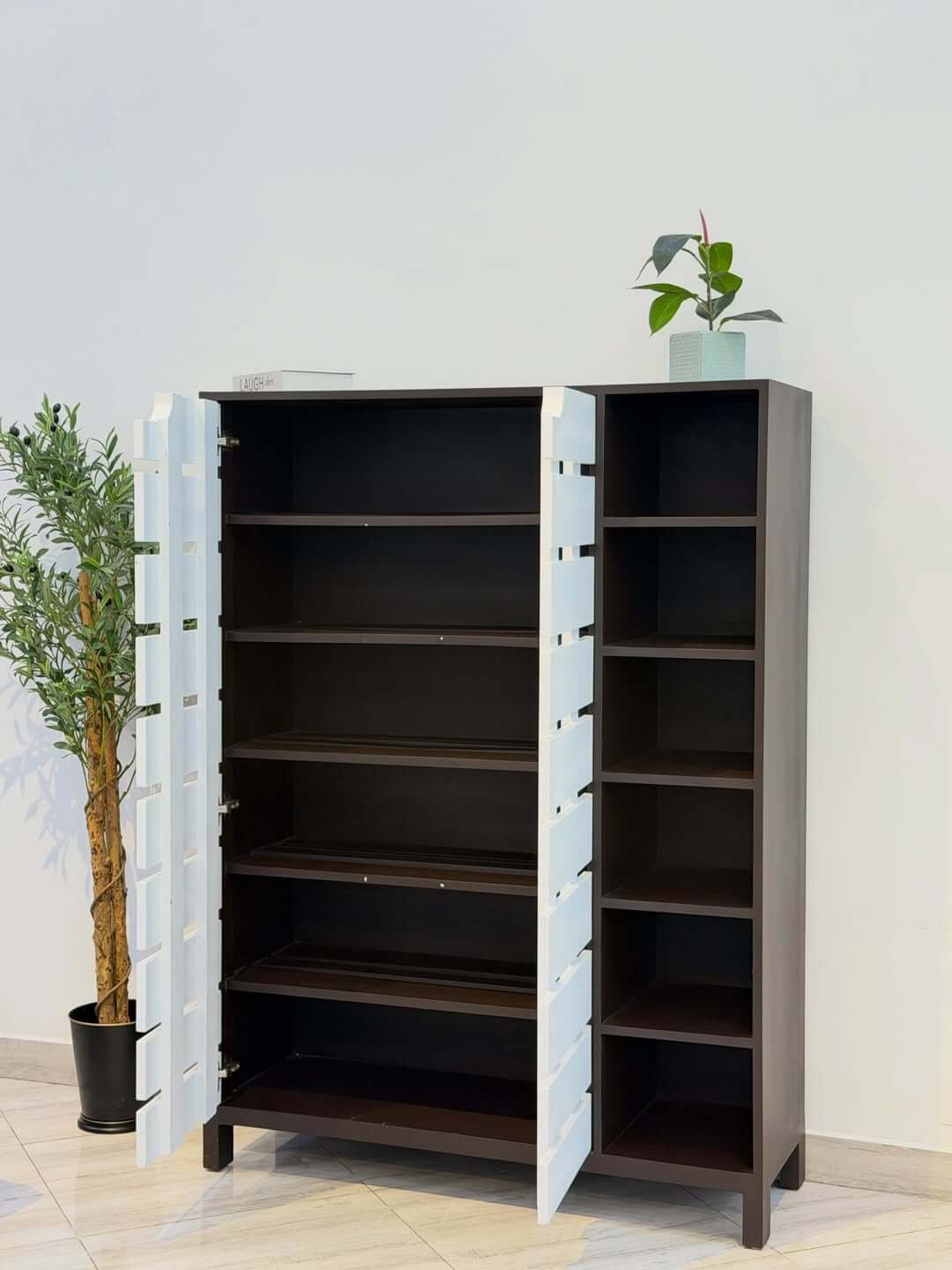
Open versus closed: the same job, two different answers to how much you want to see.
| Open rack | Closed cabinet | |
|---|---|---|
| Access | Immediate — grab and go | One extra step (open the door) |
| Look | Shoes on display | Clean, furniture-like |
| Airflow | Excellent — dries damp shoes | Needs vents or slots |
| Dust | Shoes collect dust | Protected |
| Typical price | KSh 12,000 – 24,500 | KSh 23,000 – 49,000 |
If you want both, a hybrid solves it: a cabinet with an open lower shelf for the two or three pairs in daily rotation, everything else behind doors. Several units in our shoe cabinet range are built exactly this way.
How many pairs do you need to store?
Capacity is the number buyers most often misjudge — and the reason so many racks overflow within a month. Count every pair in the house, including the ones currently under a bed, then add room to grow.
| Rack size | Approx. capacity | Suits |
|---|---|---|
| 3-tier | ~9–12 pairs | One person; a bedsitter or bedroom |
| 4-tier | ~12–16 pairs | A couple; a small apartment entryway |
| 5-tier | ~15–20 pairs | A small family |
| 6-tier | ~18–24 pairs | A family of four or more |
| Tall cabinet / dual-column | 24–30+ pairs | Large households; shoe collectors |
Shelf spacing matters as much as shelf count. Standard tiers are spaced for flat shoes and trainers — boots, heels and children’s school shoes with thick soles won’t fit. If you own boots, choose a rack with an open bottom shelf, a taller lower tier, or adjustable shelves, and check the spacing before you buy.
Which material is best for a shoe rack in Kenya?
The material decides whether your rack is furniture or a temporary fix.
| Material | Strengths | Watch out for |
|---|---|---|
| Solid wood | Strongest; no sagging or rattling; refinishable; looks premium | Higher price; keep out of standing water |
| Engineered wood / board | Smooth modern finishes; good value; wide design range | Edges can chip; swells if left damp |
| Metal frame | Handles wet and muddy shoes; slim profile | Thin wire versions bend under load |
| Rattan / woven panels | Ventilated doors; warm, textured look | Dust in the weave; wipe gently |
| Plastic | Cheapest; easy to move and wash | Cracks over time; looks temporary |
A cheap wire rack is genuinely tempting at first glance — until the shelves bow under a season’s worth of shoes and it starts scratching the floor. A well-built wooden rack carries the load, stays where you put it, and still looks right in the room years later. That long-term value logic is the same one we set out in our guide to shopping smart without compromising on quality.
Shoe rack prices in Kenya (2026)
Here is the real price picture, so you can judge any quote you are given. These are current Monsoon prices at August 2026 and vary with size, finish and promotions.
| Type | What you get | Price (KES) |
|---|---|---|
| Open tiered rack | Tall open organiser, 6-tier racks, some with a top drawer | 12,000 – 24,500 |
| Shoe bench with storage | Cushioned or velvet seat with shelves or drawer beneath | 14,000 – 28,000 |
| Closed shoe cabinet | Tilt-out bins, fluted or slatted fronts, doors and drawers | 23,000 – 36,000 |
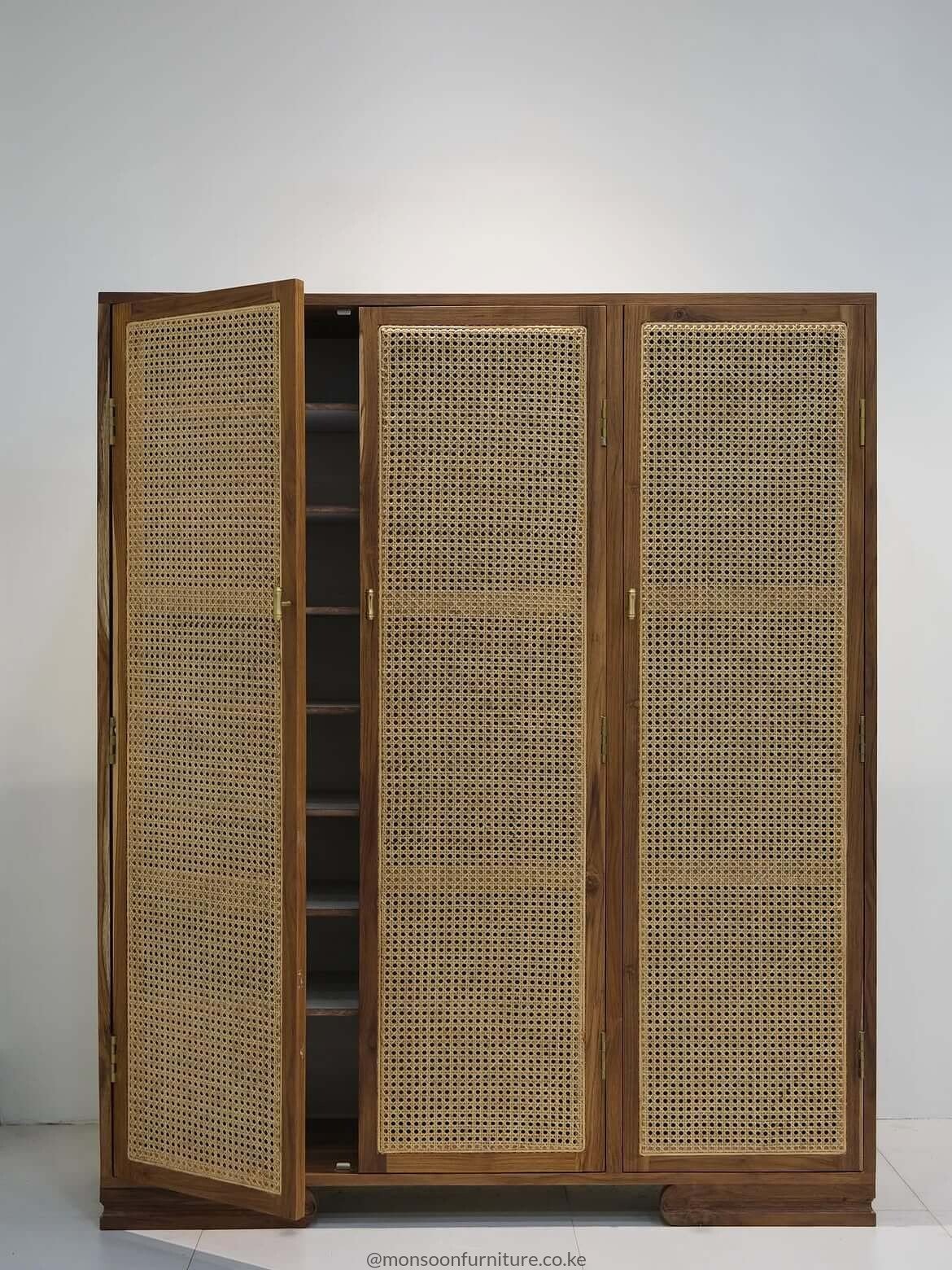
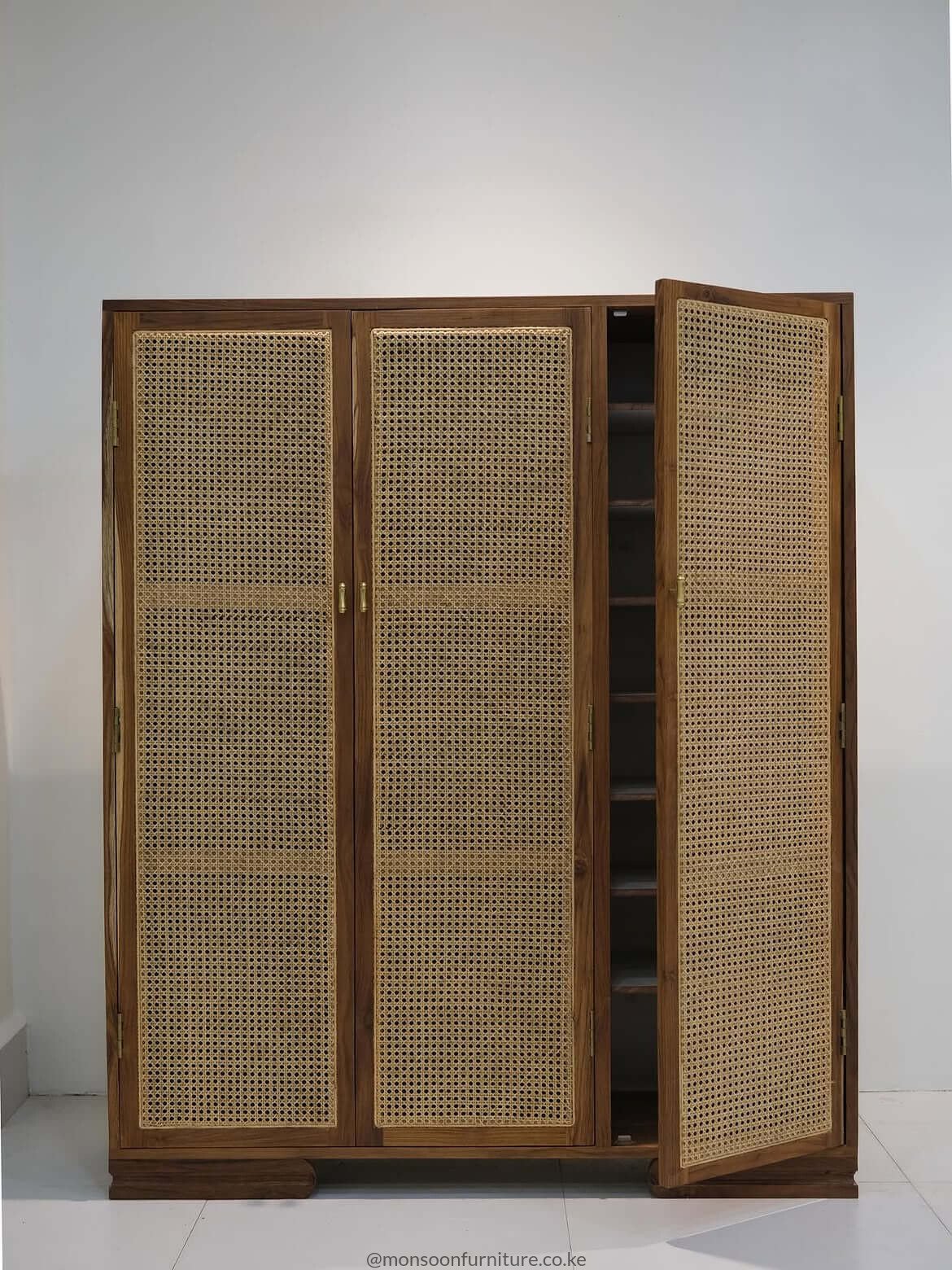
| Premium wooden cabinet | Teak, cane-door and woven-panel cabinets with internal shelving | 43,000 – 49,000 |
| Custom-built | Made to your hallway width, shoe count and finish | Quoted on request |
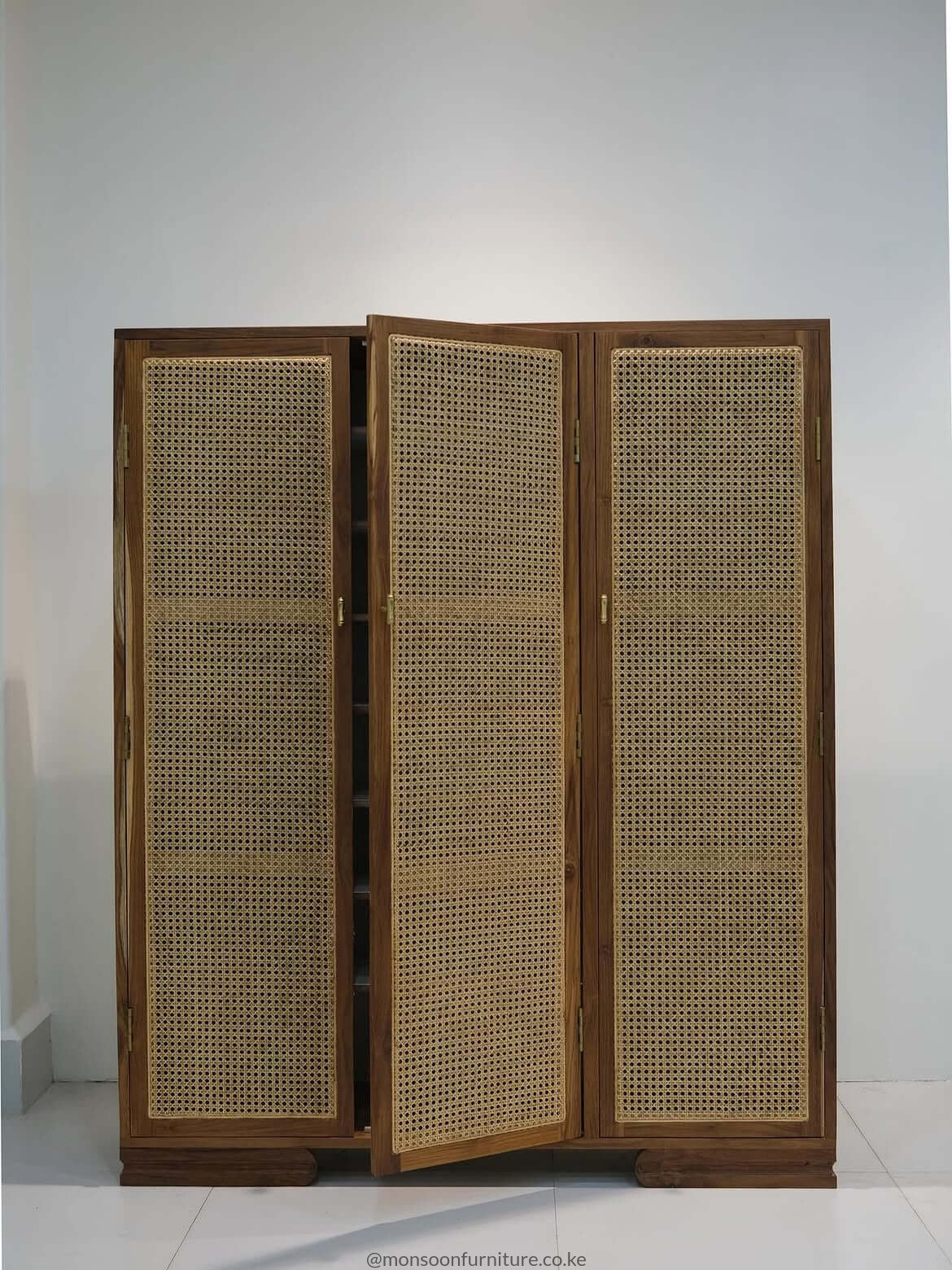
At the top of the range, a shoe cabinet stops looking like storage and starts looking like furniture.
Before comparing prices, settle two things: how many pairs you need to store, and whether the rack must fit a specific hallway width. A KSh 24,000 cabinet that holds 24 pairs is better value than a KSh 16,000 one that holds 12 and overflows by Christmas. Capacity and fit — not the sticker price — decide value here.
Best shoe racks for small Nairobi apartments
Apartment and bedsitter entryways are often just a corridor, and a standard-depth cabinet makes them impassable. Four designs solve this:
- Tilt-out cabinets. Bins that pivot forward store shoes almost upright, so the unit stays very shallow against the wall.
- Tall dual-column units. Go up instead of along — the same capacity in half the floor space.
- Shoe benches. One piece doing two jobs: somewhere to sit and somewhere to store, which matters when there’s no room for both.
- Bedroom placement. If the entrance genuinely has no space, put the rack in the bedroom beside the wardrobe and keep only today’s shoes at the door.
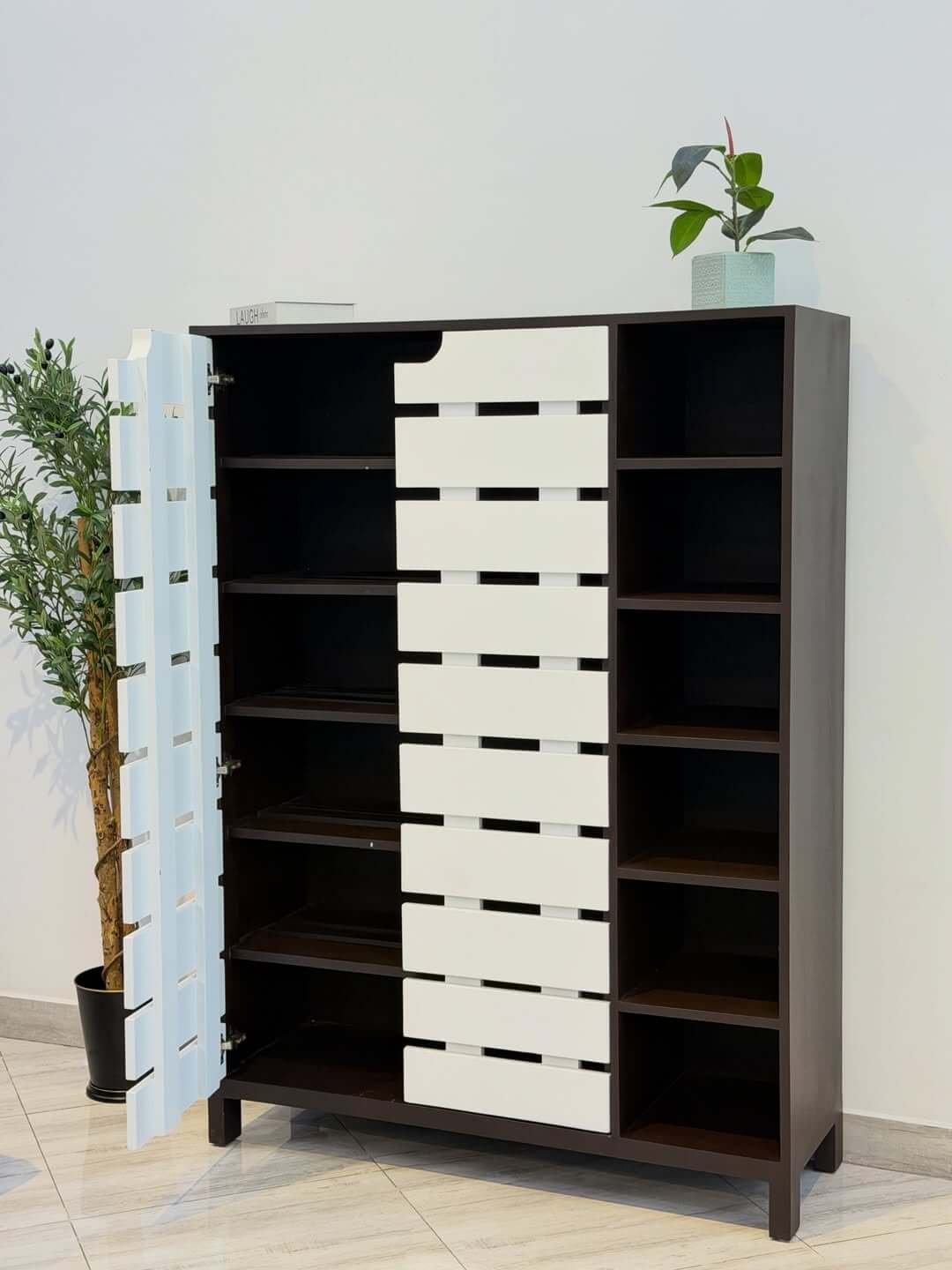
Building upwards rather than outwards: a tall, narrow unit holds the same shoes in half the floor space.
The measurement that matters most is depth. Measure your corridor, subtract the rack’s depth, and make sure at least 70–80cm of clear walking space remains. A cabinet that fits the wall but blocks the passage is the most common apartment mistake.
Where should you put a shoe rack?
Placement decides whether the rack actually gets used. A rack in the wrong room becomes a shelf for everything except shoes.
The entryway is first choice — it stops dust and mud at the door, which matters in a Nairobi dry season. If the entrance is wide enough, a bench or cabinet here also gives guests somewhere to sit and change.
The bedroom is the practical second choice for most apartments, especially for the bulk of a collection. A corridor or landing works well for slim tilt-out units.
Wherever it lands, a shoe rack is a visible piece of furniture, so treat it like one: a mirror above it, a small plant or a tray for keys turns a utility item into a proper entryway. Our home décor range has the finishing pieces, and the living room collection covers the console and seating that often sit alongside.
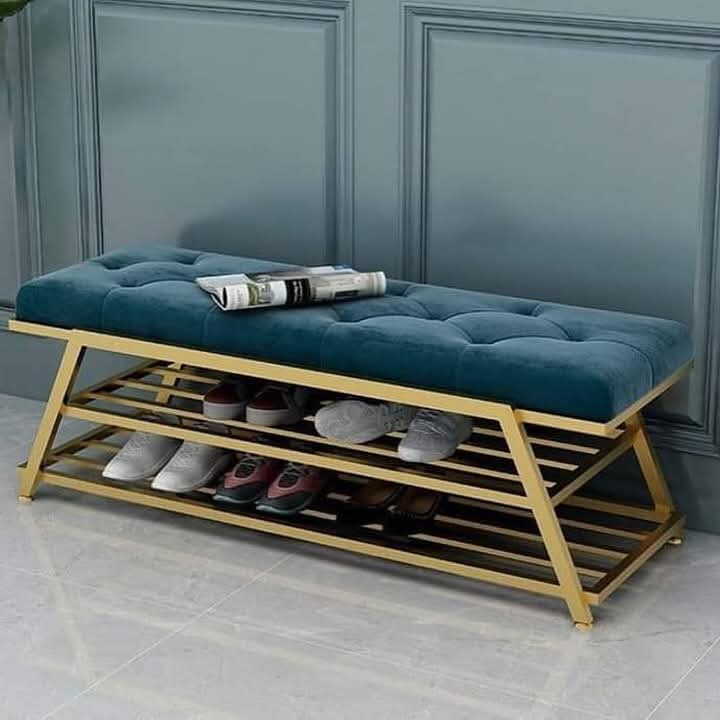
A cushioned bench with an open shoe tier beneath — seating and storage in one entryway piece.
Keeping shoes fresh: care and ventilation
A closed cabinet is only as good as its airflow. Shoes worn in the rain and shut straight into a sealed box stay damp for days — that is what produces the musty smell people blame on the cabinet itself.1 Four habits prevent it:
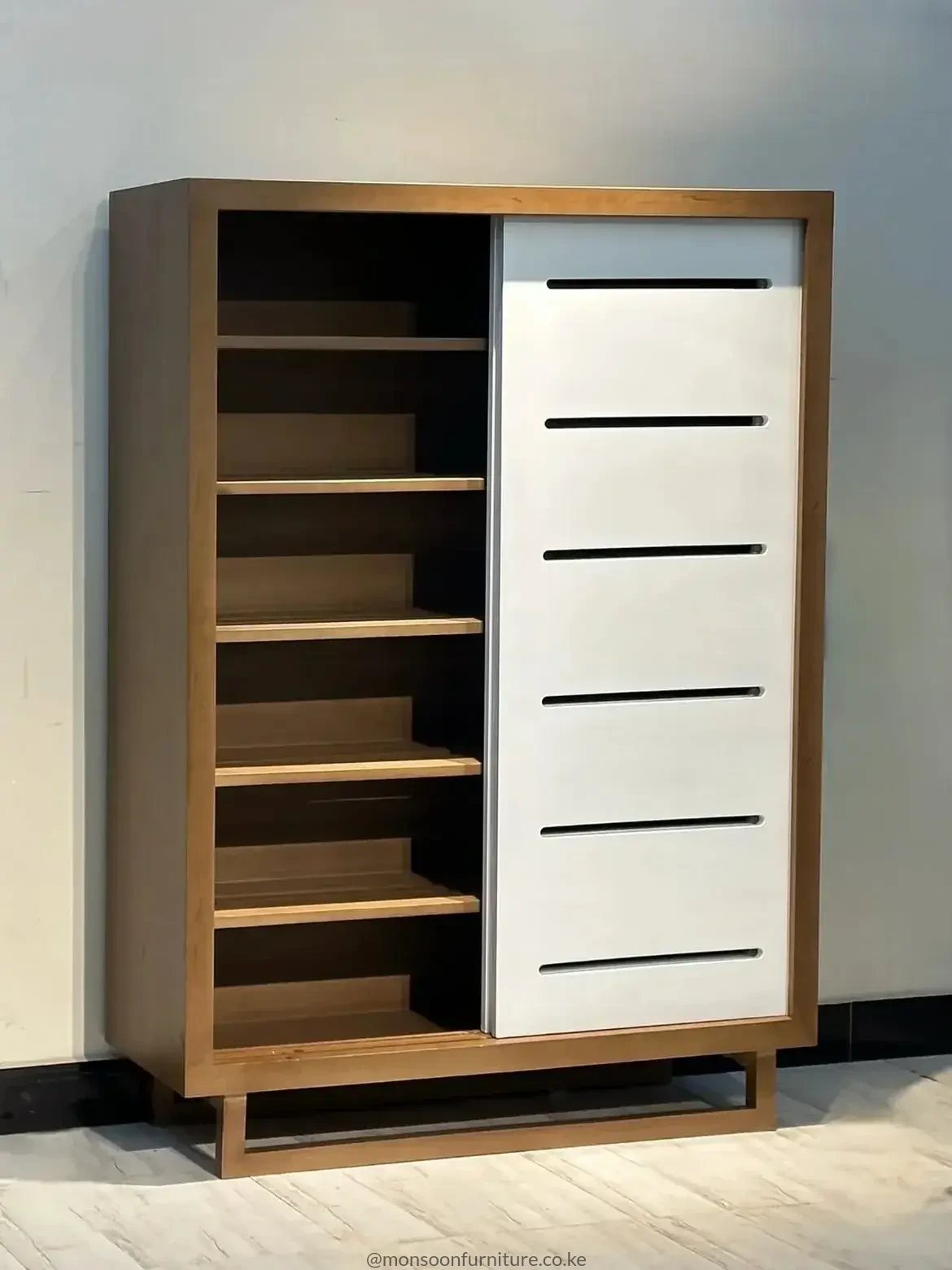
Ventilation slots in the front panel let air move through a closed cabinet — the fix for musty shoes.
- Dry before storing. Leave wet shoes on an open shelf or outside the cabinet overnight.
- Choose ventilation. Slotted panels, woven doors or an open lower shelf all let air move.
- Wipe it out monthly. Dust and grit build up fast in an entryway; a dry cloth is enough.
- Don’t overload shelves. Packing shoes tight blocks airflow and stresses the shelf.
Can you get a custom shoe rack in Kenya?
Standard sizes suit most homes, but not every entryway is standard. A corridor 90cm wide, an alcove beside the door, or a household with forty pairs of shoes is where a custom piece earns its keep — built to the exact width, depth and shelf spacing you need, including taller tiers for boots.
- Send your measurements. Wall or corridor width, available depth, and roughly how many pairs, on WhatsApp.
- Choose the spec. Open or closed, finish, shelf spacing and whether you want a seat.
- Approve the quote. A clear price for your exact piece before any work starts.
- We build it. Made by our craftsmen in Nairobi, typically in 3–4 days.
- Delivery. Free within Nairobi, placed where you want it, and delivered across Kenya.
Get the entryway sorted
Browse ready-made shoe racks and cabinets from KSh 12,000, or order a custom unit built to your hallway and shoe count — made in Nairobi, with free delivery in the city.
Frequently asked questions
How much is a shoe rack in Kenya?
A quality shoe rack in Kenya costs KSh 12,000–49,000 in 2026. Open tiered racks run KSh 12,000–24,500, cushioned shoe benches KSh 14,000–28,000, closed cabinets KSh 23,000–36,000, and premium wooden cabinets with woven or cane doors reach KSh 49,000. Cheaper wire and plastic racks rarely last more than a season or two.
How many pairs does a shoe rack hold?
Each shelf of a standard shoe rack holds about three to four pairs of adult shoes. A 4-tier rack therefore stores roughly 12–16 pairs, a 6-tier around 18–24, and a tall cabinet or dual-column unit 24–30 or more. Boots and thick-soled trainers take more space, so size up rather than down.
Is a shoe rack or a shoe cabinet better?
An open shoe rack is better for fast daily access and for airing damp shoes; a closed cabinet is better for a tidy, dust-free entryway and larger collections. Under about ten pairs suits an open rack, while ten or more suits a cabinet. Choose a cabinet with ventilation slots to prevent odour.
What is the best shoe rack for a small apartment?
For a small Nairobi apartment, choose a slim tilt-out cabinet around 25–30cm deep, a tall dual-column unit, or a shoe bench that doubles as seating. These store shoes vertically in a narrow footprint. Always leave 70–80cm of clear walking space in the corridor after the rack is in place.
Sources:
1. Shoe-storage and footwear-care guidance on ventilation, drying damp shoes before enclosed storage, and preventing odour and mildew.
Prices current at August 2026 and subject to change; capacities are general guidance and vary with shelf spacing and shoe type.

Add a review
Your email address will not be published. Required fields are marked *