
Shoe Cabinets in Kenya: Closed Shoe Storage with Doors
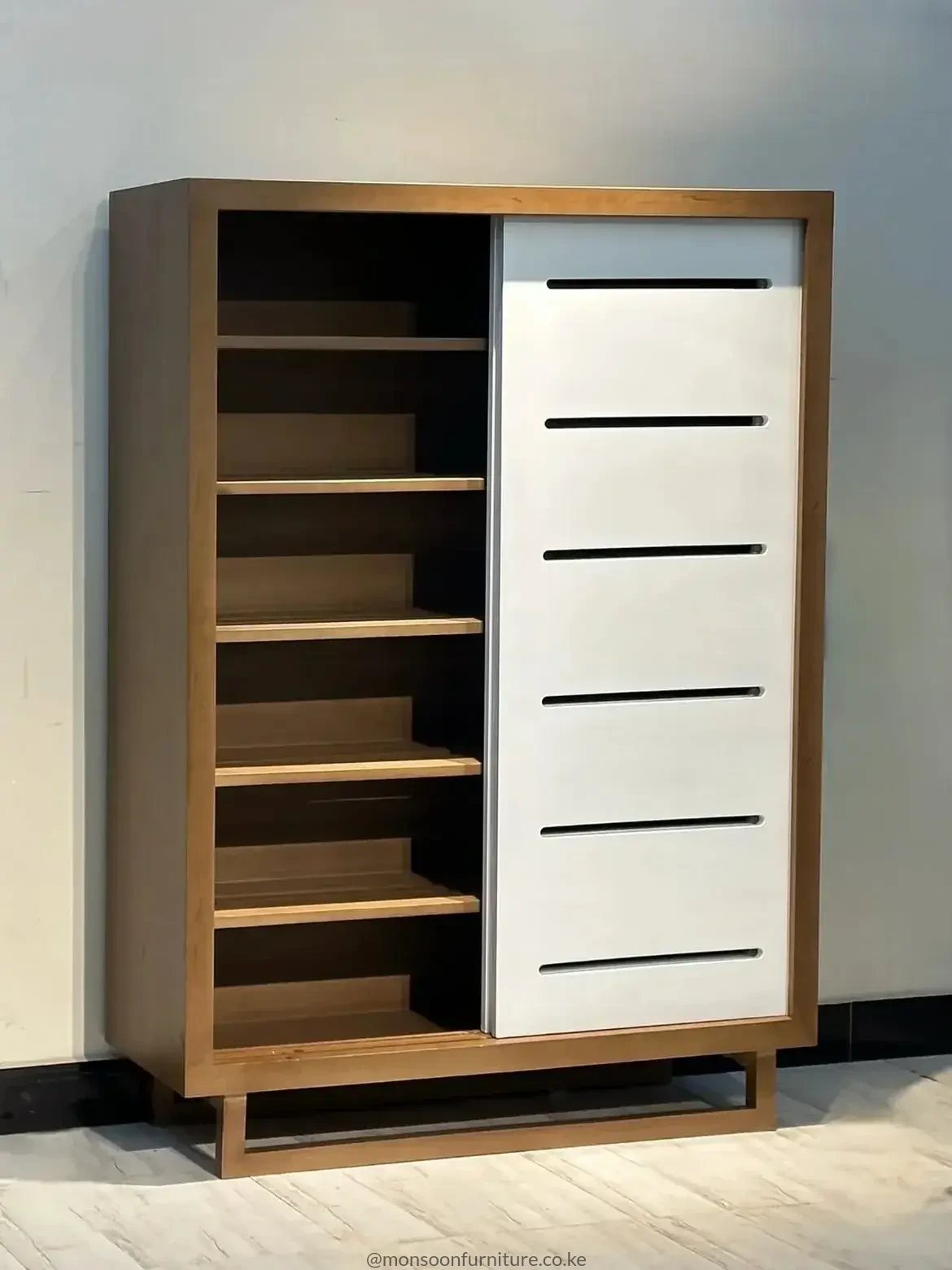
An open rack keeps shoes to hand. A shoe cabinet makes them disappear. That is the whole difference, and for a lot of Kenyan homes — especially where the front door opens straight into the sitting room — it is the difference that matters. Twenty visible pairs are the first thing a guest sees; a closed cabinet is just furniture against a wall.
This guide covers the cabinet types available here, how many pairs each holds, the ventilation question that decides whether your shoes stay fresh, the measurements to take before ordering, and real 2026 prices.
What is a shoe cabinet?
The defining feature is the front. Where an open rack displays everything, a cabinet screens it — with hinged doors, tilt-out bins, or panelled fronts. Three things follow from that:
- Dust protection. Shoes stored behind a door stay clean between wearings, which matters in a dusty Nairobi dry season.
- A calmer entrance. The unit reads as furniture, so the entryway looks finished rather than functional.
- More shoes per square metre. Cabinets are usually taller and shallower, storing footwear vertically rather than spread along a wall.
For how cabinets compare with open racks and benches across the whole category, see our main guide to shoe racks in Kenya.
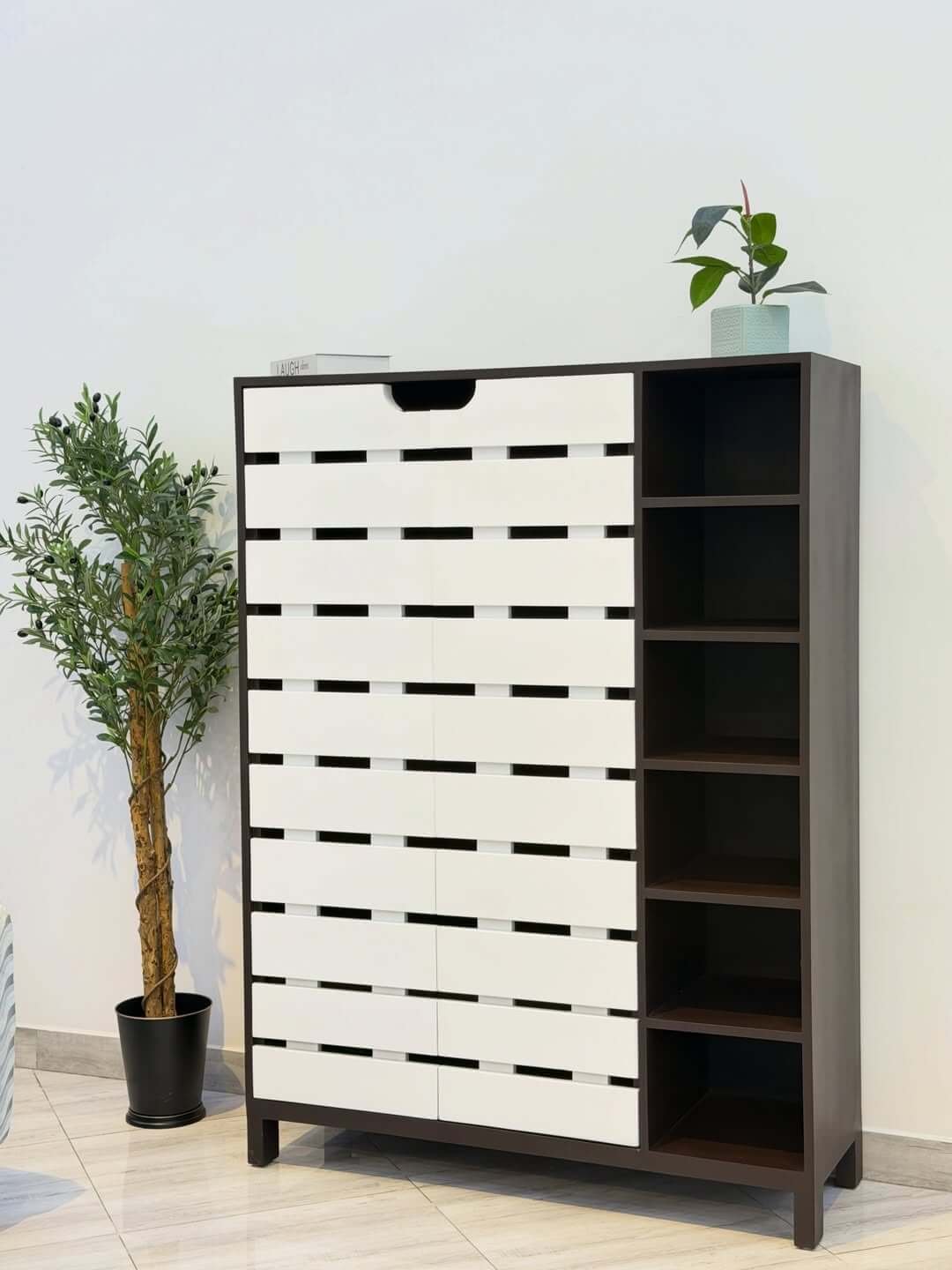
Closed at the front, raised on legs — a shoe cabinet is designed to read as furniture, not storage.
Types of shoe cabinet
Each front style behaves differently in daily use — and the right one depends far more on your corridor than on your taste:
| Type | How it opens | Best for |
|---|---|---|
| Hinged door | Doors swing outward | Flexible shelving; boots and tall shoes |
| Tilt-out (flip bin) | Compartments pivot forward | The narrowest hallways — slimmest depth |
| Slatted front | Doors with horizontal slats | A modern look with built-in airflow |
| Woven / cane panel | Doors with woven inserts | Hiding shoes while keeping ventilation |
| Cabinet with seat | Doors below, cushioned top | Entryways where you sit to change |
One practical warning about hinged doors: they need clear space in front to open. In a tight corridor that swing can block the passage, which is exactly the situation tilt-out bins were designed for.
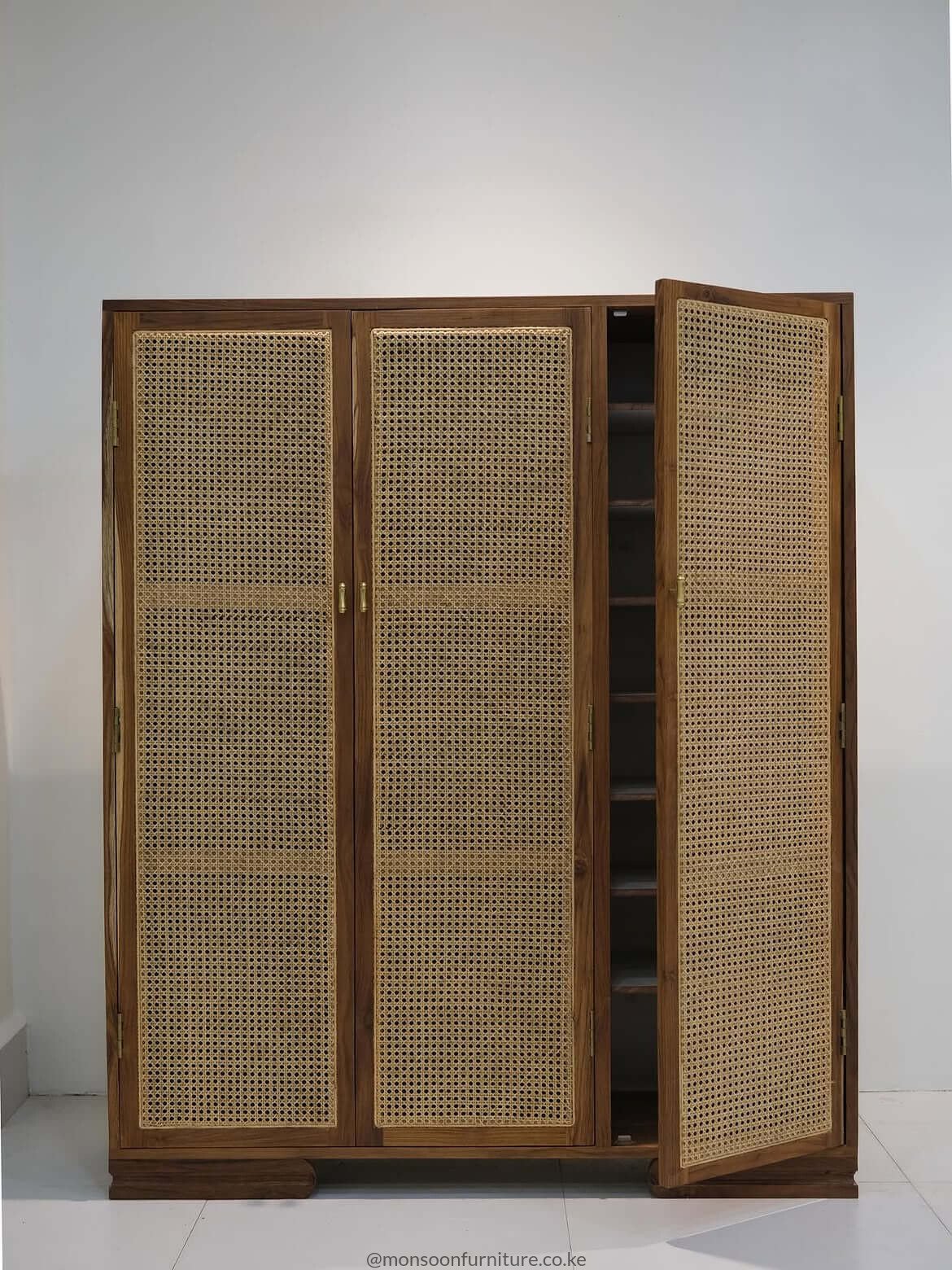
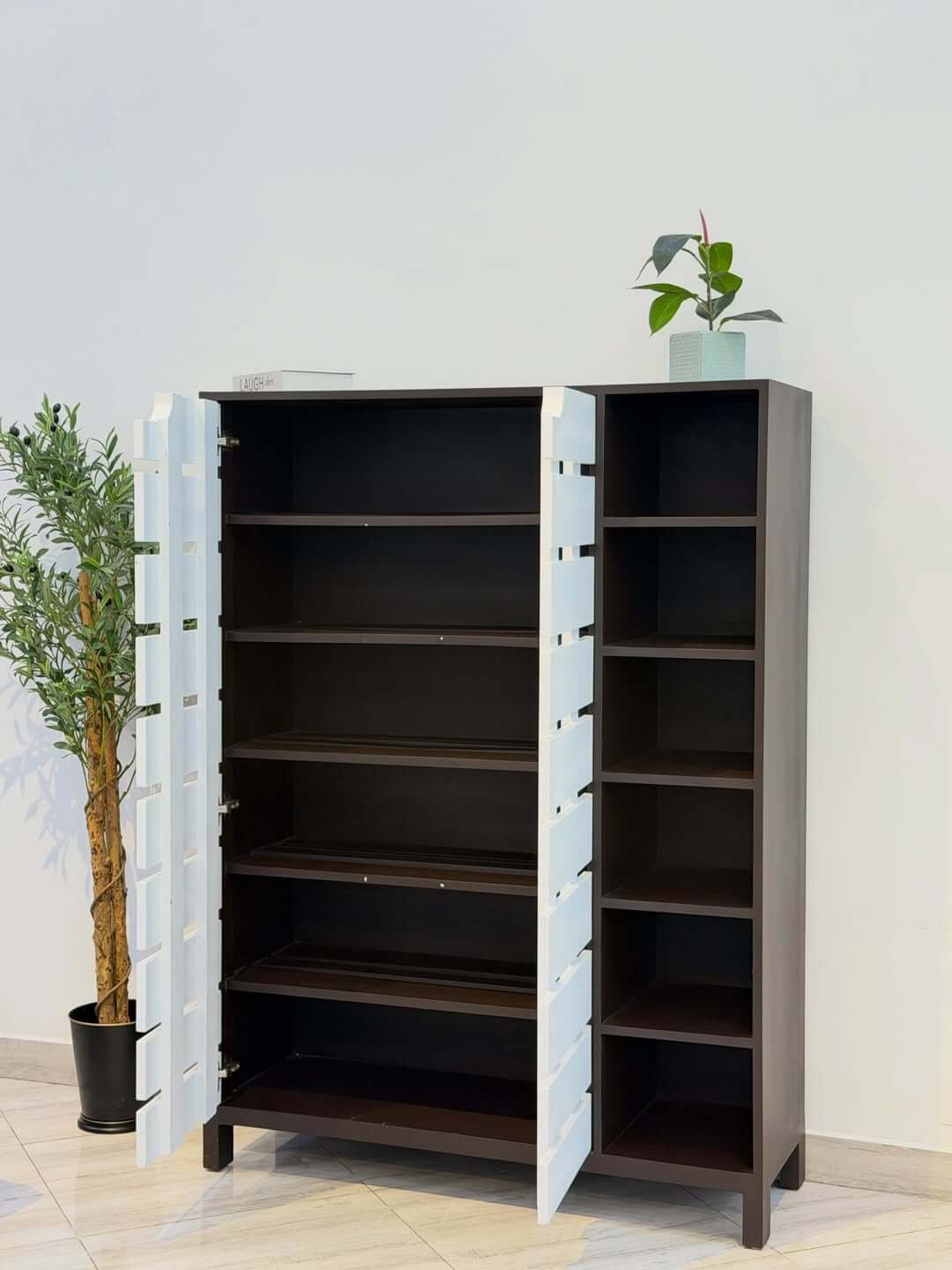
Left: hinged woven-panel doors. Right: a part-open hybrid — closed storage plus a shelf for the daily pairs.
How many pairs does a shoe cabinet hold?
Capacity is where cabinets vary most, because two units of identical width can have very different internal layouts. Use this as a planning guide, then confirm the shelf spacing for the specific piece:
| Cabinet size | Rough capacity | Suits |
|---|---|---|
| Compact / 2-door | ~12–16 pairs | A couple; a small apartment entrance |
| 3-bin tilt-out | ~12–18 pairs | Narrow hallways; flat shoes and trainers |
| Tall 3-door | ~20–30 pairs | A family of four or more |
| 4-door / dual-column | 25–30+ pairs | Large households; big collections |
Two cabinets the same height can hold very different numbers of pairs depending on how many internal levels they have — and whether those levels clear a boot. If a specific shoe count matters, ask for the internal shelf measurements before ordering rather than relying on the external dimensions.
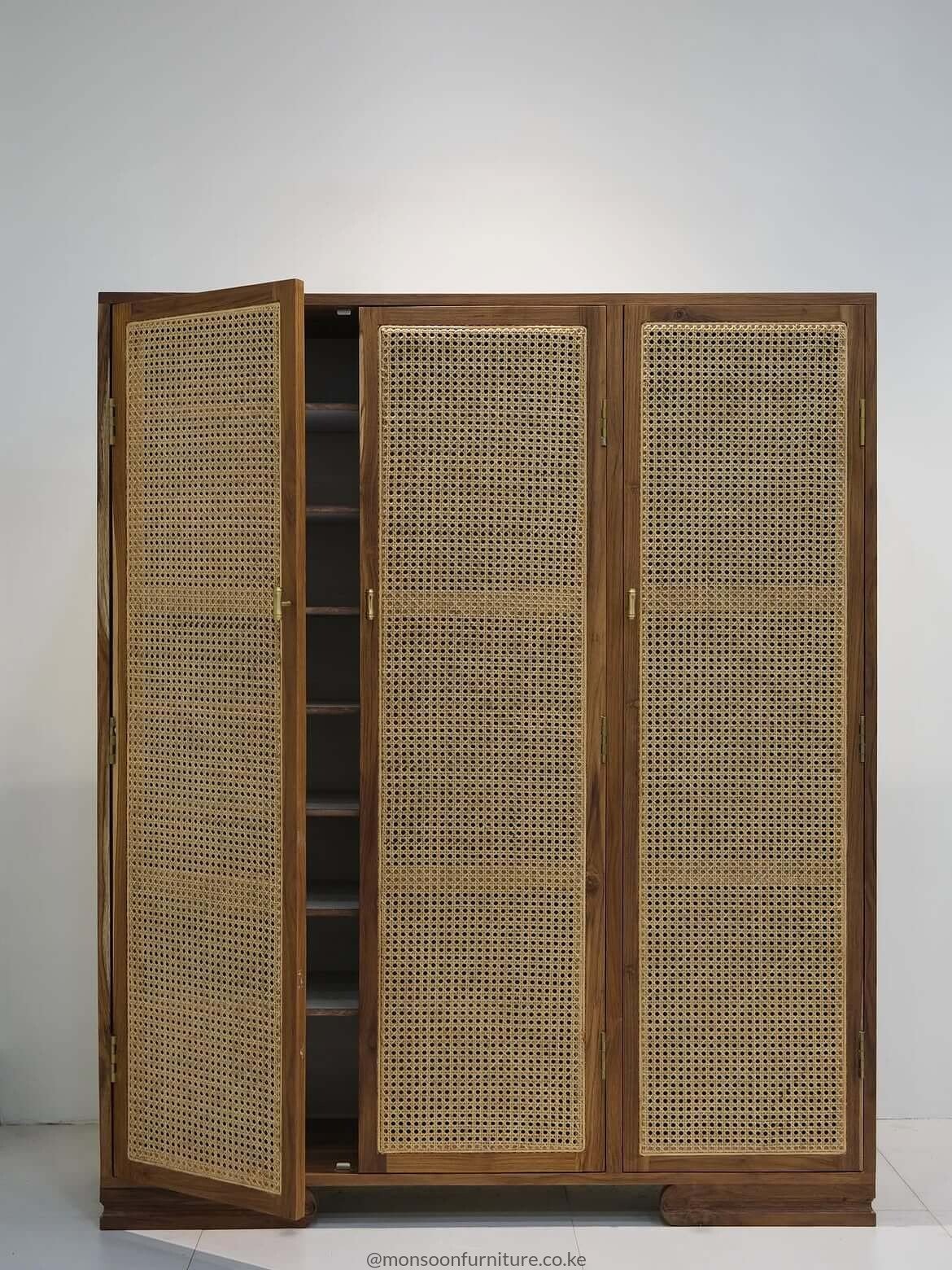
Open the door and count the levels — internal shelf spacing decides capacity far more than the cabinet’s outside size.
Ventilation: how to avoid a musty cabinet
This is the one genuine weakness of closed storage, and it is entirely preventable. Shoes worn in the rain and shut straight into a sealed box stay damp for days; that is what produces the smell people blame on the cabinet.1
Design solves most of it. Slatted fronts, woven cane inserts and purpose-cut airflow slots all let air move through a closed unit — which is why those fronts are so common here rather than being purely decorative. An open lower shelf helps too, giving damp everyday shoes somewhere to air.
- Dry first, store second. Leave wet shoes on an open shelf or outside the cabinet overnight.
- Choose a ventilated front — slots, slats or woven panels rather than a fully sealed face.
- Don’t overpack. Shoes crammed tight block the airflow the design provides.
- Brush the panels. Dust clogs slots and weave; a soft dry brush keeps them open.
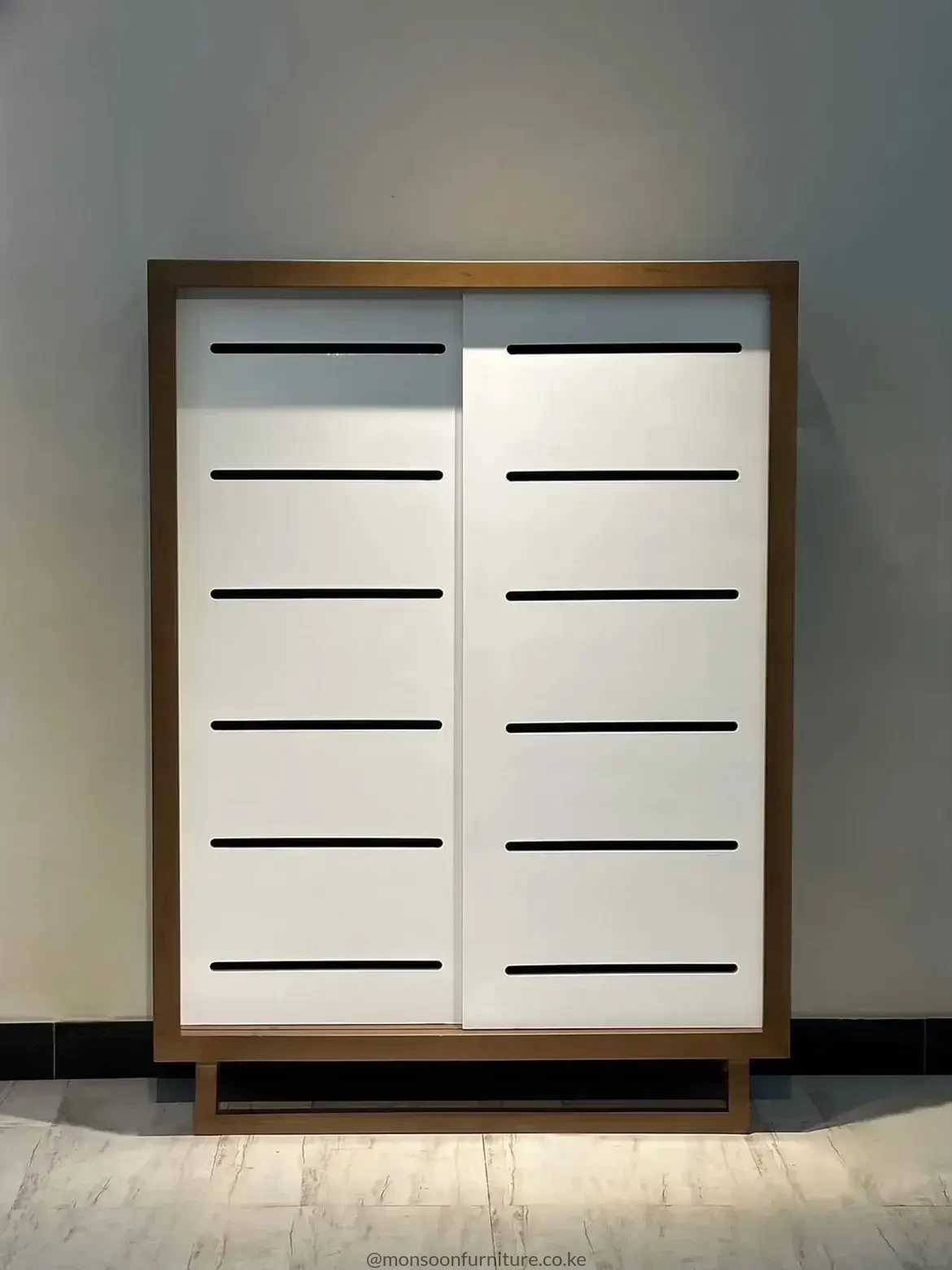
Horizontal slots cut into the front panel — ventilation designed in, rather than added later.
Will it fit? Measuring before you order
Most disappointments in this category are measurement problems, not product problems — and the one people forget is the route into the house.
| Measure | Why it matters |
|---|---|
| Wall width | The obvious one — the space the cabinet sits against |
| Corridor depth | Leave 70–80cm clear walking space after the cabinet |
| Door swing | Hinged doors need clear room to open fully |
| Delivery route | Final doorway, lift-door height, tightest stair or corridor turn |
That last row is the one worth taking seriously in a Nairobi apartment. A tall three-door cabinet may suit the room and still need diagonal clearance to get around a stair landing or into a lift. Measure it before dispatch, not on delivery day.
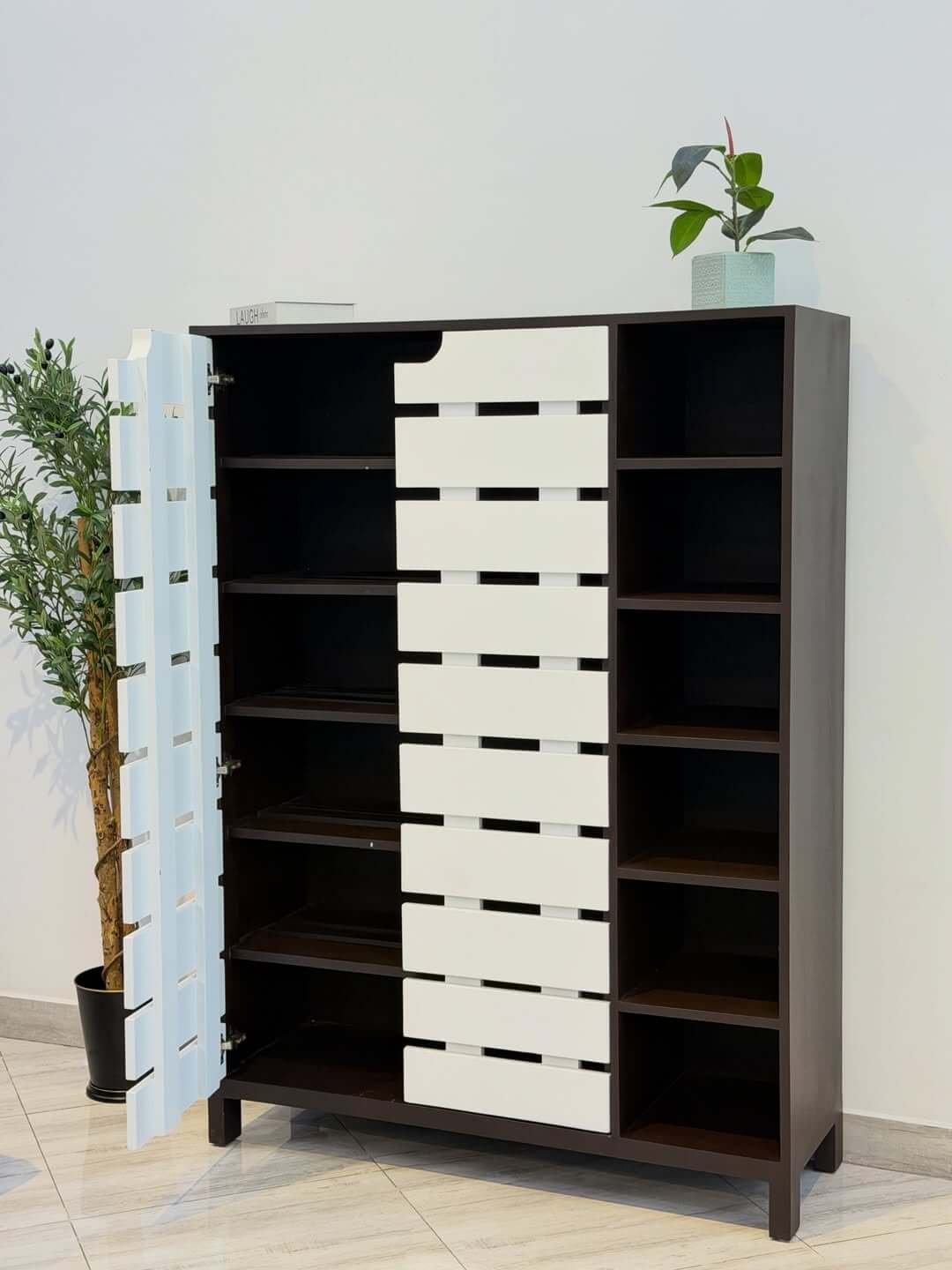
Tall and shallow is the apartment shape — capacity in height rather than depth, leaving the corridor clear.
Shoe cabinet prices in Kenya (2026)
Here is the real price picture, current at August 2026 and subject to size, finish and promotions.
| Tier | What you get | Price (KES) |
|---|---|---|
| Entry cabinet | Tilt-out bins, fluted fronts, drawer cabinets, cabinet-with-seat | 23,000 – 28,000 |
| Mid-range cabinet | Slatted fronts, rattan and woven-panel doors, larger units | 34,000 – 36,000 |
| Premium cabinet | Cane-door, four-door woven and teak cabinets with internal shelving | 43,000 – 49,000 |
| Custom-built | Made to your hallway, shoe count and finish | Quoted on request |
What the top tier buys is door detailing — cane and woven panels are genuinely harder to make — plus a named timber and more substantial construction. If you want to weigh solid timber against a wood-finish cabinet before deciding, our guide to wooden shoe racks and how to spot a wood-look finish covers exactly that. You can also see the full closed-storage range in the shoe cabinet collection.
Where to put a shoe cabinet
A cabinet earns its keep at the entrance, stopping dust and mud at the door. But it brings a bonus an open rack does not: a usable surface. The flat top becomes the natural landing spot for keys, sunglasses and a plant, which is why cabinets pair so well with a mirror above and a console table alongside in wider entrances.
If the entrance genuinely has no room, put the cabinet in the bedroom for the bulk of the collection and keep only the daily pairs by the door. Finishing pieces from the home décor range turn either arrangement into a proper entryway rather than a storage corner.
Custom shoe cabinets
Standard cabinets fit standard spaces. An alcove beside the door, a 90cm corridor, or a need for taller tiers that actually clear boots is where made-to-measure pays for itself.
- Send your measurements — wall width, available depth, and roughly how many pairs — on WhatsApp.
- Choose the spec: door style, finish, shelf spacing, and whether you want a seat or open shelf.
- Approve the quote before any work begins.
- We build it in our Nairobi workshop, normally within 3–4 days.
- Delivery, free within Nairobi and available across Kenya.
Hide the clutter, keep the entrance
Browse shoe cabinets from KSh 23,000, or order a custom unit built to your hallway, door style and shoe count — made in Nairobi, normally in 3–4 days, with free delivery in the city.
Frequently asked questions
How much is a shoe cabinet in Kenya?
Shoe cabinets in Kenya cost roughly KSh 23,000–49,000 in 2026. Entry cabinets with tilt-out bins or drawers run KSh 23,000–28,000, mid-range slatted, rattan and woven-panel cabinets KSh 34,000–36,000, and premium cane-door, four-door and teak cabinets KSh 43,000–49,000. Custom sizes are quoted on request.
How many pairs does a shoe cabinet hold?
A shoe cabinet typically holds 12 to 30 pairs, depending on height and internal shelf spacing. Each shelf level takes about three to four pairs of adult shoes, so a tall three-door cabinet stores around 20–30 pairs. Tilt-out bins hold fewer per compartment because shoes stand almost upright inside them.
Do shoe cabinets make shoes smell?
Only if shoes go in damp. Trapped moisture, not the cabinet, causes odour and mildew. Let wet shoes dry fully before closing them inside, choose a design with ventilation slots, slats or woven panels, and avoid overpacking so air can still move between the pairs.
What depth of shoe cabinet fits a narrow hallway?
In a narrow hallway, choose a slim tilt-out cabinet where shoes stand almost upright, and leave 70–80cm of clear walking space in front of it. Also check the door swing and your delivery route — the final doorway, lift-door height and tightest corridor turn — before ordering.
Sources:
1. Footwear-care and shoe-storage guidance on drying damp shoes before enclosed storage and preventing odour and mildew.
Prices current at August 2026 and subject to change. Capacities are general planning guidance and vary with internal shelf spacing and shoe type; confirm shelf measurements for a specific piece.

Add a review
Your email address will not be published. Required fields are marked *