
Best Shoe Rack Material: Wood vs Metal vs Plastic vs Bamboo
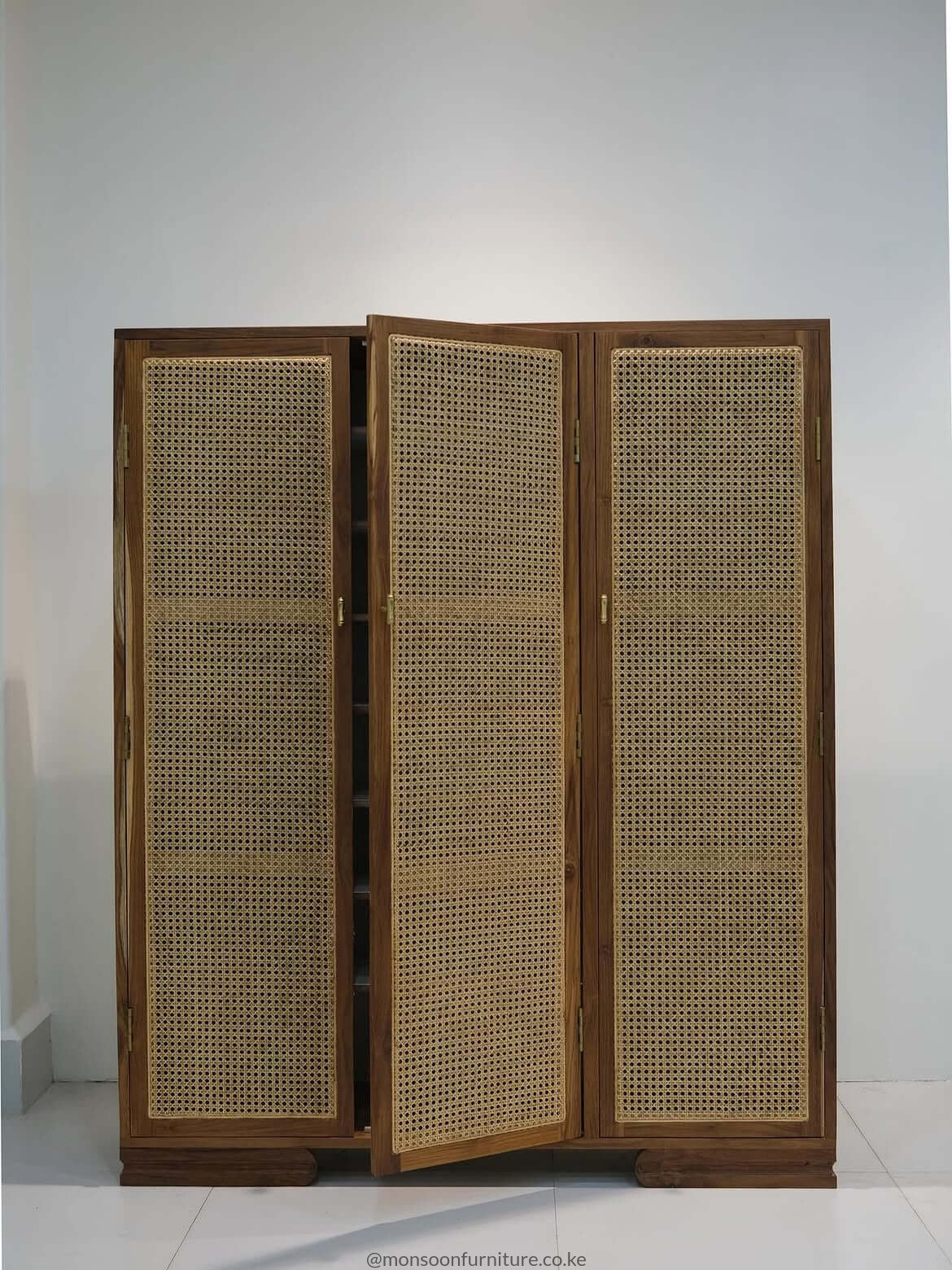
Shoe racks in Kenya span an enormous price range — from a KSh 500 wire frame at the market to a KSh 49,000 teak cabinet. The gap is almost entirely material, and the honest question is not “which is best” but “which is right for the load, the location and the length of time you want it to last”.
This guide compares every material on durability, weight capacity, humidity, cleaning and cost per year — including where the cheap options genuinely win.
The materials at a glance
| Material | Lifespan | Load | Humidity | Typical price (KES) |
|---|---|---|---|---|
| Solid wood | 10+ years | Excellent | Stable when finished | 34,000 – 49,000 |
| Engineered board | 5–10 years | Good | Swells if wet | 12,000 – 36,000 |
| Metal frame | 3–8 years | Good (if thick gauge) | Best — unaffected | 7,000 – 25,000 |
| Bamboo | 2–4 years | Moderate | Tolerant if sealed | ~5,500 |
| Rattan / woven panel | Frame lifespan | Frame-dependent | Ventilates well | 35,000 – 49,000 |
| Plastic / wire | 6 months – 2 years | Poor — bows | Unaffected but flimsy | 200 – 1,500 |
Wood: the all-round choice
Wood wins on the three things that matter over years: it holds its shape under constant load, it can be repaired rather than replaced, and it looks like part of the house rather than a storage solution parked in the hallway.
Within wood there is a real split between solid timber and engineered board with a wood finish. Board is not a poor choice — it delivers smooth modern finishes at a lower price — but its edges can chip and it swells permanently if moisture gets in. Our guide to wooden shoe racks covers how to tell the two apart before you pay.
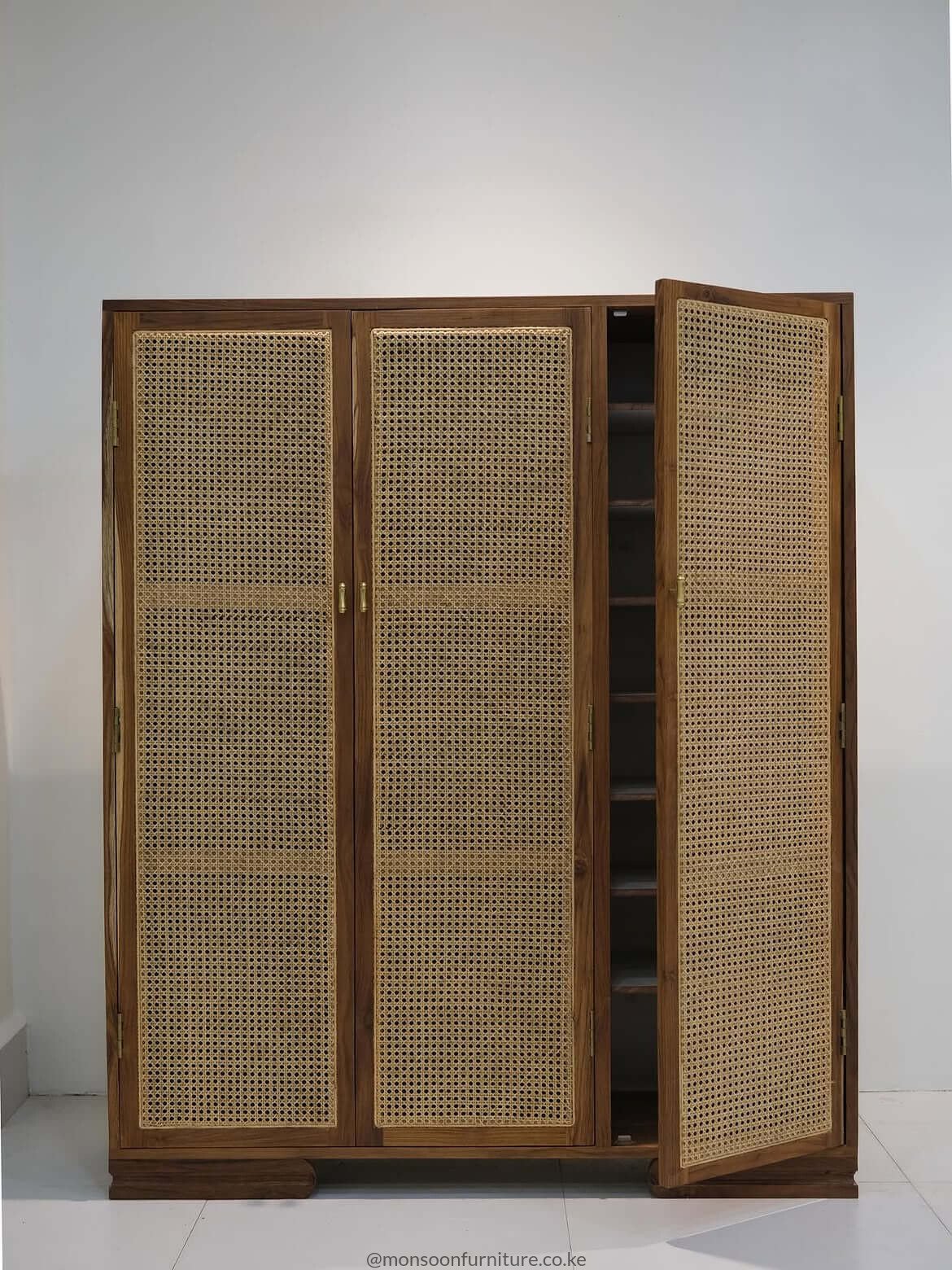
Timber carries the load and takes a repair — the two things that decide whether a rack lasts a decade.
Metal: best for wet and muddy shoes
Metal divides sharply into two categories that share a name and nothing else.
Thin wire racks — the KSh 500–1,500 market variety — are the ones that sag, slide on tiled floors and scratch skirting boards. Furniture-grade metal frames, the tubular kind used on cushioned benches, are a different proposition: rigid, rust-resistant, and often paired with upholstery or timber shelves.
If your entrance takes rain-soaked shoes daily — a ground-floor door, a compound entrance — metal’s total indifference to moisture is a genuine advantage that wood cannot match.
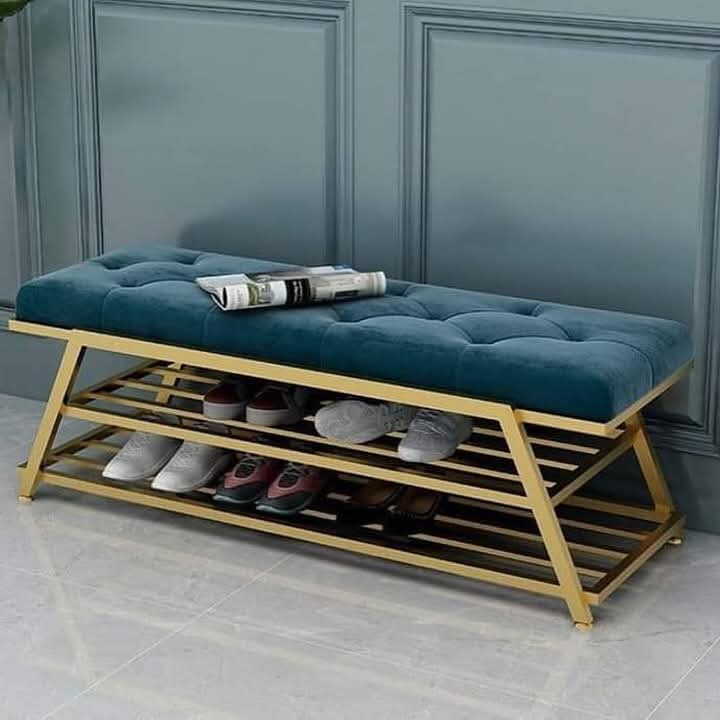
Furniture-grade metal: a slim rigid frame, unaffected by damp, paired with a cushioned seat.
Bamboo: light, sustainable, mid-priced
Bamboo occupies a useful middle ground. It looks warm and natural, weighs very little, and is genuinely sustainable — bamboo regrows in a few years where hardwood takes decades.
Its limitations are honest ones: it is a grass, not a hardwood, so shelves flex more under weight, and an unsealed bamboo rack will absorb moisture. For a bedroom, a guest room or a light-use entryway it is a sensible buy. For a family front door taking twenty pairs, it will show its limits within a couple of years.
Plastic and wire: cheapest, and honest about it
There is no point pretending these do not have a place. For a student room, a one-year rental, or storing seasonal shoes in a back room, a KSh 500 rack does the job and owes you nothing.
What you should not expect is for one to hold a family’s footwear by the front door. The failure is predictable: the shelves bow in the middle, the frame racks sideways, and within a year it is holding fewer shoes than the day it arrived.
Light racks slide. On the polished tiles common in Kenyan homes, a wire or plastic rack shifts every time someone pulls a shoe out, gradually scratching the floor and the skirting. Heavier furniture-grade pieces stay put — a small thing that becomes irritating daily.
Rattan and woven panels
This is not really a competing material — it is a component. The frame is wood; the weave fills the doors. But it changes how a closed cabinet performs, which is why it has become the signature look in Kenyan entryways rather than a purely decorative choice.1
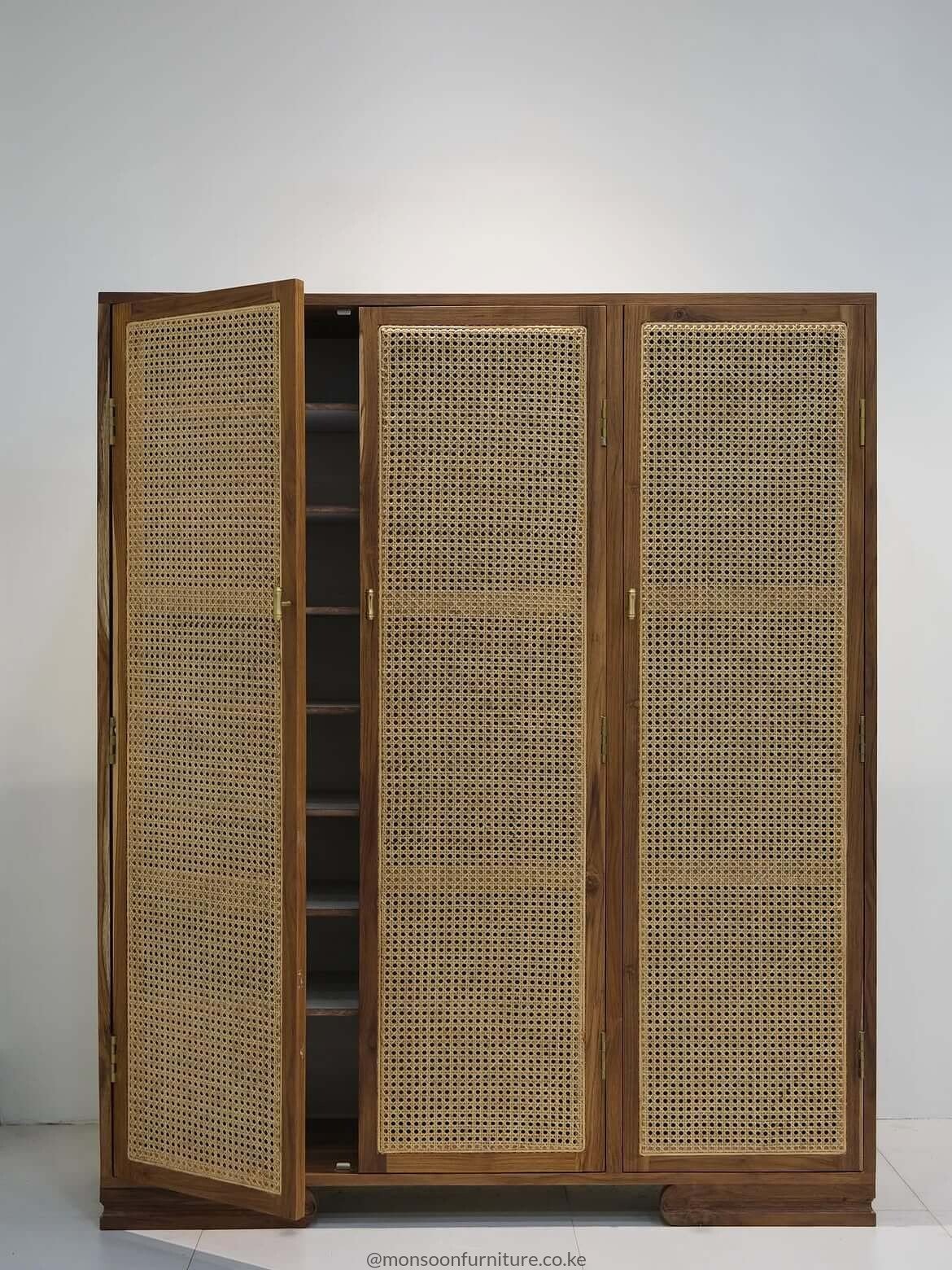
Woven panels do a job as well as a look — air moves through the weave, so closed storage still breathes.
Which lasts longest in Kenya’s climate?
Two local conditions do the damage: moisture from rain-soaked shoes, and fine dust that settles constantly in an entryway.
| Material | Damp shoes | Dust | Termites |
|---|---|---|---|
| Solid hardwood | Good when finished | Wipes clean | Resistant when finished |
| Engineered board | Poor — swells | Wipes clean | Vulnerable if damp |
| Metal | Excellent | Wipes clean | Immune |
| Bamboo | Fair if sealed | Wipes clean | Some vulnerability |
| Woven / rattan | Good — ventilates | Traps dust; brush it | Some vulnerability |
| Plastic | Excellent | Washable | Immune |
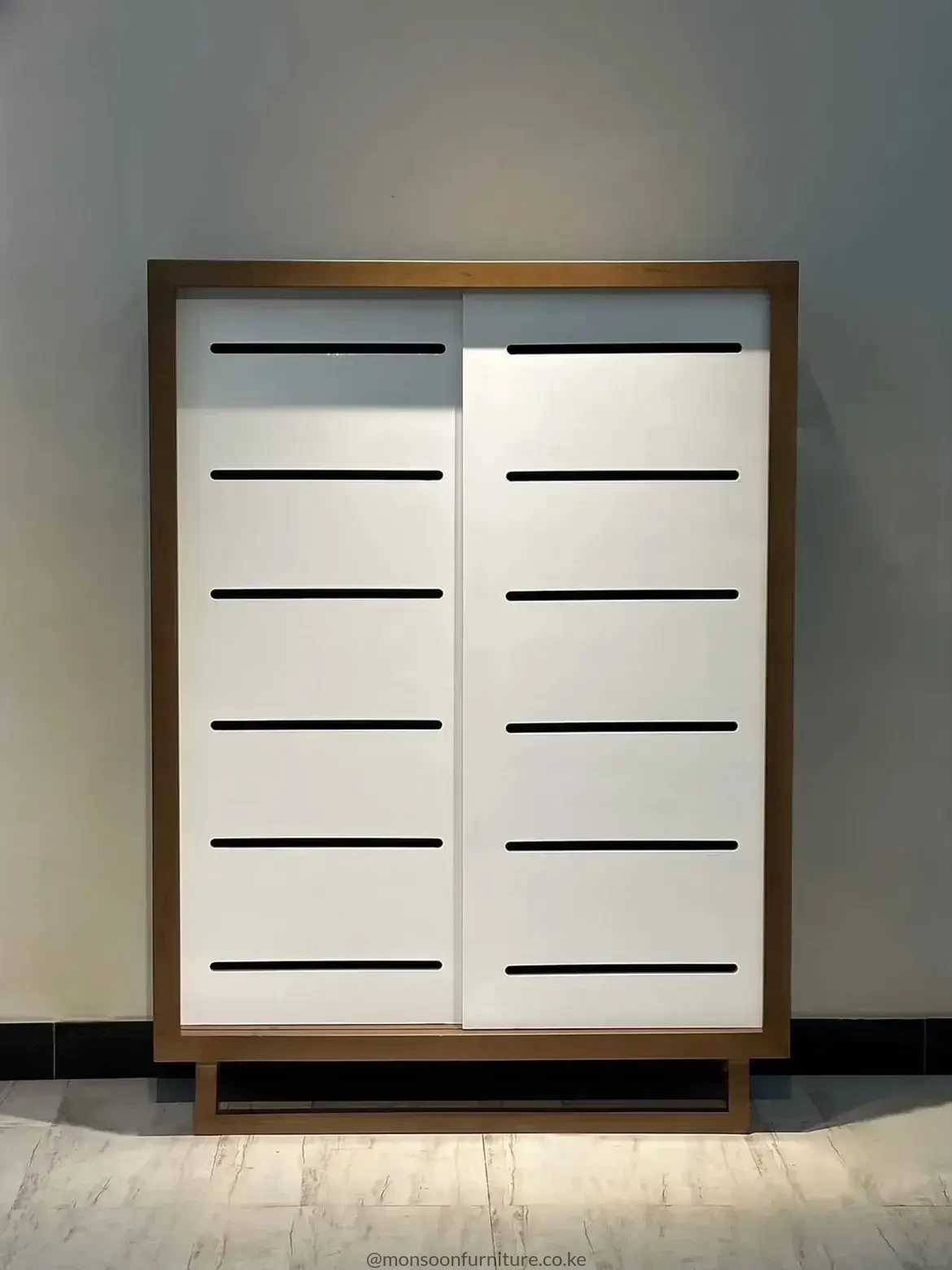
Whatever the material, ventilation is what keeps damp shoes from turning storage musty.
Cost per year: the honest comparison
It would be easy to claim that expensive racks are cheaper in the long run. In some categories that is true. In shoe storage, it mostly is not — and the arithmetic is worth seeing:
| Material | Typical price | Lifespan | Rough cost/year | What you give up |
|---|---|---|---|---|
| Wire / plastic | 500 | ~1 year | ~500 | Capacity, looks, stability |
| Bamboo | 5,500 | ~3 years | ~1,800 | Rigidity under load |
| Light metal | 7,000 | ~4 years | ~1,750 | Furniture-like appearance |
| Board cabinet | 24,000 | ~7 years | ~3,400 | Little — good middle ground |
| Solid wood | 45,000 | ~12 years | ~3,750 | Nothing, but costs most |
So the case for spending more is not that it saves money. It is that a KSh 500 rack holds eight pairs badly, slides on the floor and looks like a wire frame in your entrance, while a KSh 24,000 cabinet holds twenty-four pairs, hides them, and reads as furniture. You are buying capacity, stability and appearance — which is a perfectly good reason, and an honest one.
Which material for your situation?
| Your situation | Best material | Why |
|---|---|---|
| Front door opens into the sitting room | Solid wood or board | It is visible furniture, so it must look right |
| Shoes come in wet or muddy daily | Metal, or wood with an open tier | Moisture resistance and airflow |
| Balcony or covered outdoor area | Metal or plastic | Board and bamboo will not survive |
| Bedroom, light use | Bamboo or board | Low load; price and looks matter more |
| One-year rental | Wire, plastic or bamboo | No point investing in a piece you will leave |
| Family of four, permanent home | Solid wood or board cabinet | Capacity and load-bearing are the constraints |
Whichever material you pick, size it properly — our capacity guide covers how many pairs each size actually holds.
Cleaning and care by material
- Solid wood: dust weekly; wipe spills immediately; re-oil or polish once or twice a year.
- Engineered board: dry cloth only. Never let water sit on an edge or a chip.
- Metal: damp cloth, then dry — rust starts at joints and welds first.
- Bamboo: keep the sealant intact; re-seal if the surface starts to feel rough.
- Woven / rattan: soft dry brush to clear dust from the weave; avoid soaking.
Not sure which material suits your entrance?
Tell us where the rack will stand and whether shoes come in wet, and we’ll recommend the right material — or build a custom piece in your chosen finish. Free delivery within Nairobi.
Frequently asked questions
What is the best material for a shoe rack?
Wood is the best all-round material — it carries weight without sagging, lasts ten years or more, and looks like furniture. Metal is better where shoes arrive wet, since moisture does not affect it. Engineered board offers the best balance of price, capacity and finish for most Kenyan homes.
Are metal or wooden shoe racks better?
Wooden racks look better and carry more weight; metal handles moisture better and never swells or rots. If your entrance takes rain-soaked shoes daily, metal has a real advantage. If the rack is visible to guests and holds a large collection, wood is the stronger choice.
Are bamboo shoe racks any good?
Bamboo shoe racks cost around KSh 5,500 and offer decent value for light use — they are attractive, light and sustainable. Bamboo is a grass rather than a hardwood, so shelves flex more under heavy loads and the sealant must be maintained. Best for bedrooms or low-traffic entryways.
Is an expensive shoe rack worth it?
Measured per year of use, cheap racks are not poor value. What a higher price buys is capacity, stability and appearance — a KSh 24,000 cabinet holds around 24 pairs, hides them and looks like furniture, where a KSh 500 wire rack holds eight badly and slides on tiled floors.
Sources:
1. Footwear-storage guidance on ventilation and preventing odour and mildew in enclosed shoe storage.
Monsoon prices current at August 2026. Wire, bamboo and light-metal figures are typical Kenyan marketplace prices for comparison, not Monsoon products. Lifespans are general estimates and vary with build quality and use.

Add a review
Your email address will not be published. Required fields are marked *