
Shoe Rack Ideas for Small Spaces & Apartments in Kenya
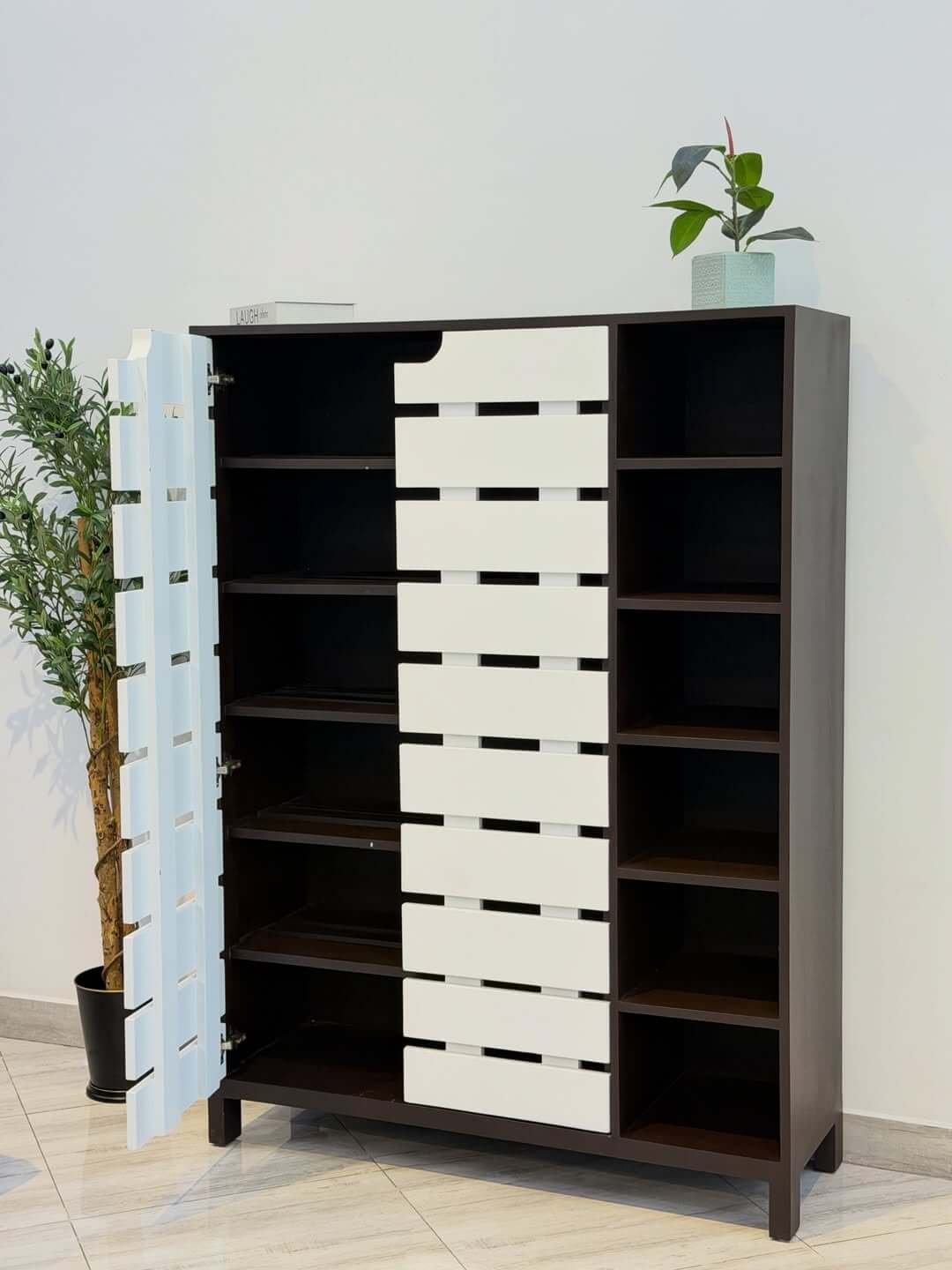
Most Nairobi apartments were not designed with an entryway. The front door opens into a corridor, or straight into the sitting room, and there is nowhere obvious for shoes to go — so they end up in a heap that everyone steps over.
The good news is that small-space shoe storage is a solved problem. It just requires thinking vertically instead of horizontally, and measuring three things before you buy. Here are the designs that work, where to put them when the entrance is tiny, and the mistakes that waste the little space you have.
What makes a shoe rack good for a small space?
Three qualities separate a small-space unit from a normal one:
- Shallow depth. This is the whole game in a corridor. Designs that stand shoes almost upright — tilt-out bins especially — hold the same pairs in far less depth than shelves where shoes lie flat.
- Height instead of width. A tall unit uses wall you already own. Two columns of shelves in a 60cm width will out-store a low rack stretched along two metres.
- A second job. A bench you sit on, or a cabinet with a usable top for keys, justifies its floor space twice.
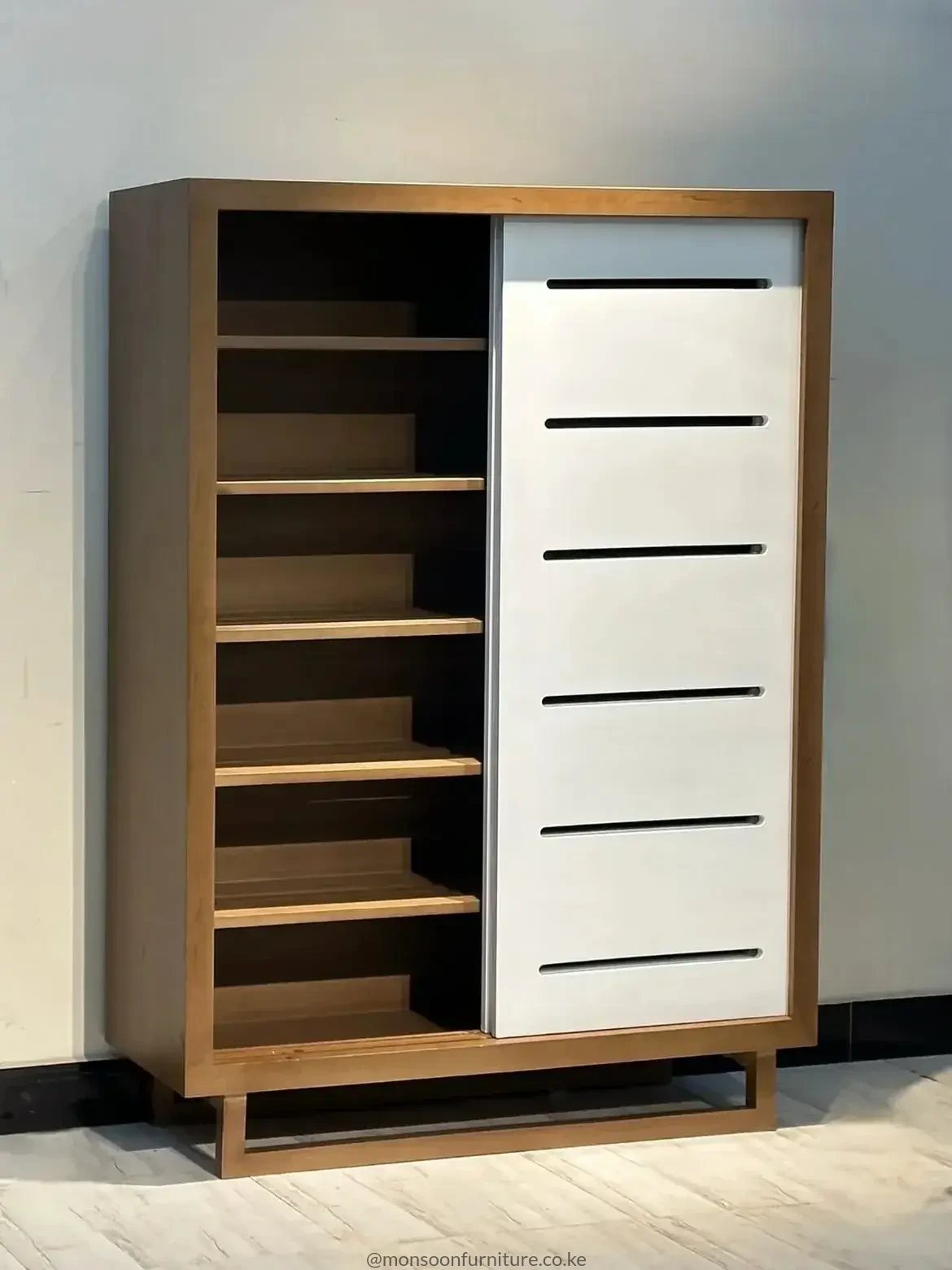
Wall height is free floor space. A tall unit stores the same shoes in a fraction of the footprint.
Measure three things before you buy
Almost every small-space regret traces back to a measurement nobody took. Four numbers cover it:
| Measure | What to check | Rule of thumb |
|---|---|---|
| Wall width | The run the unit sits against | Leave a hand’s width at each end |
| Depth available | How far it can stand out from the wall | 25–30cm for a tight corridor |
| Walking space left | Corridor width minus unit depth | Keep 70–80cm clear |
| Door swing & route | Hinged doors; getting it into the flat | Check lift height and stair turns |
Before ordering, mark the unit’s footprint on the floor with masking tape and live with it for a day. Walk the corridor carrying shopping. Open the front door fully. It takes two minutes and catches the problem that measurements alone miss — that the space technically fits but does not actually work.
Eight space-saving shoe storage ideas
Ranked roughly from most to least permanent:
| Idea | Why it saves space | Best for |
|---|---|---|
| 1. Slim tilt-out cabinet | Shoes stand almost upright — the shallowest format | Narrow corridors |
| 2. Tall dual-column unit | Two columns of shelves in one narrow width | Big collections, small floors |
| 3. Bench with storage | Seating and storage in one footprint | Corridors with nowhere to sit |
| 4. Corner unit | Uses the dead angle furniture usually wastes | Awkward entry corners |
| 5. Under-stair storage | Fills a void that is otherwise empty | Maisonettes and townhouses |
| 6. Bedroom unit beside the wardrobe | Moves bulk storage out of the entryway entirely | Flats with no entrance at all |
| 7. Over-door organiser | Uses the back of a door — zero floor space | Rentals; light shoes only |
| 8. Stackable boxes | Grows as the collection grows | Temporary or seasonal storage |
To be straightforward about it: ideas 1–6 are furniture, and they are what we build. Ideas 7 and 8 are useful for a rental you will leave in a year, but they are fabric and plastic — they will not hold heavy boots and they do not last. Browse the furniture options in our shoe racks collection.
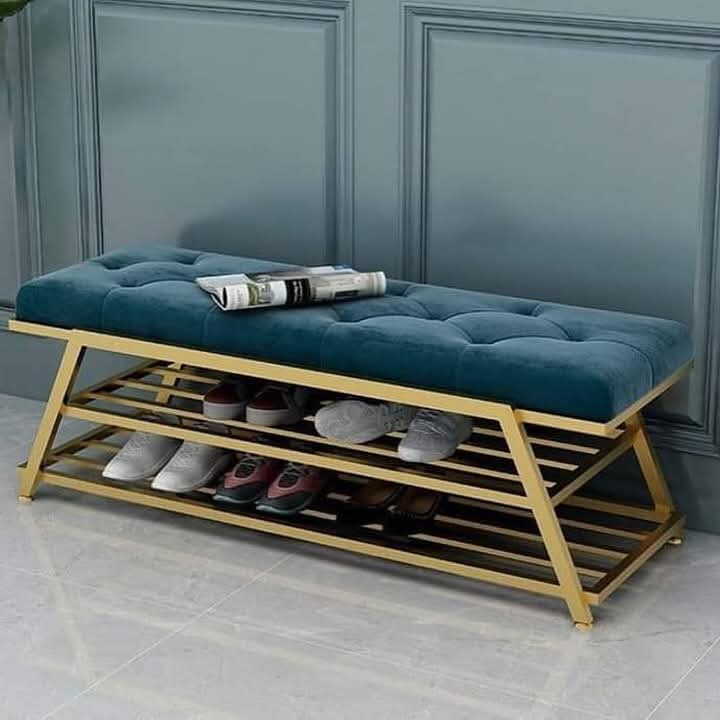
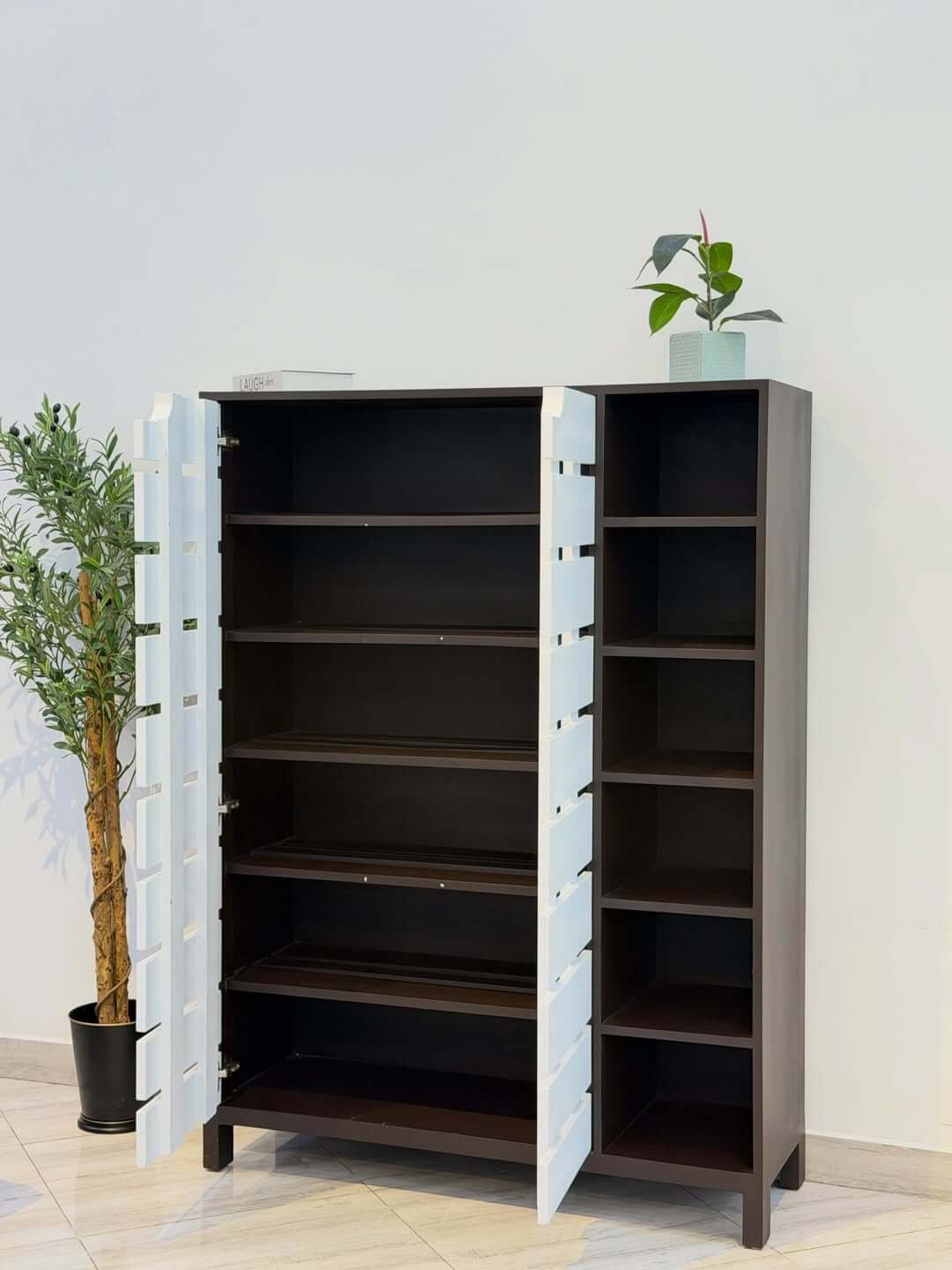
Two ways to earn a small footprint twice: a bench you sit on, and a unit that stores and displays.
Where to put it when the entryway is tiny
The instinct is to put all the shoes at the door. In a small flat, that is usually wrong — the entrance is the one place you cannot spare the floor.
| Location | What to store there | Watch out for |
|---|---|---|
| By the front door | 2–4 daily pairs on a slim unit or bench | Blocking the door swing or passage |
| Bedroom, beside the wardrobe | The bulk of the collection | Dust — closed storage is better here |
| Corridor wall | Medium storage in a tall, shallow unit | Keeping 70–80cm walking space |
| Under the stairs | Seasonal and rarely worn pairs | Sloping height limits shelf spacing |
| Balcony or utility area | Muddy outdoor shoes only | Rain exposure; needs a covered spot |
The split approach is what actually works: a small piece at the door for daily use, and closed storage elsewhere for the rest. If the bedroom is doing the heavy lifting, matching the unit to your wardrobe keeps the room looking deliberate rather than crowded.
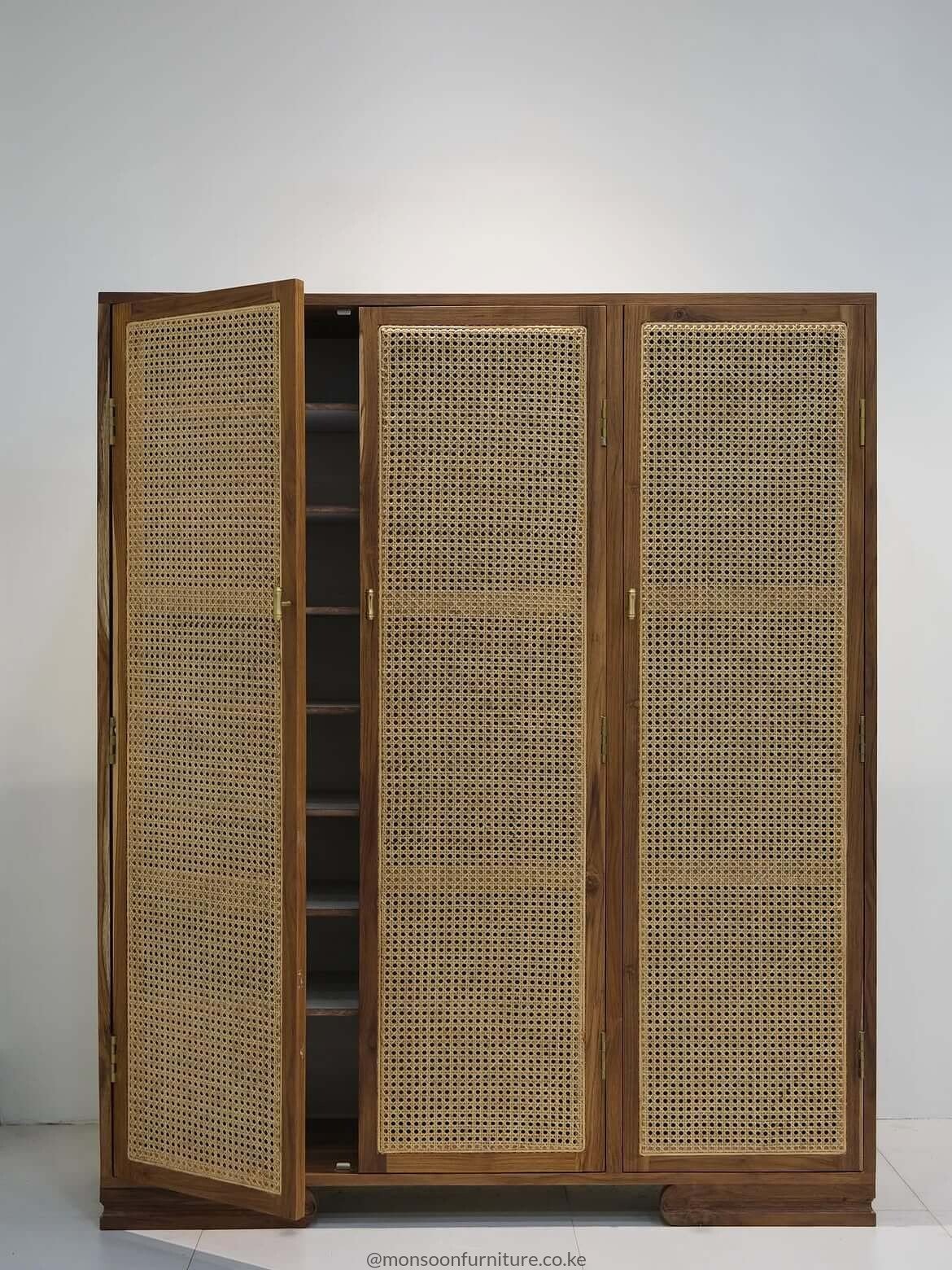
The split in one piece: most pairs behind doors, this week’s within reach.
Mistakes that waste the space you have
Four errors account for most wasted space and wasted money:
- Buying on width, forgetting depth. A unit can fit the wall perfectly and still make the corridor impassable. Depth is the number that decides.
- Hinged doors in a narrow passage. The door needs room to swing. Where it does not have it, tilt-out bins are the format designed for the problem.
- Sizing for today. Shoe collections only grow. A rack that is exactly full on delivery day overflows within months — buy one tier more than you need.
- Going low and wide. A long low rack eats wall you could have used vertically, and it collects clutter on top. Go tall.
If you are still weighing formats, our comparison of shoe racks, cabinets and benches works through the decision in about thirty seconds.
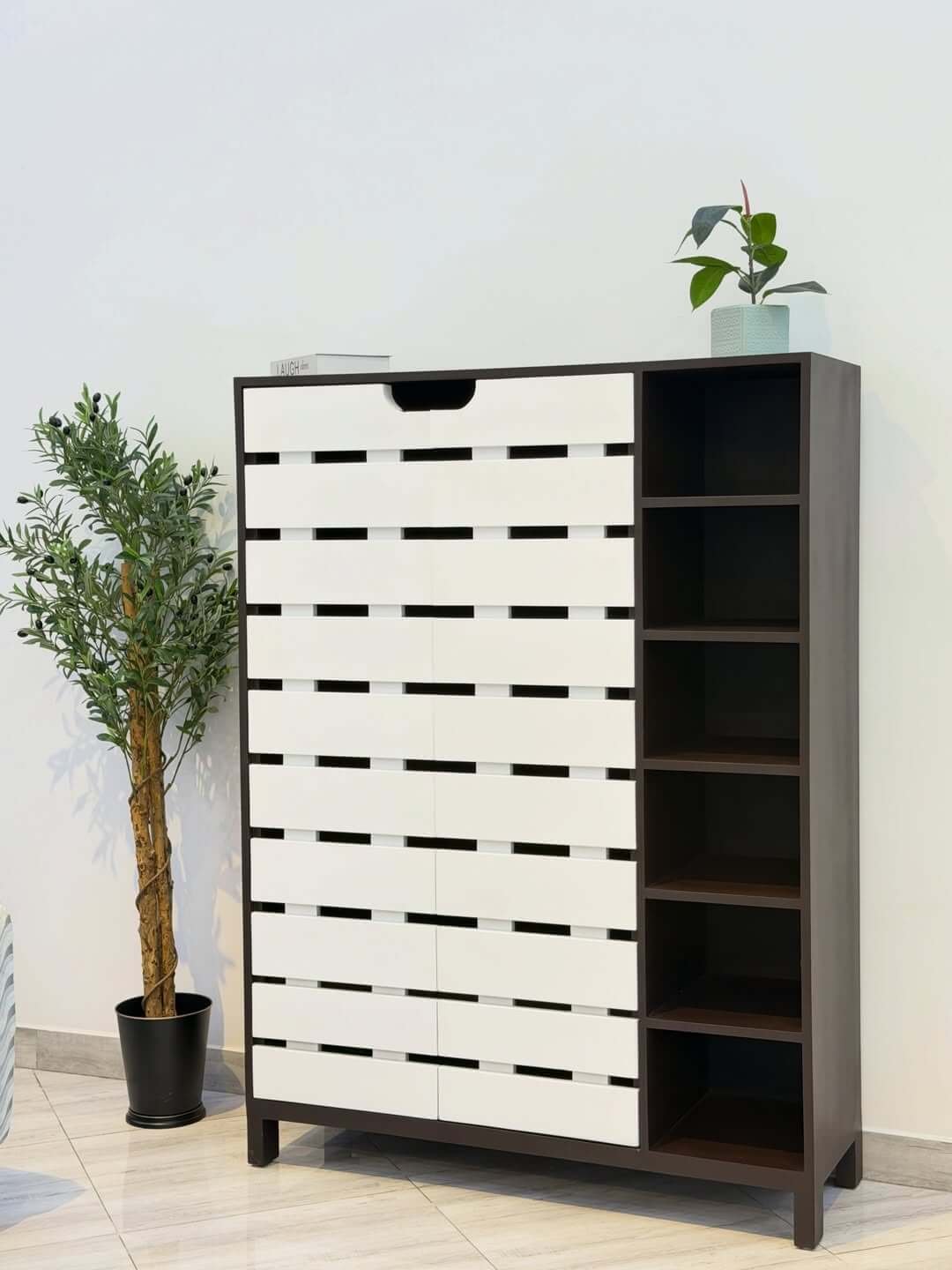
Raised legs are a small-space trick — visible floor underneath makes a narrow space read as larger.
What it costs
Small does not mean cheap in this category — a slim cabinet is often more finely made than a bulky one, because every centimetre has to work. Current Monsoon figures at August 2026:
| Format | Why it suits a small space | From (KES) |
|---|---|---|
| Tall open unit with drawer | Height over depth; keeps the corridor clear | 12,000 |
| Bench with storage | Seating plus shoes in one footprint | 14,000 |
| Compact closed cabinet | Hides clutter in a small entrance | 23,000 |
| Custom slim unit | Built to your exact corridor width | Quoted |
When custom is the right answer
Standard furniture is made for standard rooms, and small flats are rarely standard. Where an alcove, a sloping stair void or an unusually narrow passage is the problem, a built-to-measure piece is often the only thing that genuinely fits.
- Measure and photograph the space — width, depth, height, and anything that intrudes like a skirting or meter box.
- Send it on WhatsApp with a rough shoe count.
- Choose the format — tilt-out, open, closed, or bench-topped — and the finish.
- Approve the quote before work begins.
- Built in Nairobi, normally within 3–4 days, delivered free within the city.
Make the small space work
Send a photo of your entryway or corridor on WhatsApp with the width, and we’ll suggest what fits — or build a slim unit to your exact measurements in 3–4 days.
Frequently asked questions
What is the best shoe rack for a small apartment?
The best shoe rack for a small Nairobi apartment is a slim tilt-out cabinet around 25–30cm deep, a tall dual-column unit, or a bench that doubles as seating. All three store shoes vertically in a narrow footprint. Leave 70–80cm of clear walking space in front of whichever you choose.
How deep should a shoe rack be for a narrow corridor?
Aim for 25–30cm deep in a narrow corridor. Standard open racks are often 35–40cm because shoes lie flat, which can make a passage impassable. Tilt-out designs store shoes almost upright, so they achieve the shallowest depth while still holding a useful number of pairs.
Where do you put shoes in a small house with no entryway?
Split the storage. Keep two to four daily pairs on a slim unit or bench by the door, and store the rest in the bedroom beside the wardrobe, along a corridor wall, or under the stairs. Forcing a large cabinet into a tiny entrance usually blocks the passage instead of solving it.
How much is a small shoe rack in Kenya?
Slim and small-space shoe storage in Kenya starts around KSh 12,000 for a tall open unit with a drawer, KSh 14,000 for a bench with storage beneath, and KSh 23,000 for a compact closed cabinet. Custom pieces built to an exact corridor width are quoted on request.
Prices current at August 2026 and subject to change. Depth and clearance figures are practical guidance for typical Kenyan apartment corridors; measure your own space before ordering.

Add a review
Your email address will not be published. Required fields are marked *