Wooden TV Stands in Kenya: Designs, Wood Types & Prices (2026)
A wooden TV stand is one of the few pieces of furniture you buy once and keep for a decade or more — if you buy the right one. It anchors the living room, carries your screen and media boxes, and sets the tone for the whole space. It’s also where a lot of Kenyan buyers overpay for veneered board that looks like wood but isn’t, or underpay for something that warps within a year.
This is the complete guide: the popular wooden TV stand designs, the difference between real hardwood and board, which Kenyan woods last longest, real 2026 prices, and how to choose the right size for your TV. Everything you need before you spend.
Why choose a wooden TV stand?
Wood is the default material for good reason. A well-built wooden stand is strong enough to hold a large screen and stacked media boxes without bowing, durable enough to survive daily use and Kenya’s humidity, and timeless in a way glass-and-metal trends aren’t. A wood grain that looks good today will still look good in ten years.
There’s also the repair advantage: a solid wooden stand can be sanded and refinished if it’s scratched or the fashion changes, where a damaged board unit simply gets thrown away. Bought right, wood is the cheapest option measured over its lifetime. Browse the full range in our TV stands collection.
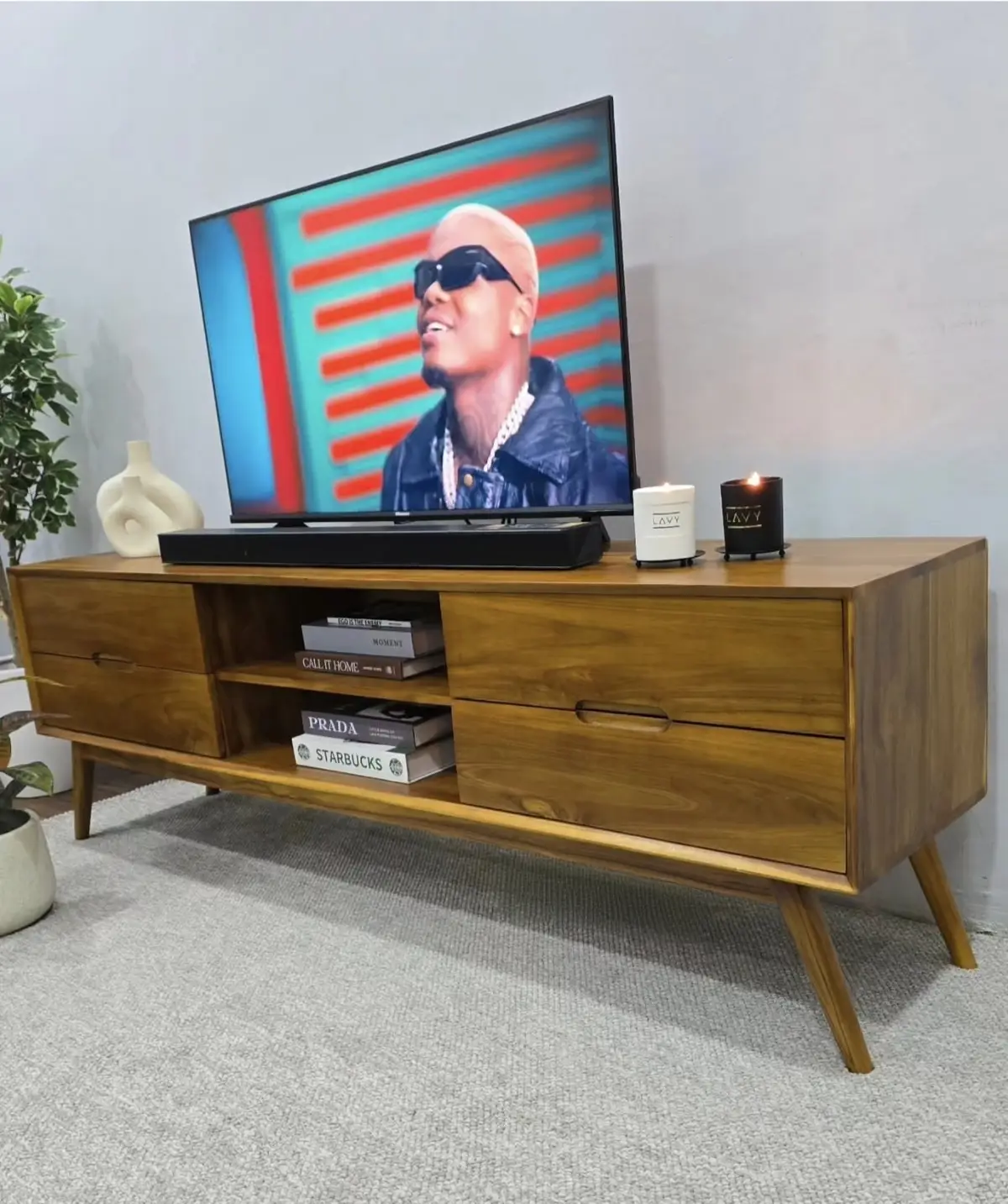
A solid wooden TV stand carries a large screen and media boxes without sagging — and ages well.
Popular wooden TV stand designs in Kenya
Wooden stands come in a handful of design families. Knowing them helps you match a stand to your room and your storage needs.
| Design | What it suits | Storage |
|---|---|---|
| Low-profile media unit | Modern living rooms, large screens | Drawers + open shelves |
| Floating / wall-mounted | Small apartments; keeps floor clear | Cabinet + open shelf |
| Multi-drawer cabinet | Families needing to hide clutter | Maximum — several drawers |
| Slatted / chevron front | Statement modern rooms | Concealed behind panels |
| TV stand + coffee table set | A fully coordinated living room | Both pieces store media & décor |
Slatted and chevron wood-front designs are the current favourites for a modern look, while solid-hardwood units remain the choice for buyers who want the piece to last a generation. If you want the coordinated look, see our guide to matching TV stand and coffee table sets.
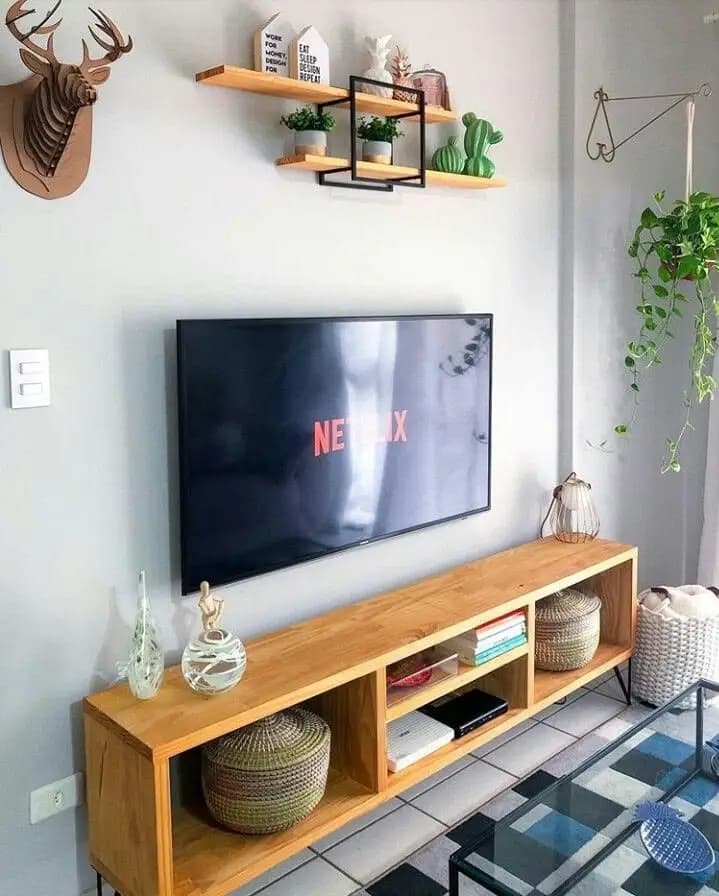
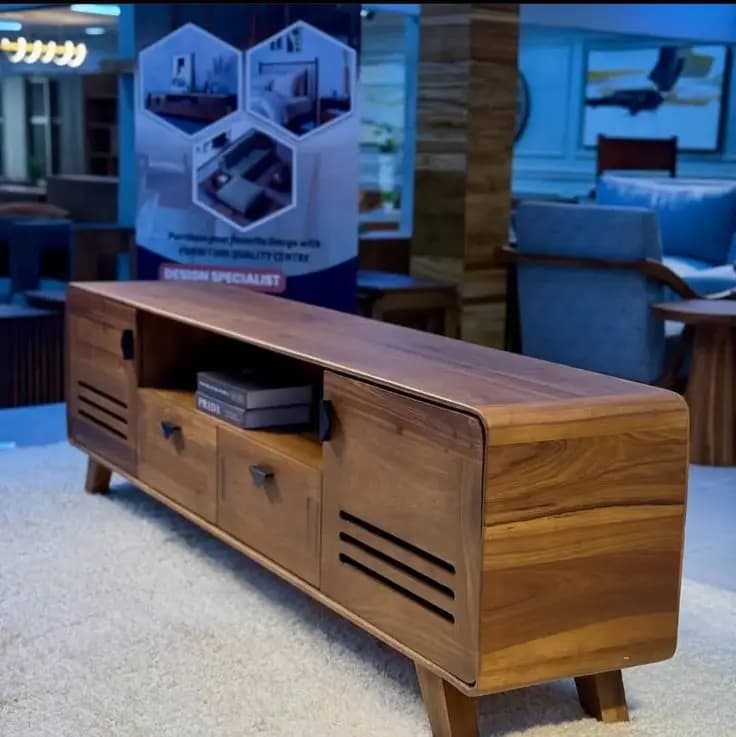
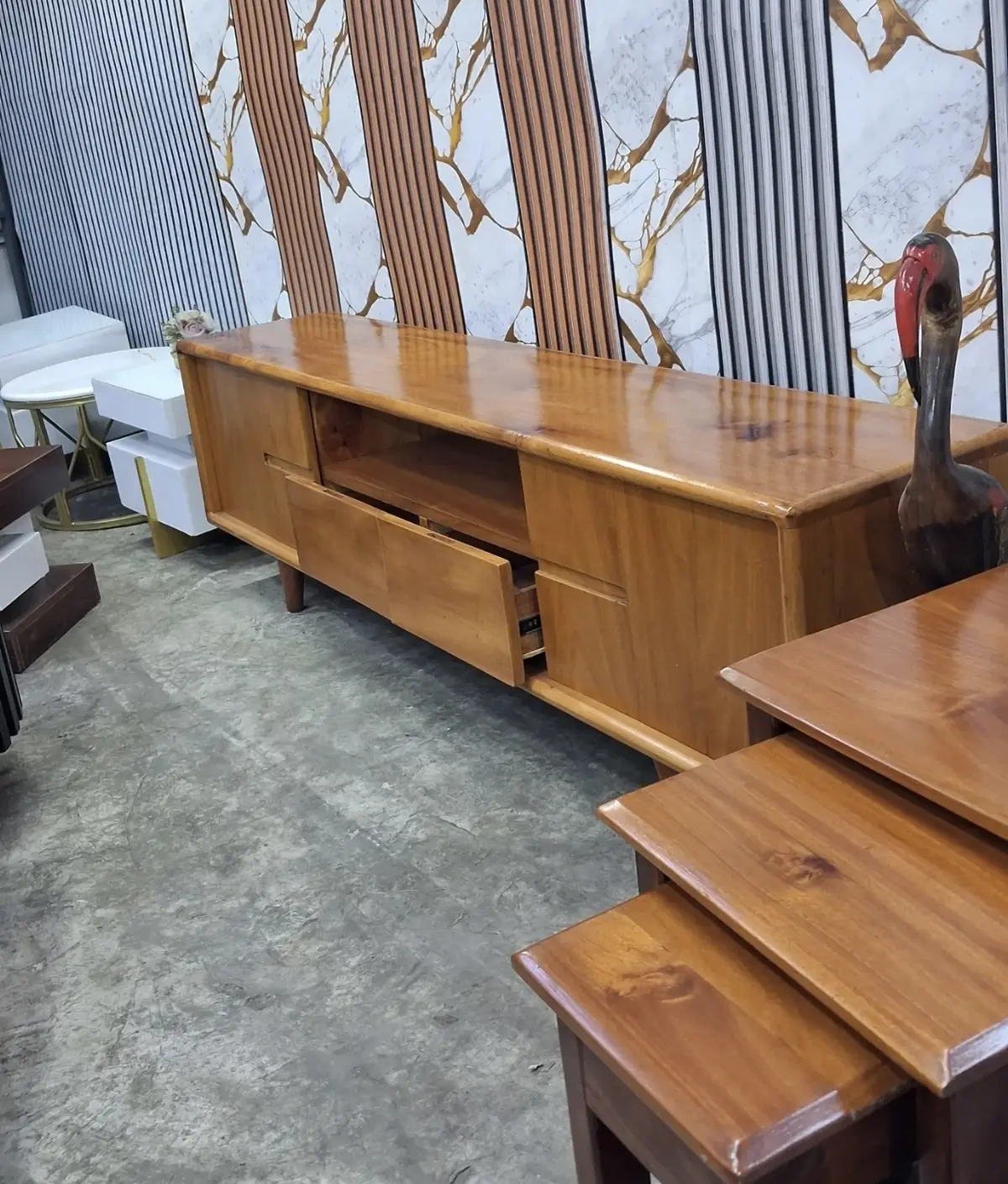
Two popular directions: a slatted-front modern unit and a multi-drawer cabinet that hides clutter.
Solid wood vs board: what “wooden” really means
This is the distinction that decides whether your stand lasts two years or twenty — and it’s the one sellers are vaguest about. Not everything called “wooden” is solid wood.
| Solid hardwood | Engineered board (MDF / ply) | |
|---|---|---|
| Lifespan | Decades; refinishable | A few years; not repairable |
| Weight it carries | Heavy screens & boxes easily | Limited; can bow over time |
| Humidity | Stable when finished | Can swell and peel at edges |
| Price | Higher up front | Cheaper up front |
| Best for | A once-in-a-decade buy | Short-term or low-budget needs |
Board isn’t “bad” — a good MDF unit with a quality wood-look finish can look excellent and suit a tight budget or a rental. But if you want a stand that survives moves, humidity and years of use, solid hardwood is worth the extra. Our guide comparing solid wood vs MDF TV stands covers this decision in full.
Check the edges and the back. Solid hardwood shows continuous grain that wraps around edges and looks like real timber on the underside. Board shows a printed finish that stops at the edge, often with a plain or paper-backed rear. Tap it — solid wood sounds dense, board sounds hollow.
Best wood types for a TV stand in Kenya
If you’re buying solid wood, the species matters — for colour, durability and price. Kenya has some of the finest furniture hardwoods in the region, and three stand out for a TV stand.
Mahogany
The classic furniture hardwood. Mahogany is prized for its deep reddish-brown colour, fine grain and natural lustre, and it’s stable, durable and easy to work into both classic and modern designs.1 It’s the go-to for a warm, premium, timeless TV stand — and the most widely recognised name, which is why it commands a slight premium.
Mvule (African teak)
Mvule (Milicia excelsa) is one of East Africa’s most sought-after hardwoods, valued for exceptional strength and natural resistance to decay and water thanks to the oils in the timber.2 Freshly cut it’s a yellowish tone that turns a rich golden-brown as it ages. If you want maximum durability — including resistance to Kenya’s humidity and pests — mvule is the toughest of the three.
Meru oak
Meru oak (locally also linked to Vitex and olive wood) is prized for its attractive grain and versatility, and it stands up well to moisture — Kenyan furniture guides specifically recommend it for pieces that need to withstand water.3 It gives a slightly lighter, characterful look than mahogany’s deep red.
| Wood | Colour | Key strength | Best for a TV stand if you want… |
|---|---|---|---|
| Mahogany | Deep reddish-brown | Fine grain, workable, stable | A warm, classic, premium look |
| Mvule | Golden-brown | Best decay & water resistance | Maximum durability in humidity |
| Meru oak | Lighter, characterful grain | Attractive grain, water-tolerant | A lighter, distinctive grain |
| Mango / teak | Warm golden tones | Good value, unique grain | Character on a smaller budget |
Any of these will outlast a board unit many times over. The choice comes down to colour preference and budget — mahogany and mvule sit at the premium end, with Meru oak and mango offering strong value. For pieces built to your chosen wood, see our guide to custom hardwood TV stands.
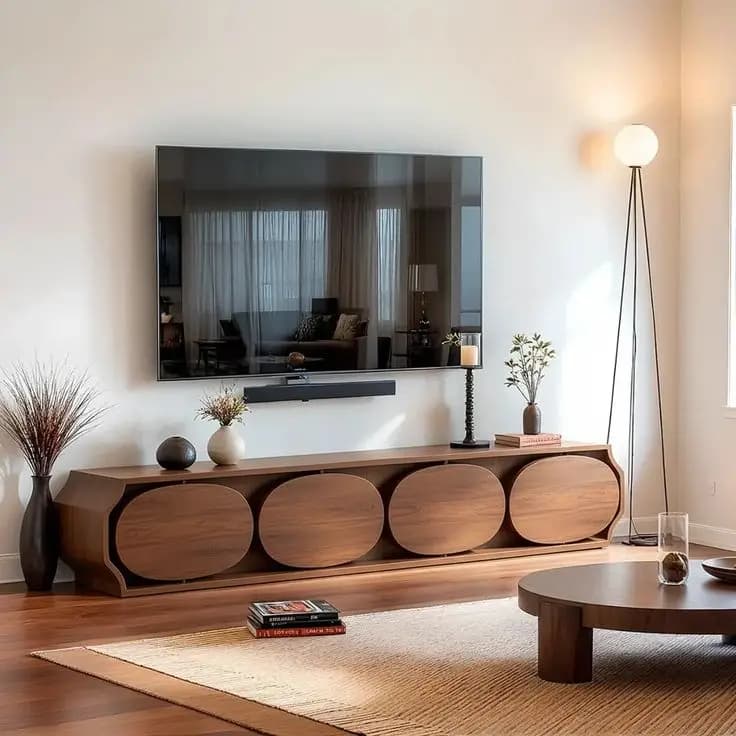
Real hardwood grain wraps around the edges and warms with age — the mark of a solid-wood stand.
Wooden TV stand prices in Kenya (2026)
Here’s the price picture so you can judge any quote. The solid-wood range reflects real made-to-order hardwood units; the board range is included so you can see the difference between the two.
| Type | What you get | Price (KES) |
|---|---|---|
| Wood-look board unit | MDF/ply with wood-effect finish; floating or standing | 12,000 – 28,000 |
| Solid hardwood — compact | Smaller solid-wood stand for up to 55″ screens | 35,000 – 42,000 |
| Solid hardwood — large / premium | 200cm+ mahogany, mvule or Meru oak with storage | 45,000 – 55,000 |
| Custom hardwood | Built to your wall length, screen size & wood | Quoted on request |
As a guide, Monsoon’s solid wooden TV stands run from around KSh 35,000 to KSh 55,000 depending on size, wood and design. Prices are current at July 2026 and vary with dimensions and finish. The premium over a board unit buys you decades of life, real weight capacity, and a piece you can refinish rather than replace — so per year of use, solid wood is often the cheaper choice.
When comparing prices, always ask two questions: “Is this solid wood or board?” and “What length is it in cm?” A KSh 40,000 solid mahogany stand and a KSh 40,000 board unit are not the same purchase — one lasts a generation, the other a few years.
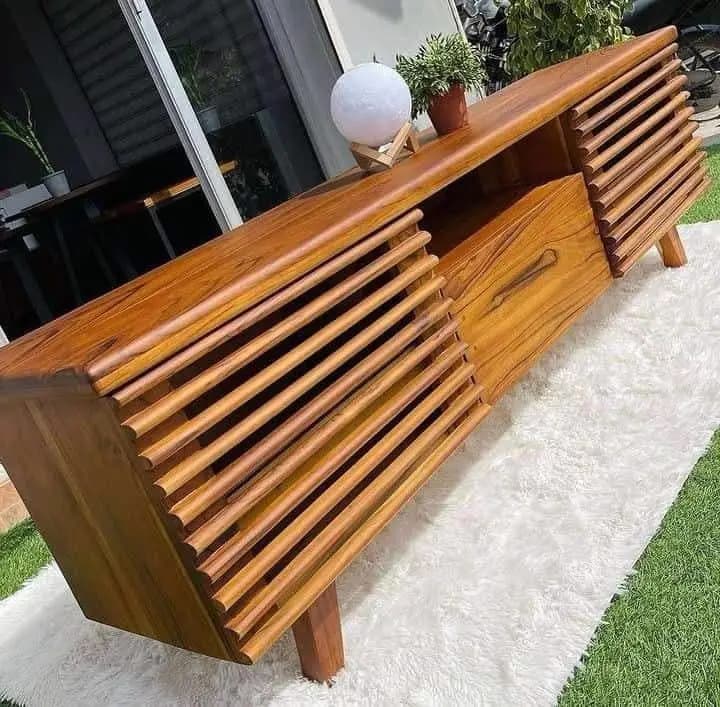
A large solid-wood unit with storage — the KSh 45,000–55,000 tier that lasts a generation.
What size wooden TV stand do you need?
Getting the size right matters as much as the wood. The rule is simple: the stand should be wider than the TV — at least 15cm clear on each side — so the screen looks anchored, not perched. Measure your TV’s full width (not the screen size) and your wall space before buying.
| TV size | Recommended stand length | Best for |
|---|---|---|
| 32″ – 43″ | 120 – 150cm | Bedrooms, apartments, small lounges |
| 50″ – 55″ | 160 – 200cm | Most family living rooms |
| 65″ | 200cm+ | Larger living rooms |
| 75″+ | 200 – 240cm | Big open-plan rooms |
If your wall or screen size falls between sizes — or you want a specific wood and length — a custom hardwood stand solves it exactly. For the full sizing detail across screen sizes, see our solid wood TV stand size guide.
Caring for a wooden TV stand in Kenya
A solid wooden stand rewards a little care with decades of life. The essentials for Kenyan homes:
- Dust weekly with a dry or barely-damp cloth — fine Nairobi dust is abrasive if left to build up.
- Wipe spills immediately. Standing water is the enemy of any wood finish; blot, don’t let it sit.
- Keep out of all-day direct sun. Strong equatorial light fades wood tone over time.
- Re-oil or polish once or twice a year to feed solid wood and keep its lustre.
- Check for pests in humid rooms. Well-finished hardwood resists termites, but keep the room ventilated.
Do this and a solid mahogany, mvule or Meru oak stand will outlast several cheaper units — and can be refinished to look new again years later.
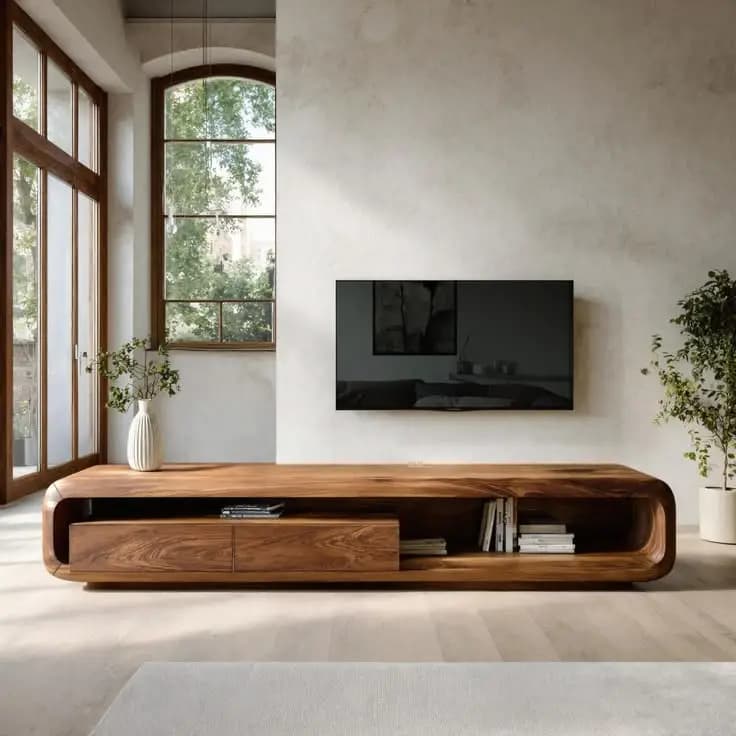
A well-finished, well-cared-for hardwood stand looks as good years later as the day it was built.
Get a wooden TV stand built to last
Browse ready-made wooden TV stands, or order a custom solid-hardwood unit in mahogany, mvule or Meru oak — sized to your wall and screen, from KSh 35,000. Delivered across Nairobi and Kenya.
Frequently asked questions
How much is a wooden TV stand in Kenya?
A solid-hardwood wooden TV stand in Kenya costs roughly KSh 35,000–55,000 in 2026, depending on size, wood type and design, with mahogany and mvule at the top of the range. Wood-look board stands cost less — around KSh 12,000–28,000 — but do not last as long as solid hardwood.
Which wood is best for a TV stand in Kenya?
Mahogany, mvule and Meru oak are the best woods for a TV stand in Kenya. Mahogany gives a rich reddish-brown, workable finish; mvule (African teak) offers the best resistance to decay and water; and Meru oak has an attractive grain and good water tolerance. All three are durable local hardwoods that last for decades.
Is a solid wood TV stand better than MDF?
For longevity, yes. Solid hardwood lasts decades, carries heavier screens, resists humidity when finished, and can be refinished if scratched. MDF or board is cheaper and lighter but can chip, swell in humidity and cannot be repaired. Board suits tight budgets or rentals; solid wood suits a once-in-a-decade buy.
What size wooden TV stand for a 55-inch TV?
For a 55-inch TV, choose a wooden stand around 160–200cm long — at least 15cm wider than the TV on each side so the screen looks anchored rather than perched. Measure your TV’s full width and your wall space before buying, and size up rather than down if you’re between sizes.
Sources:
1. Kenyan hardwood furniture references on mahogany’s colour, grain and workability.
2. Kenyan timber sources on mvule (Milicia excelsa / African teak) and its decay and water resistance.
3. Daily Nation and Kenyan furniture guides on Meru oak’s grain and water tolerance.
Wood characteristics are general guidance; exact grain and colour vary by piece.

Add a review
Your email address will not be published. Required fields are marked *