Solid Wood vs MDF TV Stands: What Lasts in Kenya?
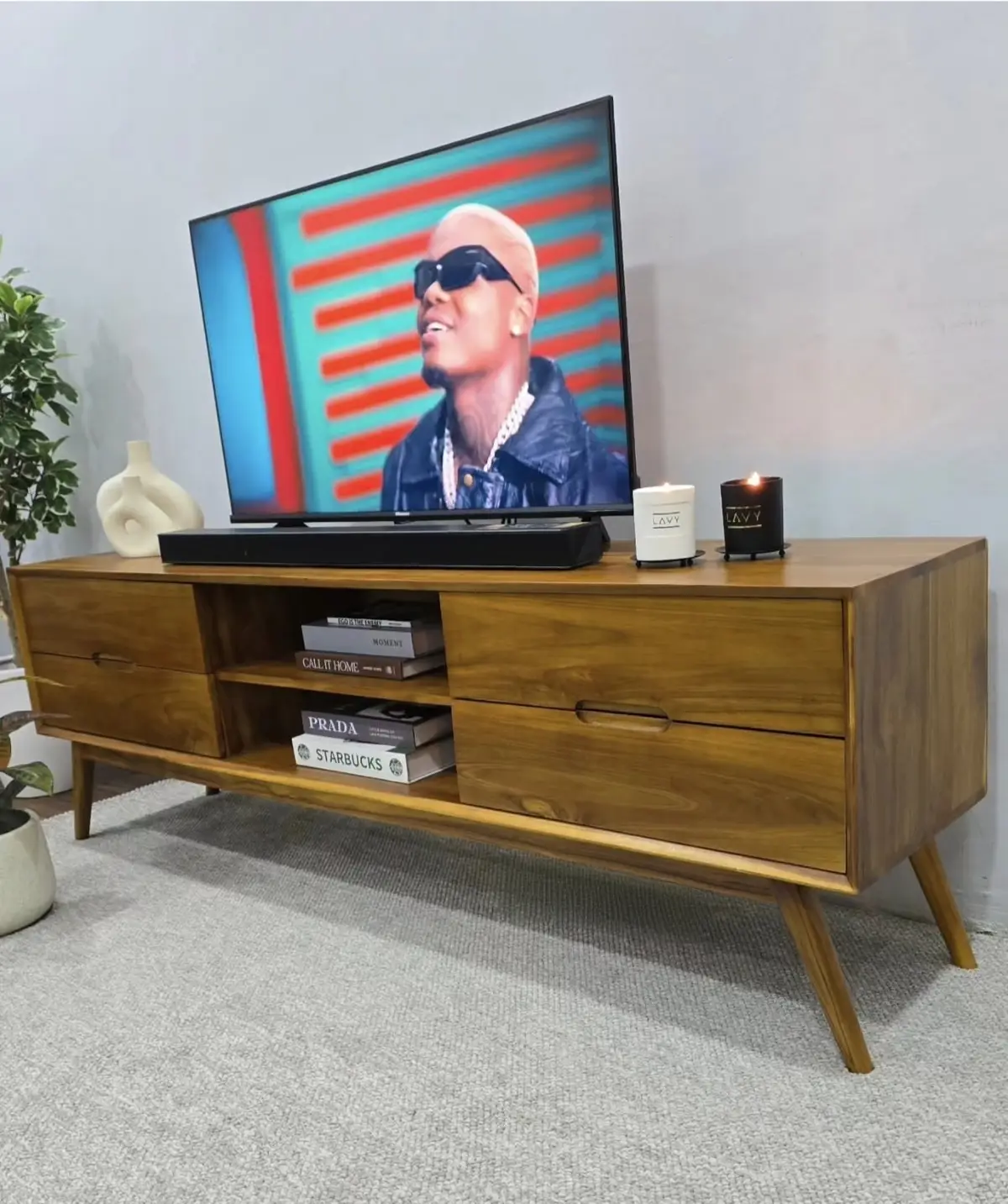
It's the question behind almost every TV stand purchase in Kenya: pay less now for a board unit, or more for solid wood? The honest answer depends on how long you want it to last — and on how Kenya's humidity treats each material.
This guide settles it: what MDF and solid wood actually are, how each survives Kenyan conditions, the real price gap, and which one is right for your home.
What is the difference between solid wood and MDF?
The two look similar in a showroom photo but are fundamentally different materials. Solid wood is exactly that — planks of real timber, with natural grain running through the whole piece. MDF and chipboard are engineered: wood fibres or chips bonded with glue under pressure, then wrapped in a printed wood-effect foil or veneer.
That difference in make-up is why they behave so differently over years of use. For the wider view of every wooden option, see our pillar guide to wooden TV stands in Kenya.
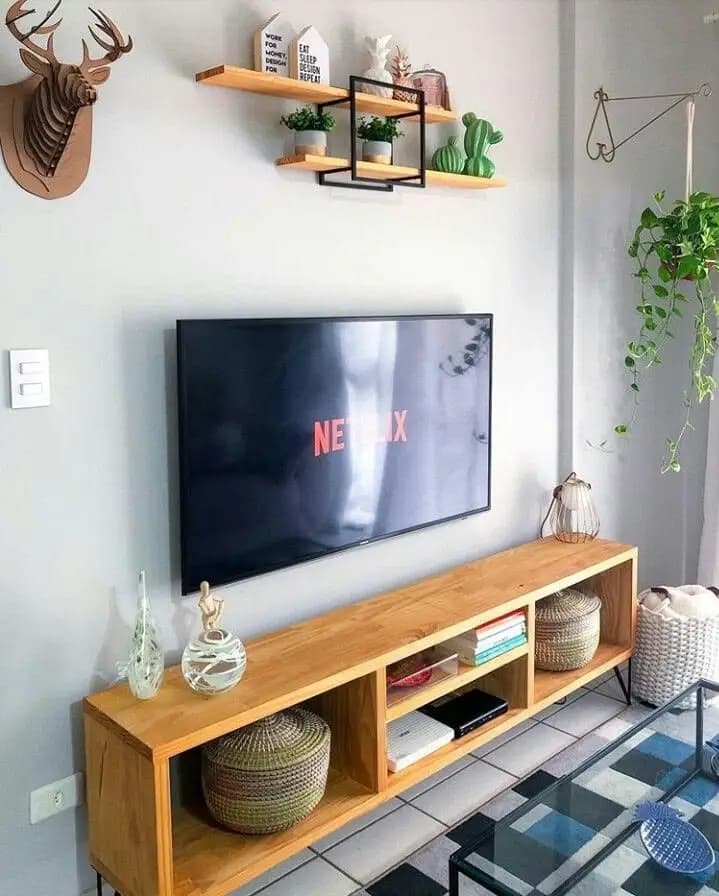
Real timber shows continuous grain that wraps around the edge — MDF's printed finish stops at the join.
Which lasts longer in Kenya's climate?
Kenya's climate is the deciding factor, and it favours solid wood. Humid coastal air, short rains and the odd spilled drink are the enemies of engineered board. When moisture reaches the fibres inside MDF — through an unsealed edge, a scratch, or a wet glass left overnight — the board swells and cannot shrink back. The foil finish lifts, the edge bulges, and there's no fixing it.
Solid hardwood handles the same conditions far better. A good finish keeps humidity out, and even if it's scratched or marked, the surface can be sanded and re-oiled to look new. This is why a solid mahogany or mvule stand can be a once-in-a-decade purchase while a board unit is a once-every-few-years one.
| Factor | Solid hardwood | MDF / chipboard |
|---|---|---|
| Lifespan | Decades; refinishable | A few years; disposable |
| Humidity | Stable when finished | Swells; foil peels at edges |
| Water spills | Wipe and re-oil | Permanent swelling |
| Weight capacity | Heavy screens & boxes | Can sag under load over time |
| Repairable? | Yes — sand & refinish | No — replace |
| Termites | Hardwood resists when finished | Vulnerable if damp |
What about the price difference?
There's no pretending the prices are the same — solid wood costs more up front. But the honest comparison is cost per year of use, not the sticker price:
| Material | Typical price (KES) | Rough lifespan | Cost per year* |
|---|---|---|---|
| MDF / board unit | 12,000 – 28,000 | 2–4 years | ~4,000 – 9,000 |
| Solid hardwood | 35,000 – 55,000 | 10+ years | ~3,500 – 5,500 |
*Illustrative, based on typical lifespans — a solid stand refinished once can last far longer, lowering its cost per year further.
Seen this way, the premium narrows or disappears. A KSh 45,000 solid stand kept for twelve years is cheaper per year than a KSh 20,000 board unit replaced three times. It's the same logic we apply to fillings and foam in our guide to the best cushions for a sofa — buy quality once.
Board isn't always the wrong choice. For a rental you'll refurnish in two years, a bedroom TV that rarely moves, or a tight starter budget, a good wood-look MDF unit is sensible. Just keep it dry, and don't expect it to survive a house move or a decade.
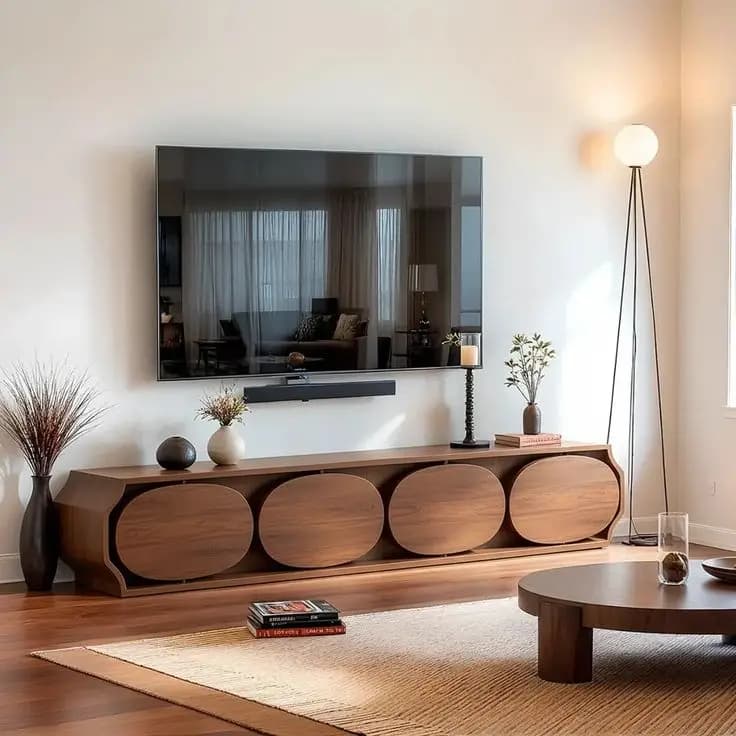
Solid wood costs more up front but, kept and refinished, works out cheaper over a decade of use.
How to tell solid wood from MDF in the shop
Sellers rarely volunteer which is which, so check yourself. Four quick tests:
The edges. On solid wood, the grain flows continuously and wraps around every edge. On MDF, the wood-look finish is a foil or veneer that stops at the edge — look for a seam or a different-coloured core.
The back and underside. Solid wood looks like real timber everywhere, even where it's hidden. MDF units usually have a plain, smooth or paper-backed rear.
The weight. Lift one end. Solid hardwood is noticeably heavy; MDF is lighter for its size, and chipboard lighter still.
The sound. Tap the top. Solid wood gives a dense, solid knock; board sounds hollow or dull.
So which should you buy?
The decision comes down to time horizon. For the main living room, a large screen, or a piece you want to keep, solid hardwood is the answer — it's stronger, survives our climate, and is cheaper over its life. For a two-year rental fit-out or a small bedroom TV, a wood-look MDF unit does the job for less.
If you're leaning solid wood, the next question is which timber — mahogany, mvule or Meru oak — and what size for your screen. Our solid wood TV stand size guide covers the sizing, and a custom hardwood stand lets you pick both. Browse ready-made options in our TV stands collection.
Buy once, keep for a decade
Our solid wooden TV stands are built to carry your screen and survive Kenya's climate — from KSh 35,000, in mahogany, mvule or Meru oak. Ask us on WhatsApp or browse the range.
Frequently asked questions
Is MDF or solid wood better for a TV stand?
Solid wood is better for longevity — it lasts decades, carries heavier screens, resists humidity when finished, and can be refinished. MDF is cheaper and lighter but swells with moisture, chips, and cannot be repaired. For a lasting living-room piece choose solid wood; for a short-term or budget need, MDF is acceptable.
Does MDF furniture last in Kenya's humidity?
Not as well as solid wood. Kenya's humidity and any water spill can make MDF swell permanently and the wood-look foil peel at the edges, usually within a few years. Keeping MDF dry and sealed helps, but for humid or coastal homes, solid hardwood is far more reliable and long-lasting.
How much more does a solid wood TV stand cost?
A solid hardwood TV stand costs around KSh 35,000–55,000, versus roughly KSh 12,000–28,000 for a wood-look MDF unit. The gap is real up front, but solid wood lasting 10+ years often costs less per year than replacing a board unit every few years — making it the better long-term value.

Add a review
Your email address will not be published. Required fields are marked *