
How to Style Cushions on a Sofa: 7 Ideas for Kenya
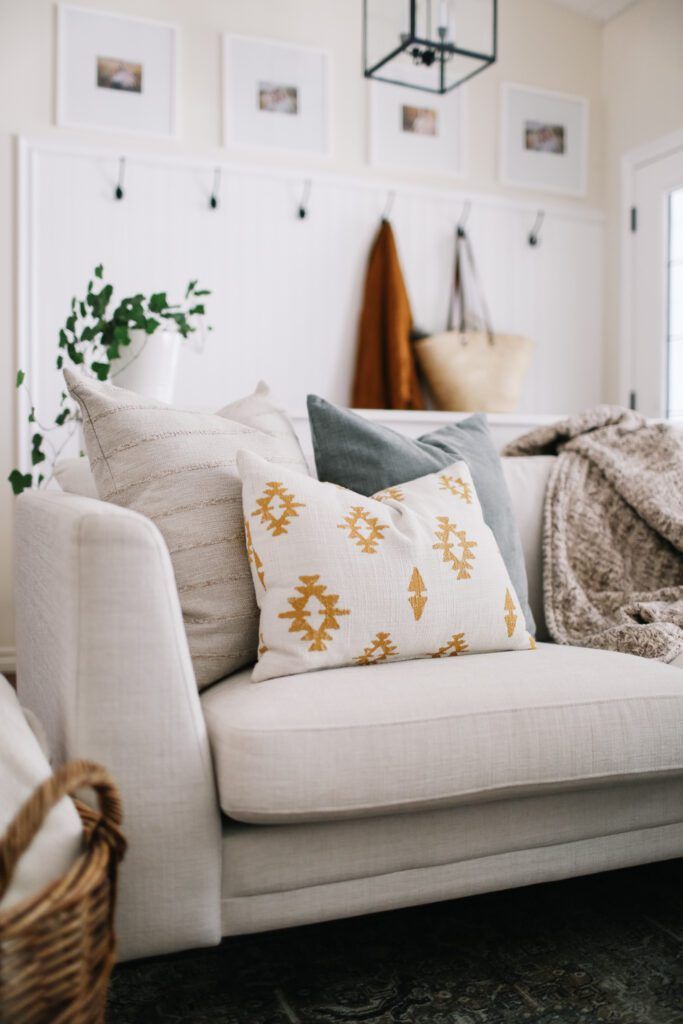
Cushions are the cheapest thing in your living room and the first thing anyone notices. They are also the easiest thing to get wrong.
Walk into most Nairobi homes and you will find the same setup: two matching cushions, one at each end of the sofa, flat and evenly spaced. It looks tidy. It also looks like nobody lives there.
This guide fixes that. Below are the counts, the sizes in centimetres, the colour rules that work under Kenyan light, and seven combinations you can copy this weekend.
How many cushions should you put on a sofa?
The reason is simple. Even numbers force symmetry, and symmetry reads as a showroom display. An odd number breaks the mirror and makes the sofa look used, in the good way.
The second rule most people miss: bigger sofas need proportionally more cushions, not the same two. A 3-seater with two cushions looks bare. L-shape and corner sofas are the worst offenders — the corner swallows cushions, so an L-shape needs almost twice what people buy for it.
Here is the count by sofa type. We built this from the sofas we actually make and deliver across Nairobi.
| Sofa type | Total cushions | How to split them | Sizes to use |
|---|---|---|---|
| 2-seater | 3 | Two at one end, one at the other | 2 × 50×50cm (20″), 1 × lumbar 30×50cm (12×20″) |
| 3-seater | 5 | Two at each outer corner, one lumbar offset to a side | 2 × 60×60cm (24″), 2 × 50×50cm (20″), 1 × lumbar |
| 5-seater (3+2) | 7 | Five on the 3-seater, two on the 2-seater | 2 × 60×60cm, 3 × 50×50cm, 2 × 45×45cm (18″) |
| 7-seater (3+2+1+1) | 9 | Five on the 3-seater, two on the 2-seater, one per armchair | 2 × 60×60cm, 4 × 50×50cm, 2 × 45×45cm, 1 × lumbar |
| L-shape / corner | 7–9 | Pile three or four into the corner, taper to one at each end | 3 × 60×60cm, 3 × 50×50cm, 2 × 45×45cm, 1 × lumbar |
| Single armchair | 1 | One only, angled into the corner of the seat | 1 × lumbar 30×50cm or 1 × 45×45cm |
If you are still choosing your seating, the count above is worth knowing before you buy — a 7-seater needs a cushion budget a 3-seater does not. Browse the full range of sofa sets in Kenya to see the shapes these counts are built for.
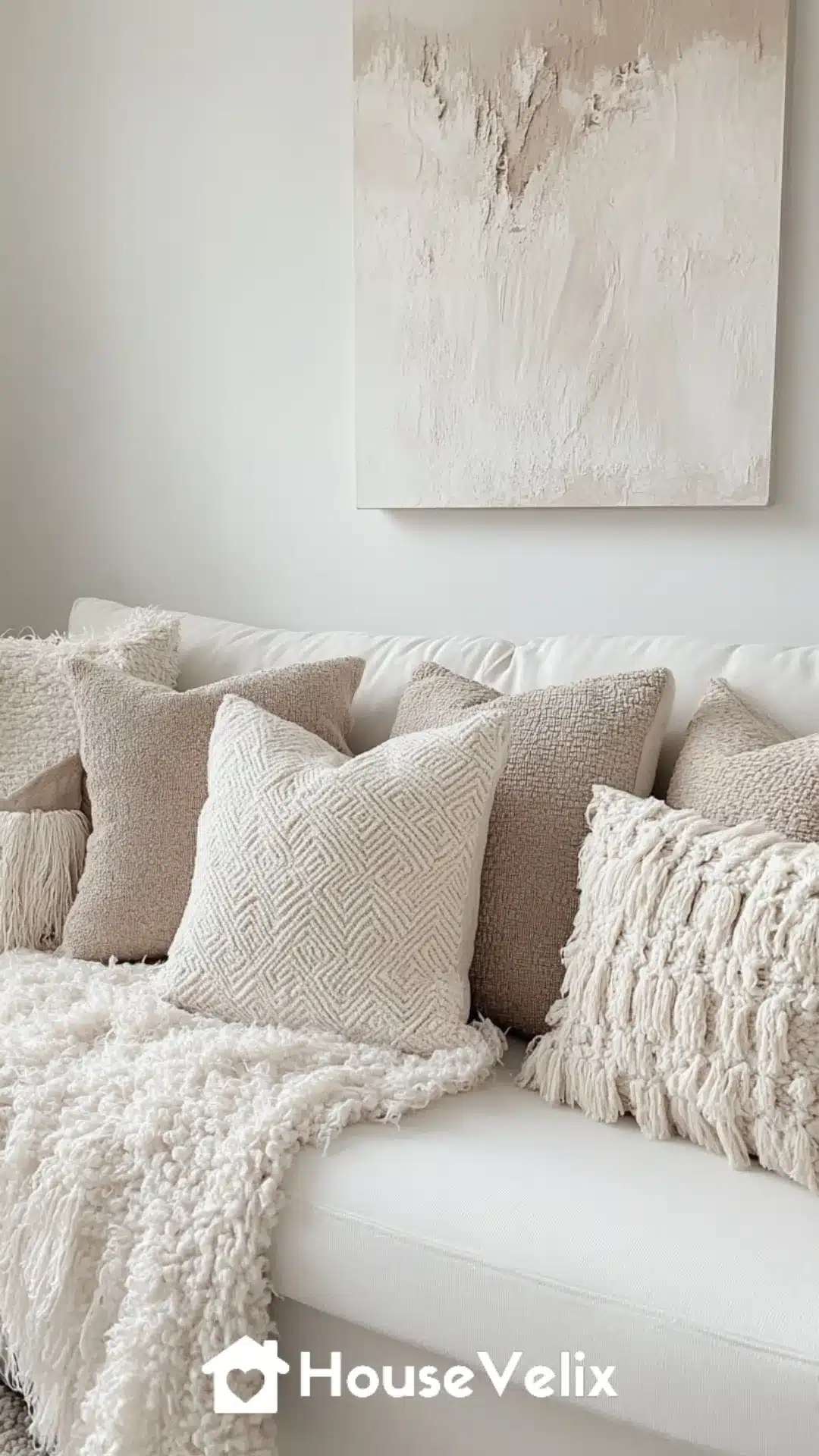
Five cushions, three sizes, one tonal family — the arrangement that works on almost any 3-seater.
The 3-size layering formula: what size cushions work best?
Think of it as building a small hill at each end of the sofa. The tallest cushion sits against the arm, the medium one leans in front of it, and the smallest or the lumbar drops in last.
Each layer should be visible. If the front cushion hides the one behind it, the sizes are too close together — jump a full 10cm between layers rather than 5cm.
The insert trick nobody tells you
Buy your insert one size larger than the cover. A 50×50cm insert inside a 45×45cm cover gives that full, plump, hotel look. A 45cm insert in a 45cm cover collapses into a sad, half-empty envelope within a week.
This single habit does more for how your sofa looks than the price of the cover. It is also why cheap cushions often photograph badly — the cover is fine, the filling is simply too small for it.
When you are choosing sizes, you are choosing the covers separately from the fillings. Our throw pillows and cushions range is built around these three sizes for exactly this reason.
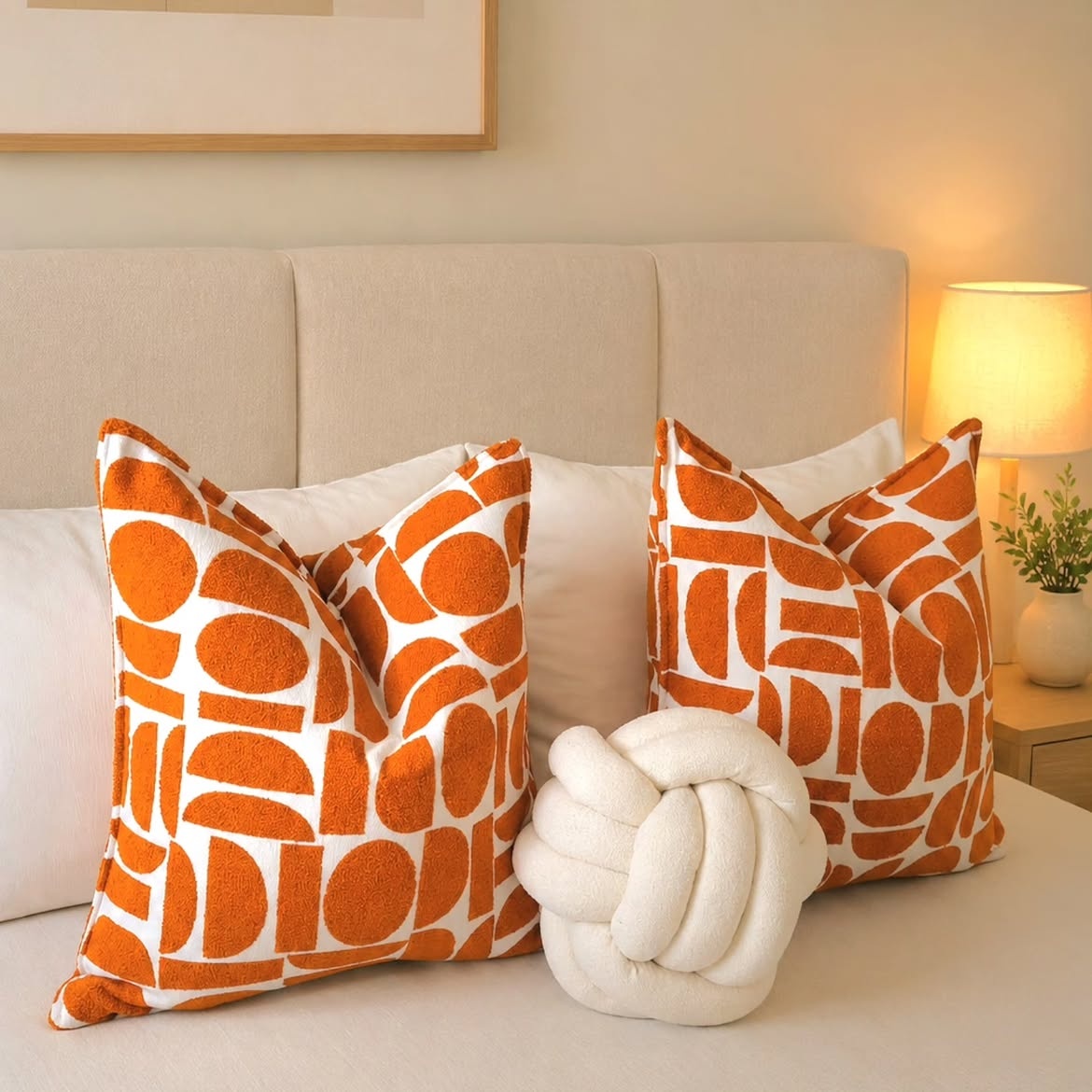
Cover and insert are two separate decisions. The insert is what people actually see.
Choosing cushion colours for Kenyan living rooms
Grey and beige sofas dominate Kenyan living rooms, which is good news: both are neutral, and both take almost any accent.
But Kenyan light changes the maths. Equatorial daylight is strong, high and close to white, and it drains pale colours at midday. The soft pastels that look considered in a European catalogue — dusty pink, powder blue, mint — go flat and washed-out in a Nairobi living room by 1pm.
Deep, saturated, slightly muted tones hold their colour through that light. Think mustard rather than lemon, terracotta rather than peach, forest rather than mint, teal rather than sky.
The 3-2-1 colour split
For five cushions on a 3-seater, split them like this:
Three in a tone close to your sofa (a shade or two lighter or darker). Two in your accent colour. One of those two carries a pattern or a strong texture.
That is the whole rule. The mistake is making all five cushions different — five colours is not a scheme, it is a pile of leftovers.
Pick an accent that already exists in the room
Your accent should repeat something you already own: a colour in your rugs and carpets, a wood tone in your coffee tables, or a shade in a painting. Repetition is what makes a room read as deliberate rather than decorated.
If you are matching a whole living room rather than just the sofa, our guide to matching your sofa with rugs, curtains and coffee tables covers the wider palette.
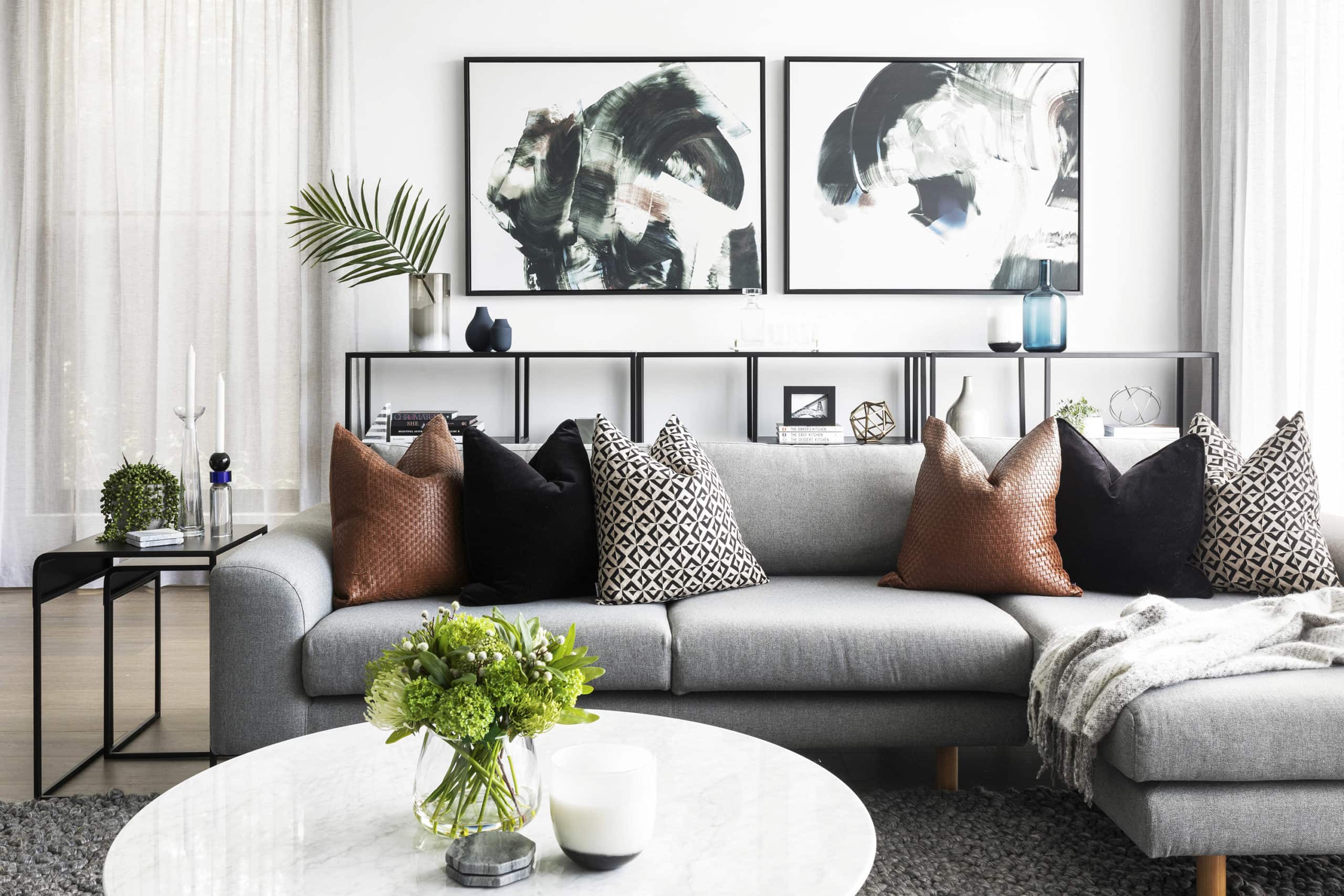
Tan and caramel on grey: a warm accent that holds its colour under strong midday light.
Mixing patterns without clashing
The safe formula is plains + one print + one texture.
Out of five cushions: three plain, one printed, one textured (a woven, a knit, a ribbed velvet, a knot). That ratio almost never fails.
Vary the scale
If two cushions carry a pattern, the patterns must be different sizes. A large geometric next to a small repeating dot works. Two medium florals next to each other fight.
The rule of thumb: one large-scale pattern, one small-scale pattern, never two mediums.
Let texture do the work instead
Texture is the safer route and, honestly, the better-looking one. A jacquard weave, a boucle, a knot cushion — these add depth without adding a single new colour, so they cannot clash.
This matters more on a large sofa. On a 7-seater or a sectional, five different prints becomes visual noise fast. If you are working out how big your sofa should be in the first place, see how much an L-shape sofa costs in Kenya for the sizes and layouts.
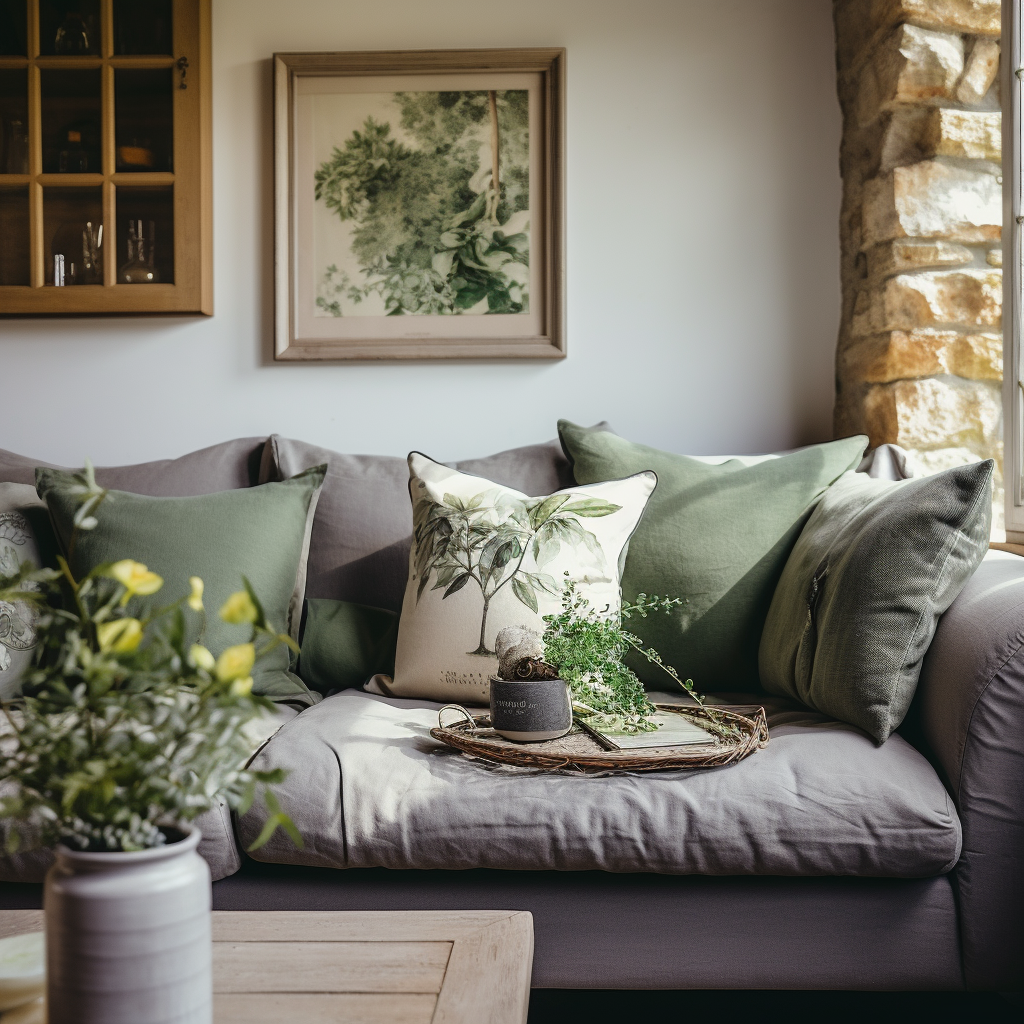
Three plains, one print, one texture. The ratio that stops a sofa looking busy.
Idea gallery: 7 cushion combinations for Kenyan sofas
Seven arrangements you can copy exactly. Each assumes five cushions on a 3-seater — scale up using the table above for larger sofas.
1. Neutral on neutral (cream sofa)
Three cream 50×50cm, one caramel 60×60cm, one woven texture in oatmeal. Quiet, warm, and impossible to get wrong. Best for small apartments where colour would crowd the room.
2. Grey sofa + tan and caramel
Two tan 60×60cm at the corners, two soft white 50×50cm in front, one caramel lumbar. Warms a cool grey sofa without committing to a bold colour.
3. Grey sofa + mustard
Three charcoal and white plains, two mustard — one plain, one jacquard. The single best accent for grey under Kenyan light, because mustard does not wash out at midday.
4. Beige sofa + terracotta
Three beige and off-white, one terracotta 60×60cm, one rust-toned texture. Earthy, and it echoes the clay and murram tones already outside your window.
5. The boho mix
Two plain cream, one boho-print cover, one tasselled or fringed cushion, one knot. Texture-led rather than colour-led — the easiest way to look styled without a colour scheme.
6. Cream + jacquard tonal
Three cream plains in 45×45cm and 50×50cm, two jacquard-pattern covers in the same cream family. All one colour, all different surfaces. Understated and expensive-looking.
7. Dark sofa + knot accent
Three warm white or oatmeal plains, one deep green or teal, one knot cushion as the sculptural piece. The knot does the work a bold print would, without the clash risk.
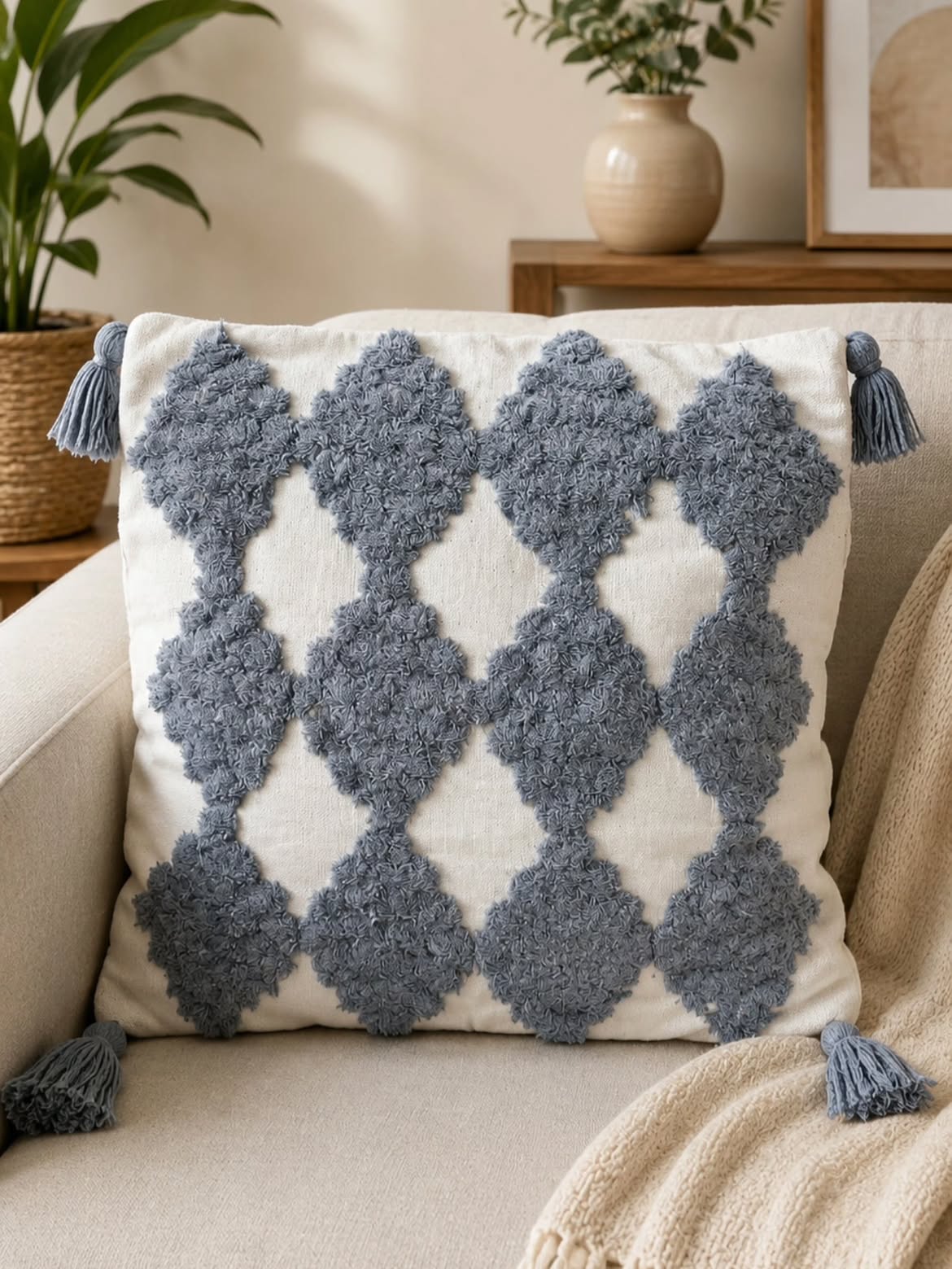
Idea 5: the boho mix — texture carries the arrangement, so no colour can clash.

Idea 6: one colour, two surfaces. Plain cream beside a jacquard weave in the same tone.
Bonus: the same rules work on beds
Cushion logic carries straight into the bedroom — two sleeping pillows, two shams, one accent for a 5×6. Browse beds in Kenya and match the accent to your bedding and duvet sets, then let the same colour repeat on the sofa next door. For extra seating that doubles as texture, poufs and ottomans follow the same tonal rule.

Idea 7: a knot cushion is the easiest sculptural accent — shape instead of pattern.
Dust-smart fabrics and care in Nairobi
Nairobi dust is fine, reddish and constant, and it is the main reason cushions here age faster than the sofa under them.
It settles into the weave rather than sitting on top of it, so an open-weave linen-look cover greys out within months on a balcony-facing sofa, while a tighter cotton blend or a velvet stays truer for far longer.
Buy removable covers. Always.
In our Ngara workshop, the cushions that come back looking tired are almost never the ones that were used the most. They are the ones with covers stitched shut, so they were never washed once in three years. A sealed cushion has an expiry date; a removable cover does not.
Washing cadence for Kenyan homes
Every two to four weeks in Nairobi, and closer to two if you live near an unpaved road or keep your windows open. Cold wash, inside out, and dry in shade — direct equatorial sun is what fades a good cover, not the washing.
Which fabric for which room
Velvet and tight cotton blends for the main living room. Jacquard for texture that hides dust between washes. Keep the open weaves and pale linens for the bedroom, where they see less traffic and less dust.
The same thinking applies to everything soft in the house — it is the logic behind how we spec fabrics on modern sofa set designs in Kenya and on mattresses in Kenya, where breathability matters more than surface finish.
Karate-chop the top of each cushion, stand the big ones upright against the arms, lean the medium ones forward, and drop the lumbar in last. Same cushions, completely different sofa.
Cushions that actually match your sofa
Most cushions are bought to fit a colour you half-remember. Ours are cut to the fabric of the sofa we built for you.
Frequently asked questions
How many cushions on a 3-seater?
Five is the sweet spot for a 3-seater sofa: two 60×60cm cushions at the outer corners, two 50×50cm in front of them, and one lumbar cushion offset to one side. Three works if your sofa is narrow or you prefer a cleaner look. Avoid four — even numbers read as staged.
What size cushions for a sofa?
Kenyan sofas suit three sizes: 60×60cm (24″) for the back layer, 50×50cm (20″) for the middle, and 45×45cm (18″) or a 30×50cm lumbar in front. Buy the insert 5cm larger than the cover — a 50cm insert in a 45cm cover gives the plump look.
Do cushions come with the sofa or separately?
Your sofa’s seat and back cushions are part of the sofa. Decorative throw cushions are almost always bought separately — most Kenyan sofa prices do not include them. At Monsoon we make custom cushion sets matched to the fabric of any sofa we build, ordered on WhatsApp.

Add a review
Your email address will not be published. Required fields are marked *