
How to Clean and Care for a Fabric Sofa in Kenya | Monsoon

A sofa rarely becomes dirty in one dramatic event. It happens quietly.
Dust settles into the seam behind the back cushion. Afternoon sun hits the same arm every day. A spill is wiped hard instead of blotted. A damp coastal room keeps upholstery from drying quickly. Six months later, the sofa looks “old” even though nothing obvious went wrong.
This guide is about preventing that slow decline. It is not a styling article and it is not another buying guide. It is the maintenance plan that begins after the sofa arrives.
What damages fabric sofas in Kenyan homes?
Dry particles settle into seams and textured fabric. Repeated sitting can work that grit deeper into the surface.
Strong direct light can gradually fade upholstery unevenly, especially when one arm or cushion receives more exposure.
Damp fabric dries slowly and creates the conditions in which musty odours and moisture-related problems can develop.
Water, solvent, detergent or stain remover can damage a fabric that was not designed for that cleaning method.
The first care rule is therefore simple: know what fabric you own. “Fabric sofa” is not one cleaning category. Velvet, bouclé, flat weave, polyester blend and removable washable covers can need different treatment.
How should you handle dust during dry or dusty periods?
IKEA’s upholstery-care guidance recommends weekly vacuuming and specifically warns that excessive suction can damage covers. That is useful in homes where fine dust arrives through open windows or busy-road traffic and settles before anyone notices it.
Remove the loose pieces
Take off throw pillows and removable back cushions. Vacuum them separately. You want access to the places where crumbs, hair and grit collect rather than cleaning only the visible seat.
Use the upholstery tool, not maximum power
Move slowly from the top of the backrest down toward the seat. For velvet or pile fabric, follow the direction of the nap where possible instead of repeatedly attacking the surface from every angle.
Work the seams
Use a crevice tool carefully around piping, between seat sections and beneath cushions. Dust hidden in a seam does not become harmless just because guests cannot see it.
Finish underneath
Vacuum the floor beneath raised sofas and around legs. Dust that remains under the furniture returns to the upholstery through normal room movement.
Before reaching for water or a spray bottle, remove as much loose dust as possible. Wetting a dusty sofa can turn simple surface dirt into a harder-to-control mark.
How do you protect a sofa from sun fading?
Monsoon’s live fabric-sofa care instructions repeatedly advise keeping upholstery away from prolonged direct sunlight. IKEA also notes that fabric colour can fade and recommends protecting upholstered seating from strong sun.
The problem is often uneven fading. A whole sofa that gradually changes tone can still look coherent. One arm that becomes visibly lighter than the rest makes the ageing obvious.
Do not solve sunlight with a permanent blanket
A throw can protect one high-contact area, but leaving it in the same place for months can create a different colour underneath. If you use covers or throws for protection, move them occasionally and inspect the upholstery beneath them.
How should fabric-sofa care change in humid or coastal homes?
Mombasa and coastal homes can face a different care problem from a dusty inland room: upholstery that stays damp for too long. Moisture can come from humidity, a leaking window, wet clothing, mopping water, condensation or a spill that soaked deeper than the surface.
The EPA’s moisture guidance is useful here because mould prevention is primarily moisture control. If a sofa becomes genuinely wet, the priority is not perfume or stain remover. It is finding the moisture source and drying the affected material promptly.
Leave a little airflow behind furniture placed near exterior walls. After a deep clean, do not press cushions back into position while they are still damp. If the room smells persistently musty or the sofa has visible mould growth, stop DIY stain experiments and ask a professional upholstery or restoration cleaner to assess it.
What weekly, monthly and yearly routine keeps a sofa looking good?
Vacuum gently, remove crumbs and pet hair, fluff loose cushions and blot any fresh spills.
Rotate reversible cushions, inspect seams and legs, vacuum under the sofa and check hidden areas.
Review curtain protection, wall dampness, ventilation and whether one seat is wearing faster.
Use fabric-approved spot treatment or a professional clean when normal maintenance is no longer enough.
Rotation matters because people rarely sit evenly. One family member has “their” corner. One chaise becomes the nap zone. One arm supports every phone call. Reversible cushions should be turned and swapped if the design permits it.
Do not unzip a cushion cover and put it in the washing machine simply because it has a zip. Some upholstered covers are designed to be removable for manufacturing or service, not domestic washing. Always confirm the care instructions.
What should you do immediately after a spill?
Rubbing feels productive because your hand is moving. Unfortunately, movement can spread the liquid, disturb pile fabrics and create a larger halo.
La-Z-Boy’s upholstery guidance uses cleaning codes such as W, S and W-S to show whether a fabric accepts water-based cleaner, solvent or either method. The important lesson is not memorising the alphabet. It is checking the actual upholstery instruction before choosing chemistry.
| Situation | First action | Avoid | Next step |
|---|---|---|---|
| Fresh drink spill | Blot gently with a clean absorbent cloth | Hard rubbing or flooding with water | Check the fabric care instruction before spot treatment |
| Crumbs / dry dirt | Vacuum first | Wetting loose dirt | Inspect whether any actual stain remains |
| Greasy mark | Blot excess without spreading | Random dish soap or solvent | Use only a treatment approved for the fabric code |
| Old unknown stain | Photograph and identify the fabric | Layering several cleaners | Test approved product or call a professional |
| Large water soak | Remove the moisture source and begin drying | Covering it while damp | Dry promptly and get professional help if saturation is deep |
More product is not automatically more cleaning. Do not mix household cleaners or keep adding different products to the same area. If the care method is unknown, pause and confirm the upholstery specification first.
How do you clean velvet, bouclé and textured fabric differently?
Velvet: Protect the Direction of the Pile

Vacuum gently and avoid aggressive scrubbing. If the pile looks flattened, the correct recovery method depends on the actual velvet fibre, so confirm the manufacturer’s care advice before steaming or brushing.
Textured Fabric: Dust Likes the Tiny Valleys
Rounded continuous upholstery means you cannot simply remove every cushion and clean it separately. Vacuum along the back-arm curve and inspect where the seat meets the body.
Bouclé: Let the Vacuum Do Less, More Often
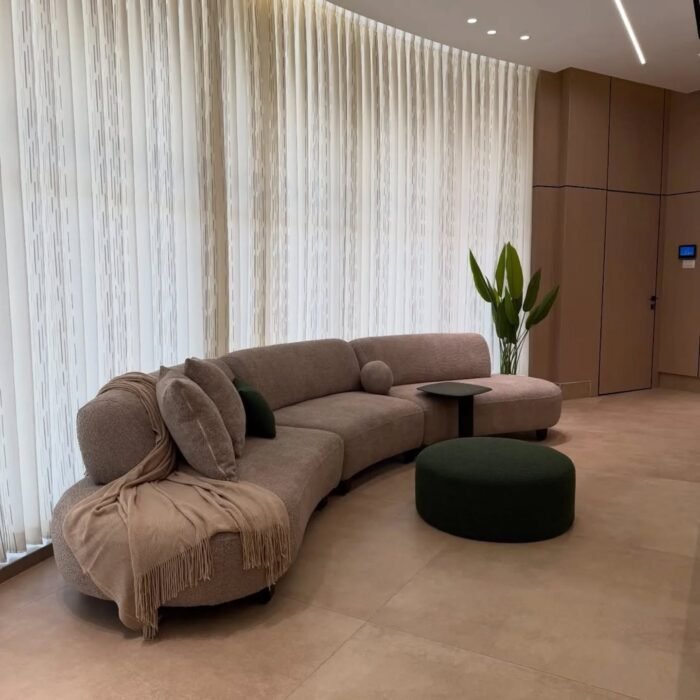
Use a gentle upholstery attachment and avoid catching loops with rough tools, jewellery or sharp pet claws. Frequent light maintenance is safer than waiting for heavy dirt to accumulate.
Soft Textured Sectional: Maintain the Cushions as Well as the Cover
Monsoon’s live care notes recommend regular vacuuming, immediate spill cleaning, avoiding harsh chemicals, keeping the sofa away from direct sun and fluffing cushions.
When should you stop DIY cleaning and call a professional?
Professional help is also sensible when the sofa is valuable enough that a cleaning mistake costs more than the service call. “I will try one more thing” is not always thrift.
Before the cleaner begins, tell them the known upholstery type, previous products used on the stain and whether any section was recently wet. Ask what method they plan to use and how long the sofa should dry before normal use.
What is the simplest care routine to remember?
For more sofa ownership guidance, read the sofa set designs in Kenya pillar, browse current sofa sets in Kenya, and use the cushion styling guide after the upholstery is clean and dry.
A clean sofa starts with knowing the fabric.
Send Monsoon Furniture the exact sofa link or a photo of your upholstery and ask for the fabric specification and care guidance before using a new cleaner. For new orders, confirm the care requirements alongside the colour and size.
Frequently asked questions
How often should I vacuum a fabric sofa?
A weekly vacuum is a useful baseline for a sofa in regular use, especially during dusty periods or in homes with pets. Use an upholstery attachment and moderate suction, remove loose cushions and clean seams and crevices. Vacuum more often when visible dust, crumbs or hair are building up.
Can I wash sofa cushion covers in a washing machine?
Only if the care label or manufacturer specifically says the cover is machine washable. A zip does not automatically mean a cover should be washed at home. Some removable covers can shrink, change texture or be difficult to refit, so confirm the fabric instructions before laundering them.
How do I remove a fresh stain from a fabric sofa?
Blot the spill promptly with a clean absorbent cloth and avoid rubbing. Then check the sofa’s cleaning instructions or upholstery code before applying water, detergent, foam or solvent. Test any approved cleaner on a hidden area first and avoid saturating the fabric.
How do I stop a fabric sofa from fading in the sun?
Reduce prolonged direct sunlight with curtains, blinds or sheers and rotate movable cushions where possible so one area does not receive all the exposure. Do not assume a dark or high-quality fabric cannot fade. The exact lightfastness depends on the upholstery specification.
How should I care for a fabric sofa in a humid coastal home?
Prioritise airflow and drying. Fix leaks or condensation, avoid leaving the sofa pressed tightly against a damp wall and dry wet upholstery promptly. Where practical, keep indoor relative humidity below 60 percent. If the sofa stays musty, becomes deeply wet or develops visible mould, seek professional assessment.
Can I use the same cleaner on velvet, bouclé and woven sofa fabric?
No. Texture and fibre content can require different cleaning methods. Velvet pile, bouclé loops and flat woven fabric respond differently to moisture, rubbing and suction. Follow the exact upholstery care code or manufacturer instructions and test any permitted cleaner on a hidden area before treating the visible surface.

Add a review
Your email address will not be published. Required fields are marked *