
Fluted & Slatted TV Units in Kenya: Designs, Prices & How to Choose
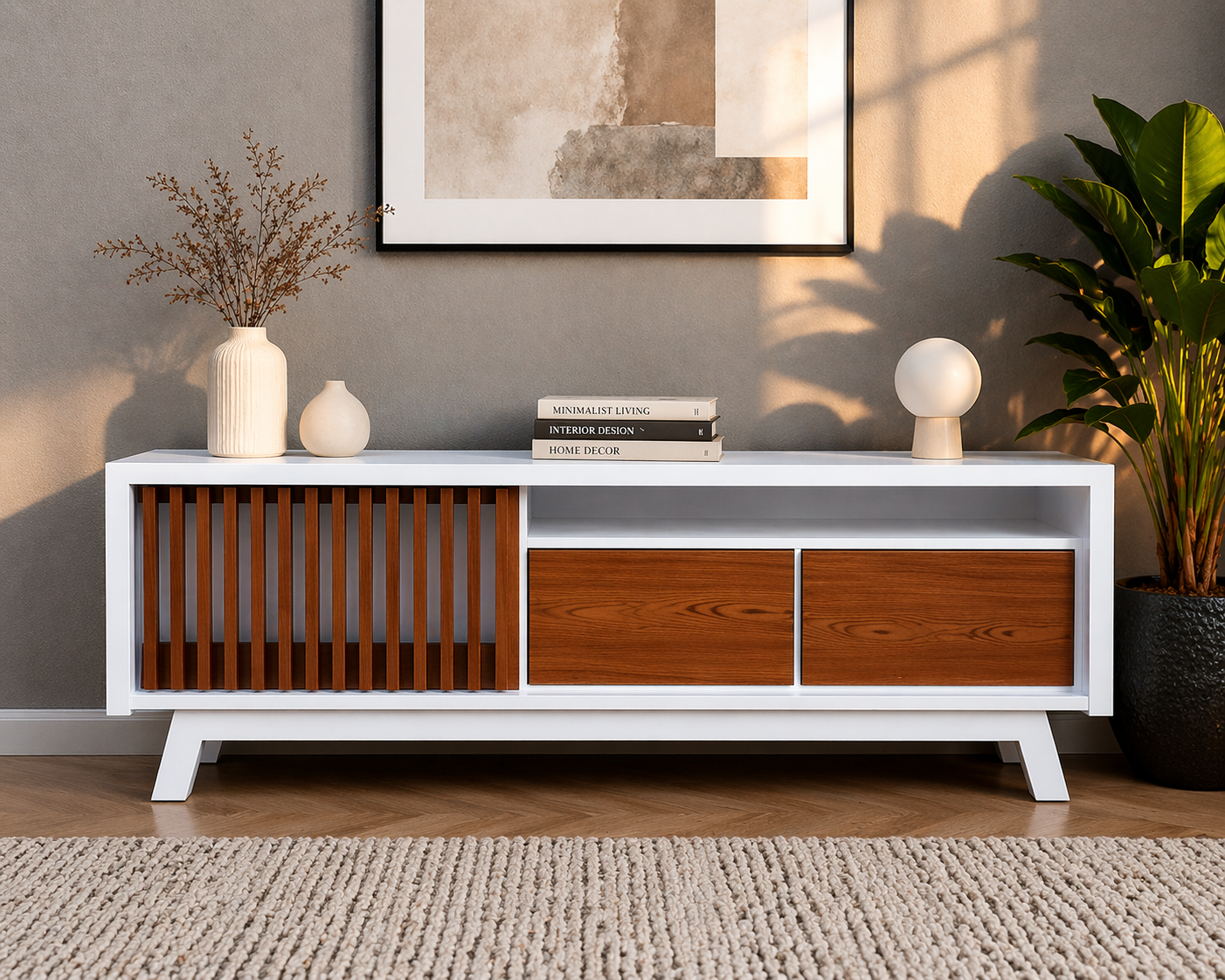
Walk through any furniture showroom in Nairobi and one look dominates the TV stands: vertical lines. Ribbed fronts, timber strips, narrow grooves running top to bottom. It has become the default finish for a modern Kenyan living room, and it is the single fastest-growing detail in the category.
Most buyers know they like it without knowing what to call it — or that “fluted” and “slatted” are two different things at two different prices. This guide sorts that out, then covers what each costs, which suits your room, and the one maintenance issue nobody warns you about.
Fluted or slatted — what’s the difference?
The distinction is easy once you have seen it, and it explains the price difference between two units that look similar in a photograph.
| Fluted | Slatted | |
|---|---|---|
| How it’s made | Grooves cut into one panel | Separate strips fixed side by side |
| Profile | Shallow, rounded ribs | Deeper, squared strips with gaps |
| Effect | Subtle, refined texture | Bold shadow lines, architectural |
| Reads best | Close up and in soft light | Across a room and in raking light |
| Dust | Settles in the grooves | Settles in the deeper gaps |
There is a third profile worth knowing: chevron, where the strips are laid at opposing angles to form a repeating V. It costs more than plain fluting because the pattern has to be cut and matched, and it makes a much stronger statement.
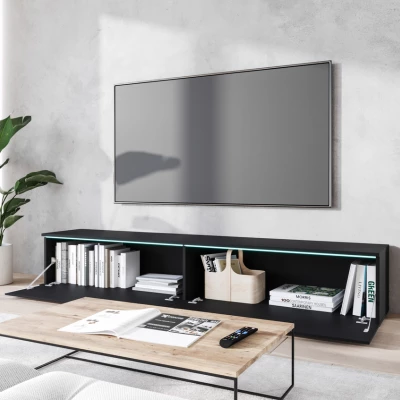
A chevron front — strips laid at opposing angles. More work to make than plain fluting, and a bolder result.
Why the look took over Kenyan living rooms
Three practical reasons behind the trend, beyond fashion:
- It adds depth without colour. A neutral room stays neutral, but the wall stops looking flat. That suits Kenyan interiors, which lean heavily on wood tones, whites and greys.
- Vertical lines lift a room. The eye follows them upward, which makes a standard-height ceiling feel taller — useful in apartments.
- It hides fingerprints and minor marks far better than a flat gloss front, where every touch shows.
It is also why the same detail keeps appearing on shoe cabinets, wardrobes and headboards. Once a workshop is cutting fluting, it travels across the whole range.
What fluted and slatted TV units cost
Current Monsoon figures at August 2026. Several are promotional, so confirm before ordering.
| Unit | Profile | Price (KES) |
|---|---|---|
| Coffee table & TV stand set, slatted | Slatted | 16,500 |
| Black slatted stand, open centre shelf | Slatted | 17,000 |
| MDF fluted unit with drawers | Fluted | 18,000 |
| Dark wood-tone slatted media console | Slatted | 19,500 |
| Wooden slatted console, raised legs | Slatted | 20,000 |
| Wall-mounted unit, chevron front (180cm) | Chevron | 26,000 |
| Walnut slatted console, rounded ends | Slatted | 32,000 |
| Liyanda fluted console, natural top | Fluted | 32,000 |
| Fluted media console with slatted doors | Both | 35,000 |
What moves the price is length, whether the carcass is solid timber or board, and how much of the front is textured. A unit with fluting across the whole face costs more than one with a single ribbed centre panel, simply because there is more machining involved.
On cheaper units the “fluting” is sometimes a printed or embossed film rather than a machined profile. Run your fingertips across it: real fluting has consistent depth you can feel, and the ribs continue cleanly around edges and corners. A printed finish feels almost flat and often stops abruptly at an edge.
Which profile suits your room?
| Your room | Best profile | Why |
|---|---|---|
| Small apartment sitting room | Fluted | Fine texture adds interest without crowding |
| Large or open-plan room | Slatted | Deeper shadow lines still read from a distance |
| Plain, undecorated wall | Slatted or chevron | The unit becomes the feature |
| Already-busy room | Fluted, one panel only | Keeps texture from competing |
| Rental you’ll leave | Fluted or slatted unit | Furniture moves with you; panelling does not |
Colour matters as much as profile. Warm wood tones make the texture feel soft and natural; black and charcoal make it graphic and sharp; white and cream make it almost disappear until the light hits it. If you are still deciding between formats rather than finishes, our guide to TV cabinets, stands and consoles covers that first.
Cleaning fluted and slatted fronts
This is the practical downside nobody mentions at the point of sale, and it matters more in Nairobi than in most places: fine dust settles into every groove, and the deeper the profile, the more it holds.
It is easily managed, but only if you clean it the right way:
- Brush, don’t wipe. A soft dry brush reaches into the grooves; a cloth glides over them and leaves the recesses untouched.
- Work with the lines, running the brush down the length of each groove rather than across the ribs.
- Use a vacuum brush head for a deeper clean every few weeks — quicker and it lifts dust out rather than pushing it along.
- Keep moisture away from board edges. A barely damp cloth is fine on the flat top; grooves should stay dry.
If a low-maintenance surface matters more to you than texture, a plain flat-fronted unit is genuinely easier to keep clean — worth knowing before you commit.
From a unit to a whole wall
Many buyers start with a slatted console and later extend the same look up the wall. It is worth knowing the two are different products at different price levels, because a photograph rarely makes clear where the furniture ends and the panelling begins.
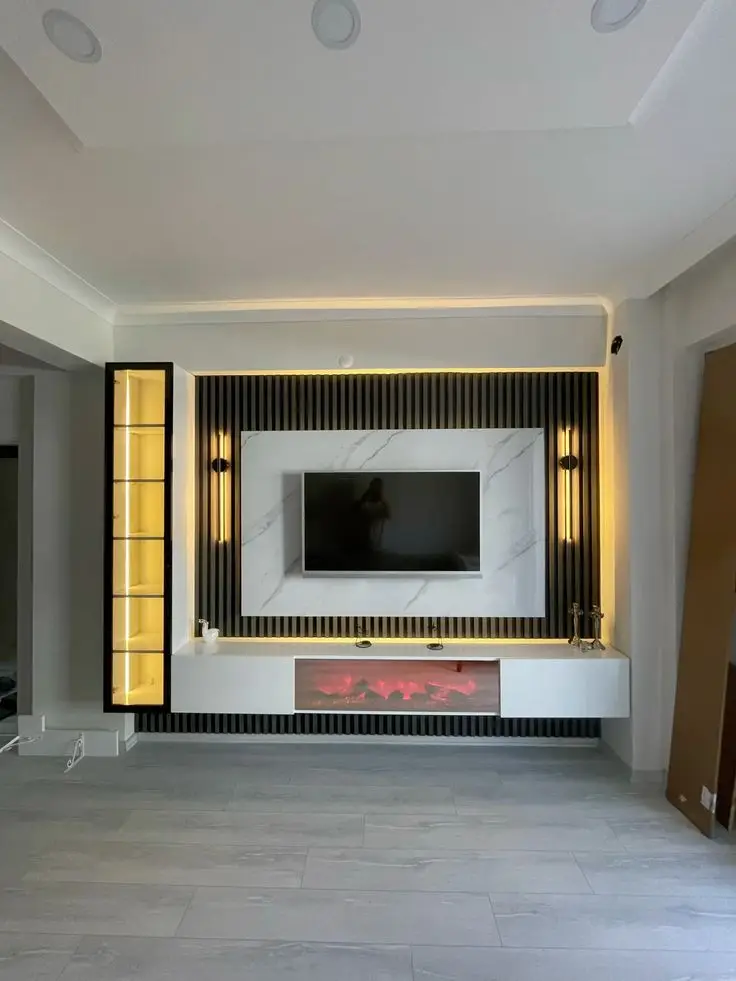
The same vertical language taken up the wall — panelling behind the screen rather than a unit against it.
If the wall version is what you actually have in mind, our guide to TV wall design in Kenya covers styles, timelines and what a full build includes. For a wall-mounted unit without the panelling, see floating TV stands.
Getting the texture custom
Texture is one of the easiest things to specify on a custom piece, because it is set by the machining rather than by a fixed component. Groove width and spacing, how much of the front is textured, and the finish over the top can all be chosen.
That matters most where a standard unit will not fit the wall — an alcove, a very wide run, or a length that falls between sizes. Browse the ready-made range first in our TV stands collection, or see the wider material picture in our guide to wooden TV stands.
Get the textured look
Send your wall length and a photo on WhatsApp and we’ll match you to a fluted, slatted or chevron unit — or build one to your measurements in 3–4 days. Free delivery within Nairobi.
Frequently asked questions
What is the difference between fluted and slatted?
Fluting is a series of fine, rounded grooves cut into a single flat panel, giving a subtle ribbed surface. Slats are separate strips fixed side by side with visible gaps between them, creating deeper shadow lines. Fluting reads as refined and smooth; slats read as bolder and more architectural.
How much is a fluted TV unit in Kenya?
Fluted and slatted TV units cost roughly KSh 16,500–35,000 in Kenya in 2026. Simple slatted stands start near KSh 16,500–20,000, chevron and larger slatted consoles run KSh 26,000–32,000, and fluted media consoles with slatted doors reach about KSh 35,000. Feature walls in the same finish cost more.
How do you clean a slatted TV unit?
Use a soft dry brush rather than a cloth, working down the length of each groove instead of across the ribs. Dust settles into the recesses where a flat cloth simply passes over the top. A vacuum brush attachment works well every few weeks, and grooves should be kept dry.
Is fluting real wood or a printed finish?
It can be either. Real fluting is machined into the panel and has consistent depth you can feel, with ribs continuing cleanly around edges. On cheaper units the effect is sometimes a printed or embossed film, which feels almost flat and often stops abruptly at an edge. Run your fingertips across it to check.
Prices current at August 2026 and subject to change; several items are promotional. Profile descriptions are general guidance — groove depth, spacing and finish vary by product, so confirm details for a specific unit before ordering.

Add a review
Your email address will not be published. Required fields are marked *