
Throw Pillow Arrangements by Sofa Type: 3-Seater, L-Shape & Sectional
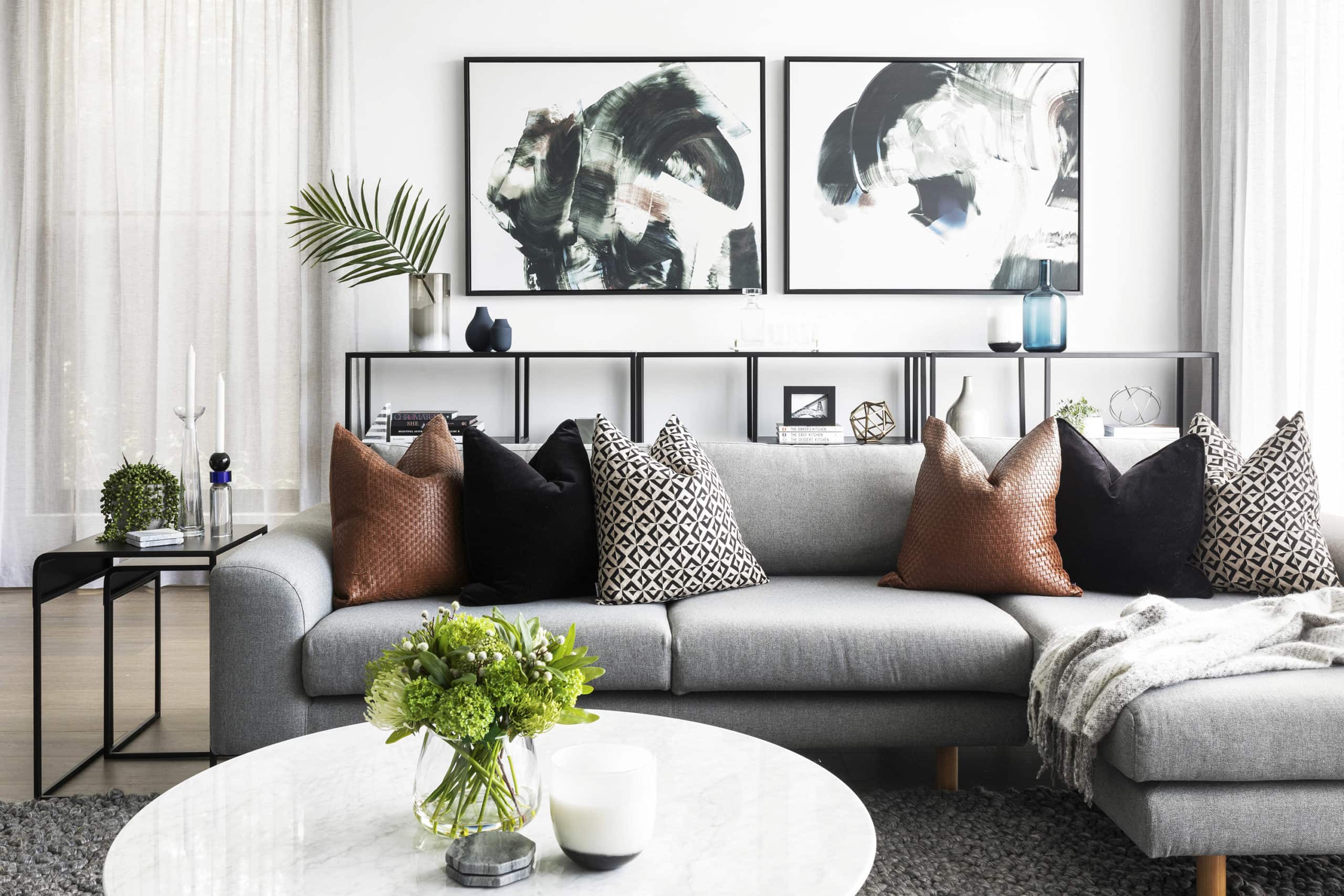
There’s no single right number of throw pillows — it depends entirely on the shape of your sofa. A formula that looks perfect on a 3-seater leaves an L-shape looking bare, and what fills a sectional would bury a loveseat.
This guide gives you the exact arrangement for every sofa type Kenyans actually own — from a compact 3-seater to a sprawling L-shape and corner sofa — with simple diagrams you can copy. Get the sofa shape right first, then the pillows follow.
3-seater sofa: the 5-pillow formula
The 3-seater is the workhorse of the Kenyan living room, and five pillows is its sweet spot. Build it back-to-front in three sizes so every layer stays visible.
3-seater · 5 pillows
Large at the outer corners, medium in front, one lumbar offset to a side — not dead centre.
For a tighter, more minimal look — or a narrower 3-seater — drop to three: two 60×60cm at the corners and one lumbar in the middle. Avoid four; even numbers force the symmetry that makes a sofa look like a showroom display. For the colour side of this, see our guide to styling cushions on a sofa.
L-shape & corner sofa: the corner-anchor rule
This is where nearly everyone under-buys. An L-shape sofa has more seat length and a deep corner that simply swallows cushions — so the two-or-three pillows that suit a 3-seater vanish on it. L-shapes and sectionals need seven to nine to look intentional.
The trick is the corner anchor. Instead of spreading pillows evenly along both arms (which looks thin and scattered), you build a cluster in the inside corner and let it taper outward.
L-shape · 8 pillows · corner-anchor
Tallest pillows stacked into the inside corner (centre), tapering to smaller ones at each open end.
Start with two 60×60cm pillows meeting in the corner, add 50×50cm on each side, then finish the ends with 45×45cm and a lumbar. A U-shape sectional follows the same logic with even more pillows — nine or more, anchored at both inside corners. If you’re weighing up an L-shape in the first place, our guide to L-shape sofa sizes and prices in Kenya covers the shapes these arrangements suit.

The corner carries the most pillows; the ends taper down. Even spacing is the mistake to avoid.
5–7 seater sets and the whole living room
When you have a 3+2+1 or larger set, the goal shifts from styling one sofa to coordinating several. The pillows are what tie the whole set together into one room.
| Sofa type | Total pillows | Arrangement |
|---|---|---|
| 2-seater / loveseat | 3 | Two 50×50cm + one lumbar |
| 3-seater | 5 | Two 60cm, two 50cm, one lumbar |
| 5-seater (3+2) | 7 | Five on the 3-seater, two on the 2-seater |
| 7-seater (3+2+1+1) | 9 | Five + two + one per armchair |
| L-shape / corner | 7–9 | Corner-anchor, tapering to the ends |
| U-shape sectional | 9+ | Anchored at both inside corners |
The rule for a coordinated set: choose two or three fabrics and repeat them across every piece, but arrange each sofa a little differently. Same family, different sentence. Browse full sofa sets to see how the pieces relate before you plan the pillows.
Beds and daybeds: the bonus arrangement
A daybed is really a narrow sofa, so it takes the same approach: stand square pillows against the wall it sits beside, then layer smaller and lumbar pillows forward for depth. For actual beds, the layering order and count differ slightly — our full guide to how many pillows to put on a bed covers Kenyan bed sizes in detail.
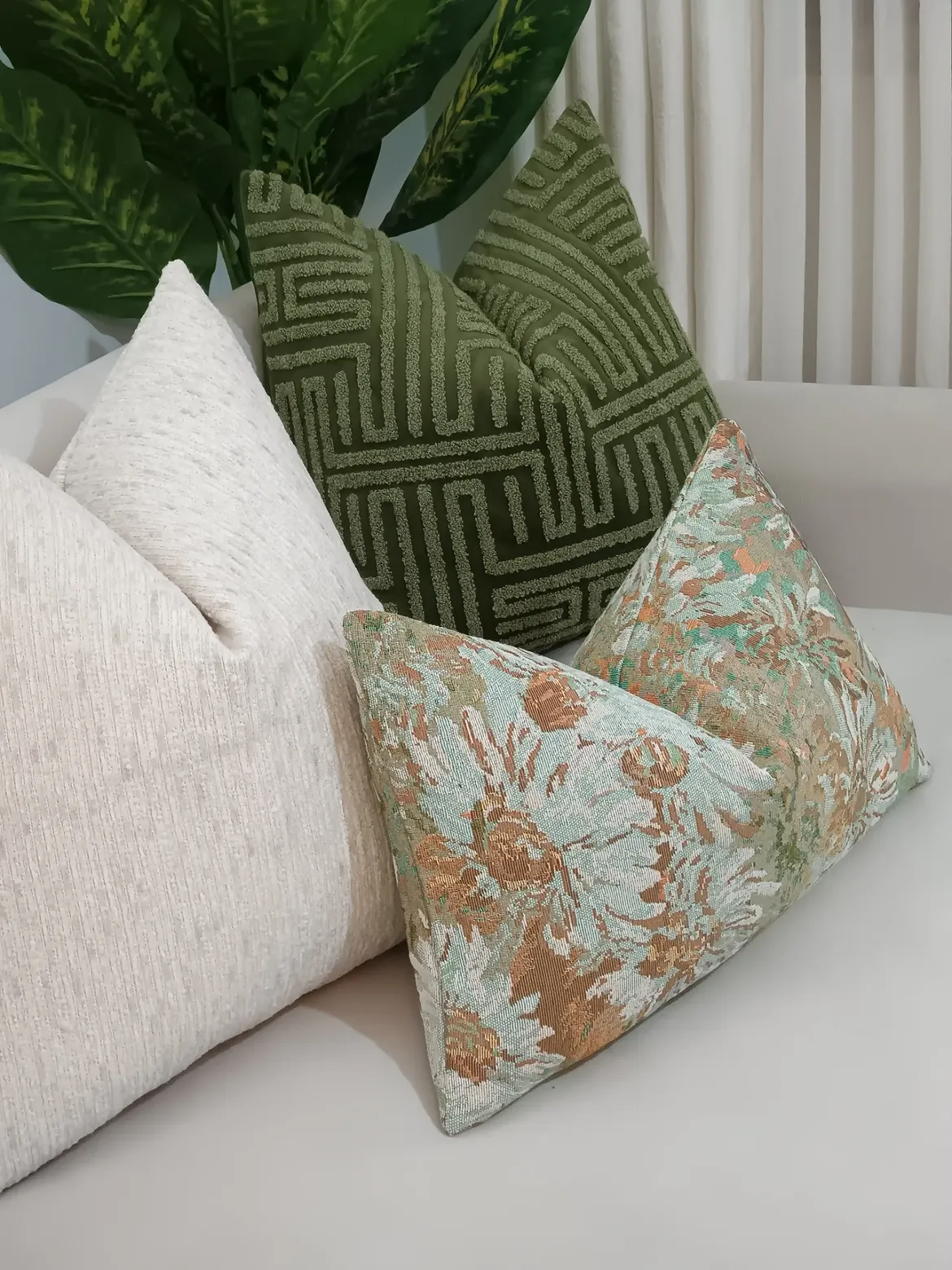
Whatever the piece, the rule holds: odd numbers, mixed sizes, biggest at the back.
Common throw pillow arrangement mistakes
Almost every under-styled sofa in Kenya makes at least one of these mistakes:
- Pillows too small. A 40×40cm pillow is lost on a 3-seater or L-shape. Start at 50×50cm and go up to 60×60cm for the back layer.
- Too few on big sofas. Two pillows on an L-shape looks bare. Size the count to the sofa — seven to nine for corners and sectionals.
- Everything matching. Five identical pillows read as flat and shop-bought. Mix at least three fabrics or textures.
- Even numbers, evenly spaced. Symmetry looks staged. Odd numbers and a clustered corner look lived-in.
- Flat inserts. Buy the insert one size up from the cover so pillows sit plump, not limp.
Count your pillows. If it’s an even number, add or remove one. If they’re all the same size, swap two for a bigger and a smaller. If they’re evenly spaced on an L-shape, push the biggest into the corner. Three small moves, a completely different sofa.
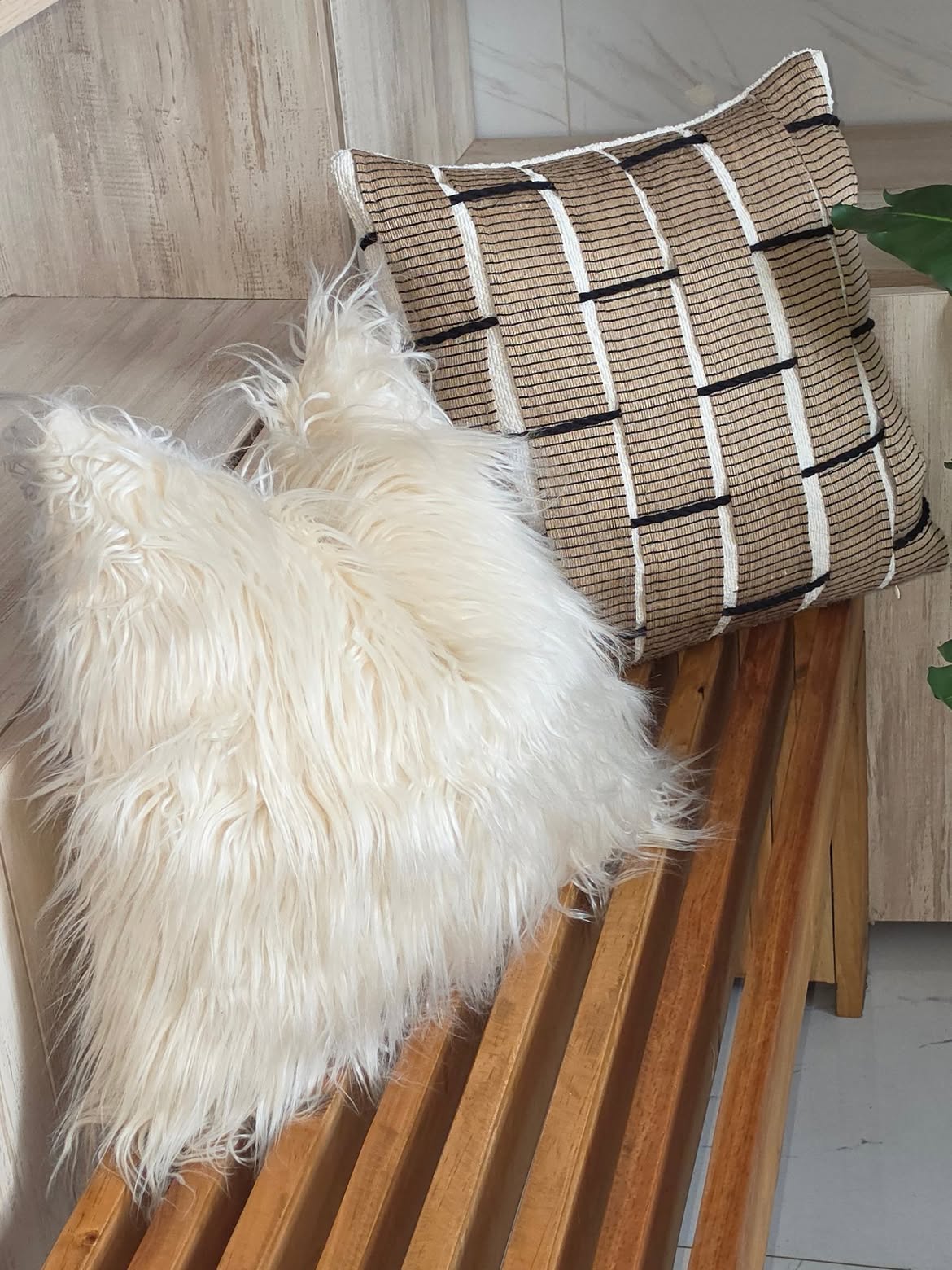
Coordinated, not matched: two or three fabrics repeated across the set tie the whole room together.
Pillows sized to your sofa
Tell us your sofa type on WhatsApp — 3-seater, L-shape or full set — and we’ll make a coordinated pillow set in the right sizes and count, matched to your fabric.
Frequently asked questions
How many pillows on an L-shape sofa?
An L-shape or corner sofa needs seven to nine throw pillows — more than most people expect. Pile three or four into the inside corner where the sections meet, then taper to one or two at each open end. The deep corner swallows cushions, so under-buying is the most common L-shape styling mistake.
What size pillows for a sectional?
Use a mix on a sectional: 60×60cm pillows for the back and corner, 50×50cm as the middle layer, and 45×45cm or 30×50cm lumbars at the ends. Larger pillows suit the scale of a sectional — anything under 45×45cm looks lost. Build the biggest sizes into the inside corner.
Should all sofas in a room match pillows?
No — coordinate rather than match. Repeat two or three fabrics across all the sofas, but arrange each piece slightly differently and don’t make every pillow identical. Matching every sofa exactly looks flat and shop-bought; a repeated fabric family with varied arrangements looks designed and collected.

Add a review
Your email address will not be published. Required fields are marked *