
How to Tell Real Hardwood from MDF and Veneer: 7 Checks
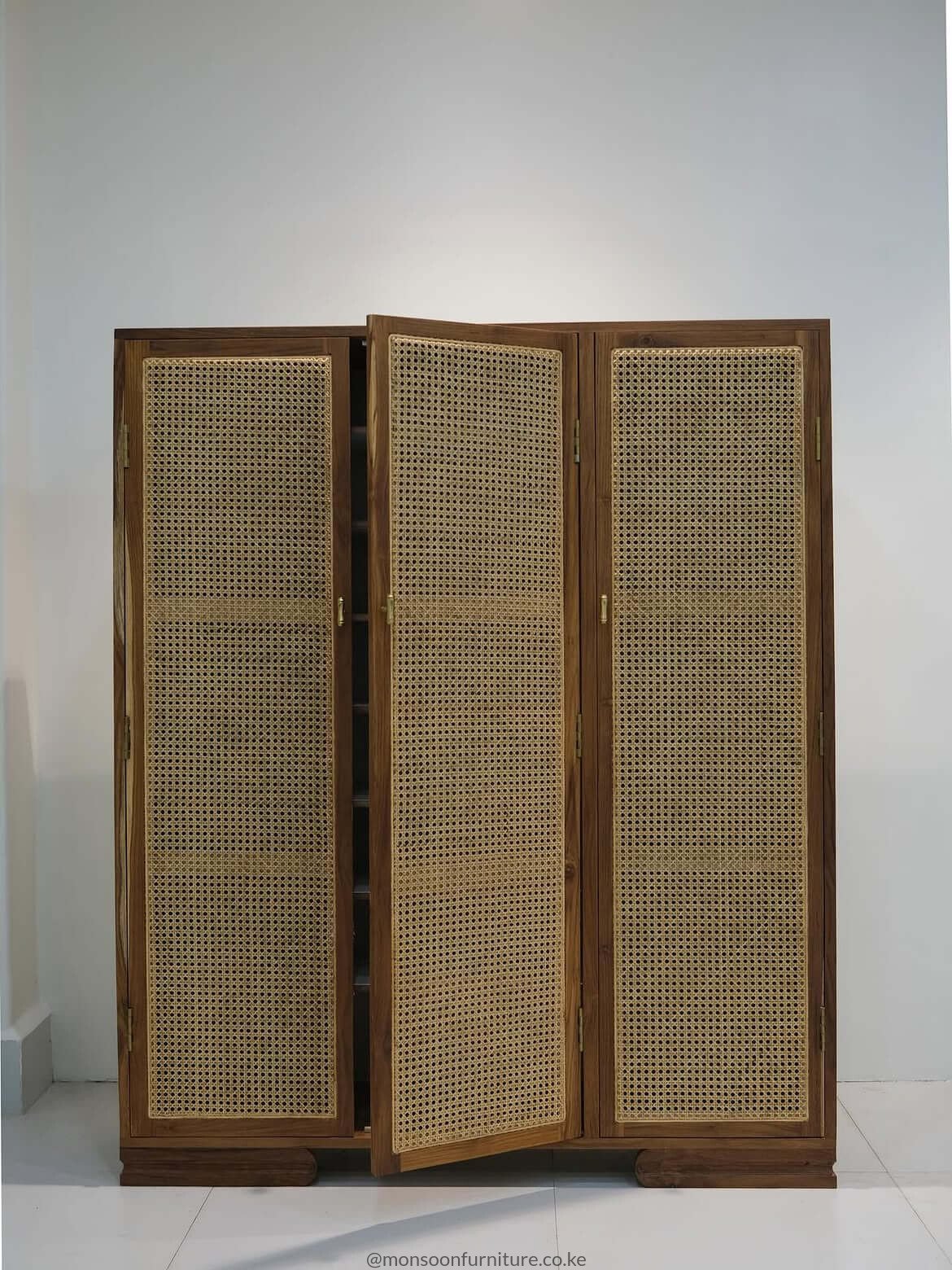
"Wooden" is the most elastic word in Kenyan furniture retail. It is used for solid timber, for veneered board, and for chipboard wrapped in a printed film that has never been near a tree. All three can look near-identical in a photograph and even in a showroom.
These seven checks take about a minute and settle it. None of them requires tools, and the first one is close to conclusive on its own.
First: three different things get called "wood"
This distinction matters because two of the three are legitimate and one is imitation:
| Type | What it is | Real wood? | Can it be refinished? |
|---|---|---|---|
| Solid timber | Real wood through the whole thickness | Yes, throughout | Yes, repeatedly |
| Veneer | Thin real-wood slice over a stable core | Yes, on the surface | Once, very lightly |
| Printed foil | Photographic film laminated to board | No | No |
Most disappointment comes from paying solid-timber prices for the third. The checks below separate all three.
The seven checks
- Look at the end grain This is the most reliable check. Where timber has been cut across, real wood shows growth rings, pores and a slightly rougher texture — a cross-section of a tree. Board shows a uniform, sandy, biscuit-like core, and printed foil shows the pattern simply stopping at the edge. Look at the top of a leg, the front edge of a shelf, or inside a drawer front.
- Check whether the grain repeats Photographic finishes are printed from a limited set of images, so the same knot or streak reappears at regular intervals along a panel or across matching doors. No two boards of real timber are ever identical. If you spot the same distinctive mark twice, it is printed.
- Follow the grain around the edges On solid timber the pattern wraps continuously over corners and onto the sides, because it is the same piece of wood. On board the face finish stops at a seam and a separate edge strip takes over, often in a slightly different shade or sheen.
- Inspect the back and the underside Makers finish what shows. Solid timber looks like wood everywhere — underneath, behind, inside the cabinet. Board furniture typically has a plain, smooth or paper-backed rear, and an underside that looks nothing like the front.
- Lift one end Solid hardwood is dense and noticeably heavy for its size. MDF is lighter, and chipboard lighter still. If a large cabinet moves easily on your own, it is very unlikely to be solid timber.
- Tap the surface Knock the top with a knuckle. Solid wood gives a dense, solid sound with almost no resonance. Board sounds hollow or dull, and a hollow-core panel will sound obviously empty.
- Sanity-check the price against the size Solid hardwood has a raw-material floor. A large piece offered at board-furniture prices is almost never solid timber — occasionally it is a genuine clearance, but far more often the description is loose.
Look at the end grain. Weight can be misleading with dense board, sound varies with panel thickness, and a good edge-banded unit can look convincing from the front. But a cut end either shows the cross-section of a tree or it does not — and it is the one thing a printed finish cannot fake.
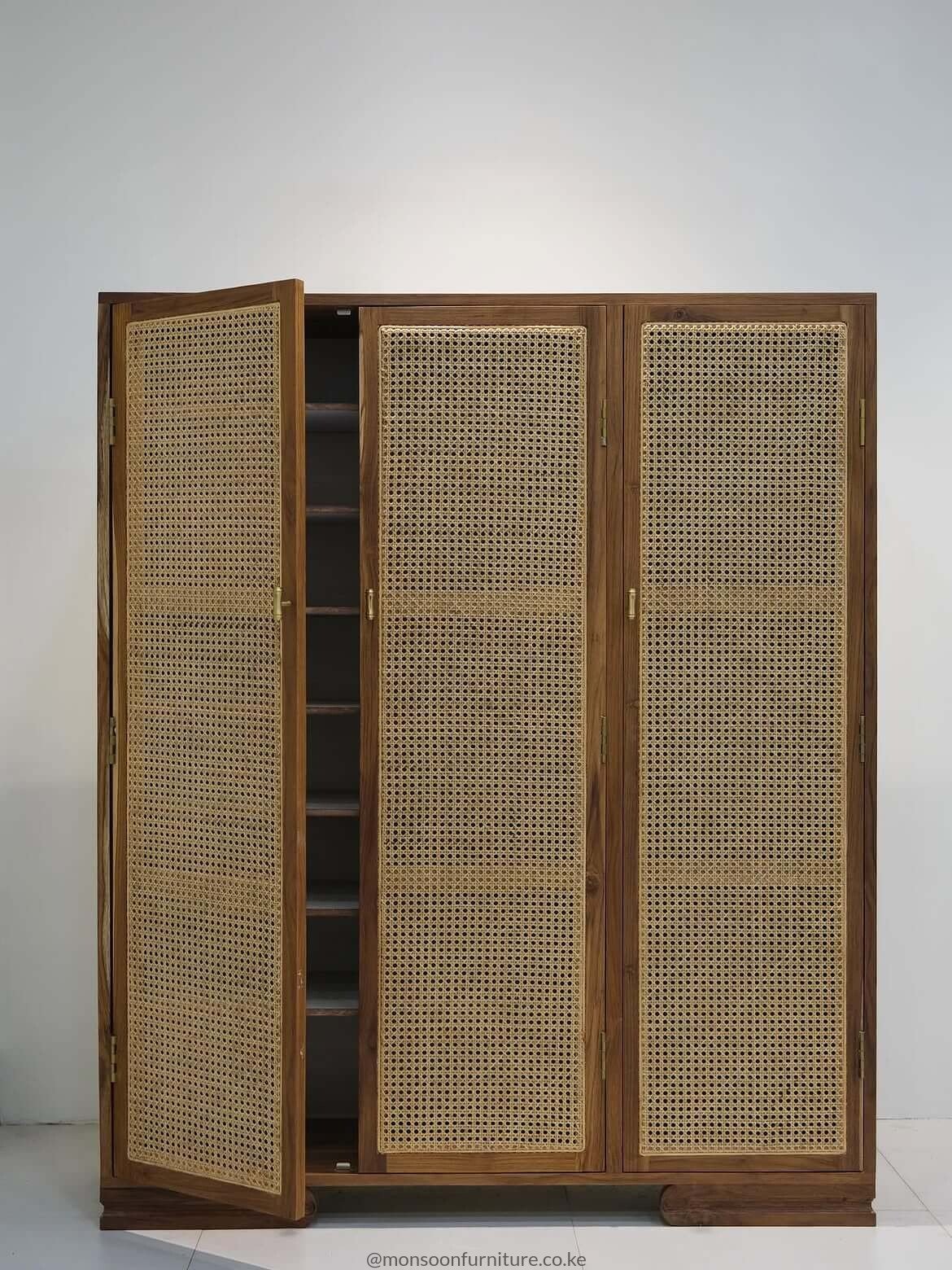
Open the doors. On solid timber the wood continues inside — on the shelves, the edges and the back panel.
Is veneer a bad thing?
It is worth being clear about this, because "veneer" is often used as an accusation.
A wide solid-timber panel wants to move — to cup and to split along the grain as humidity changes. A veneered panel does not, because the core is stable and the timber layer is thin. That is why quality furniture has used veneer over solid cores for a very long time, and why a veneered tabletop can outperform a solid one in some designs.
Two things to know: veneer can usually be refinished only once and very lightly, since the timber layer is thin; and a chipped veneer edge exposes the core beneath. Judge it as what it is, price it accordingly, and there is nothing wrong with it.
Buying online: what to ask for
Most furniture in Kenya is now bought from photographs, and standard product images are shot from the angles that flatter a piece. These four requests do the work of the physical checks:
- A close-up of a cut edge or end grain. The single most useful photo, and the one least likely to already exist.
- The back and underside. Shows instantly whether the piece is finished all round or only where it shows.
- A corner, close up. Reveals whether the grain wraps or an edge strip takes over.
- The material in writing, plus the weight. A stated species and a weight figure are both hard to fudge.
How the seller responds tells you as much as the photographs. A maker who works in solid timber will send them without hesitation, because the images help them. Vagueness, delay, or a reply that repeats marketing language usually answers the question by itself.
Questions that get a straight answer
Phrasing matters. "Is it solid wood?" invites a yes. These three do not:
| Ask this | Good answer | Warning sign |
|---|---|---|
| "Which timber is it?" | A named species — mahogany, mvule, Meru oak, mango | "Hardwood", "imported wood", "wooden" |
| "Which parts are solid and which are board?" | A clear breakdown, given readily | "It's all wood" |
| "Was the timber dried before use?" | Yes, with a word on how | Confusion, or no answer |
That last question is the one most sellers cannot answer, and it separates a workshop from a reseller. Timber built into furniture before it has been seasoned moves afterwards — the usual cause of split panels and loose joints. Our guide to the hardwoods we build with explains why drying matters more than species choice.
What we state, and why
We would rather lose a sale to a clear answer than win one to a vague one. If a piece uses board for a back panel or a drawer base, that is stated too — as our comparison of solid hardwood and MDF explains, combining materials sensibly is good design, not a compromise to hide.
Apply these seven checks to anything you are considering, including ours. A maker confident in their material has no reason to mind.
Ask us anything about the wood
Want to see the end grain, the back, or the underside of a piece before you buy? Message us on WhatsApp and we'll send photos. Free delivery within Nairobi.
Frequently asked questions
How can you tell if furniture is real wood or MDF?
Look at the end grain first. Real timber shows growth rings and pores where it has been cut across, while MDF shows a uniform, sandy core. Then check whether the grain repeats along a panel, whether it wraps around edges, and how heavy the piece feels. Board is lighter and sounds hollow.
Is veneer real wood?
Yes. Veneer is a thin slice of genuine timber bonded to a stable core, and it has been used in fine furniture for centuries because it resists warping better than a wide solid panel. It differs from printed foil, which is a photograph of wood grain and contains no timber at all.
What is the quickest way to spot a printed wood finish?
Look for a repeating pattern. Printed finishes come from a limited set of images, so the same knot or streak reappears at intervals along a panel or across matching doors. No two pieces of real timber are identical, so a repeated distinctive mark means the finish is printed.
How do I check furniture material when buying online?
Ask for photographs you will not find in a listing: a close-up of a cut edge or end grain, the back and underside, and a corner where the face meets the side. Also request the material in writing and the weight. A seller who hesitates has effectively answered the question.
What should I ask a furniture seller about wood?
Ask which specific timber it is, which parts are solid and which are board, and whether the wood was dried before use. A named species and a clear breakdown indicate a maker who knows their material. Vague answers such as "hardwood finish" or "it's all wood" usually mean board throughout.
These checks are practical guidance for buyers, not laboratory identification — very well-made board furniture can pass individual tests, which is why several checks together are more reliable than any one alone. Timber is a natural material, so grain, colour and weight vary between pieces of the same species.

Add a review
Your email address will not be published. Required fields are marked *