Fabric vs Leather Sofas in Kenya: Which Lasts Longer?
Fabric forgives a hot afternoon. Leather forgives a spilled cup of tea. Neither forgives neglect.
That is the honest starting point. There is no single upholstery winner for every Kenyan home because “leather” can mean genuine hide, coated leather or synthetic leather-look material, while “fabric” can mean anything from smooth woven polyester to velvet, bouclé or ribbed corduroy. The label alone tells you less than most sales conversations suggest.
The better question is this: which surface suits your climate, household, cleaning habits and budget? A sofa used by three children in a sunny Nairobi apartment faces a different life from one placed in a formal lounge in Karen or a humid coastal home.
What is the difference between fabric, genuine leather and leather-look upholstery?
Read the product wording literally
A sofa called “leather look” is not automatically genuine leather. Monsoon’s tan Chesterfield product page correctly describes the visible upholstery as a leather-look finish. This guide therefore uses it as the synthetic or coated option, not as proof of genuine hide.
Before paying genuine-leather prices, ask the seller to state the upholstery type in writing: full-grain, top-grain, corrected-grain, bonded leather, split leather, PU, PVC or leather-look. “Premium leather feel” is a marketing phrase, not a material specification.
| Decision factor | Durable fabric | Genuine leather | Leather-look / PU |
|---|---|---|---|
| Initial feel | Soft, warm and varied | Smooth, natural and responsive | Smooth, uniform and coated |
| Heat and breathability | Usually comfortable, depending on weave | Natural leather can absorb and release moisture | Less breathable than natural leather |
| Spill response | Blot quickly; liquid can enter fibres | Wipe promptly; care depends on finish | Easy surface wipe while coating remains intact |
| Dust | Fibres and tufting need vacuuming | Smooth surface wipes easily | Smooth surface wipes easily |
| Scratches | Snags depend on weave | Marks may blend into patina or need repair | Deep scratches can expose or lift the coating |
| Sunlight | Colour can fade | Can fade or dry without protection | Can fade, dry or peel with heat and UV exposure |
| Colour and texture choice | Widest range | Broad but more controlled | Many colours, usually uniform |
| Ageing | Depends heavily on weave and construction | Can soften and develop character | Does not develop natural leather patina |
| Best fit | Relaxed family homes and colour-led interiors | Long-term buyers ready for proper care | Easy-wipe look on a tighter budget |
What do the materials look like in a real room?

Which lasts longer: fabric or leather?
The answer depends on comparing equal quality. A well-made fabric sofa can outlast a poorly made leather-look sofa. Genuine leather stretched over a weak frame is still a weak sofa. Upholstery is the visible layer, but frame joints, foam density, spring support and stitching decide whether the piece keeps its shape.
Leather Naturally describes genuine leather as breathable, moisture-responsive and capable of developing character with age. That advantage belongs to real leather, not automatically to bonded, PU or PVC surfaces sold under leather-adjacent names.
Fabric durability depends on fibre, weave, backing, seam quality and daily use. A tight flat weave generally gives claws, zips and rough clothing fewer loops to catch than a loose textured surface. Removable covers can be a major advantage because the most exposed layer can be washed or replaced without rebuilding the sofa.
Ask about the frame, seat support, foam and stitching before debating fabric versus leather. A strong cover cannot rescue sagging cushions, loose joints or a sofa that was too large for the delivery route.
Which material feels better in Kenya’s climate?
Kenya does not have one indoor climate. The Kenya Meteorological Department describes conditions ranging from humid coastal regions to temperate highlands and arid areas. That difference matters inside the lounge.
In Nairobi and the highlands, cool mornings and evenings can make fabric feel immediately cosy. In Mombasa and other humid coastal areas, airflow around and under the sofa becomes more important. Whatever the cover, avoid pressing the entire back against a damp wall and allow the room to ventilate.
Direct sunlight is the common enemy. IKEA’s upholstery guidance advises keeping both fabric and leather away from prolonged strong sunlight because fabric can fade and leather can dry. A large west-facing window can be harder on upholstery than the general city climate.
Choose woven fabric for easy comfort or protected genuine leather when the sofa sits away from strong afternoon sun.
Prioritise airflow, regular cleaning and a cover specification suited to humidity. Do not assume a glossy coating solves moisture.
Use curtains or sheers and rotate loose cushions. UV exposure can change both fabric colour and leather condition.
Fabric feels warm immediately and offers more textures for a relaxed, layered interior.
Which is easier to clean?
For crumbs, dust and a small spill, a smooth surface is convenient. Wipe, dry and move on. That is why leather-look sofas are attractive for rentals, waiting rooms and households that value speed.
Fabric needs a little more routine: vacuum the seams, rotate loose cushions and blot liquids before they travel through the weave. The reward is choice. You can select tighter weaves, darker mixed tones or removable covers that disguise and manage everyday use better than delicate pale velvet.
Genuine leather requires the right conditioner for its finish and should not be treated with random cooking oils, strong detergents or furniture polish. Leather-look material should also avoid greasy cleaners, which can leave a film or affect the coating.
Which is better for children, pets and Airbnb guests?
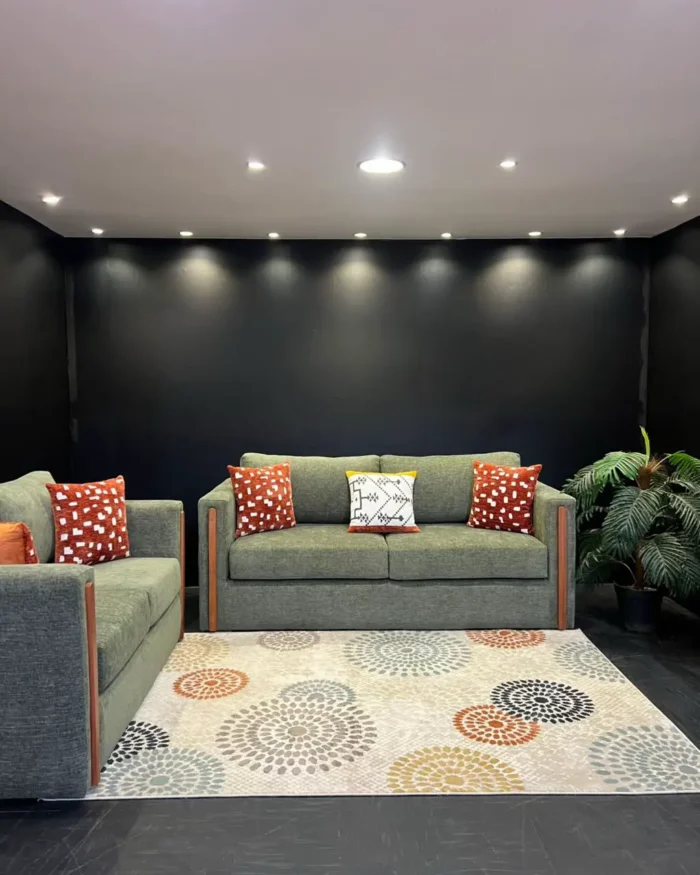
Children do not care whether a sofa has a luxury material story. They care that it is the best place to eat a biscuit five minutes after you banned food from the lounge. Mid-tone fabric with a subtle texture hides more daily evidence than plain white or jet black.
Pet claws can mark genuine leather and catch loose-weave fabric. There is no claw-proof upholstery. A tight weave gives fewer snag points, while a protected leather finish may handle light contact better than very soft aniline leather. The smartest choice is the one you are prepared to maintain, not the one described as indestructible.
For Airbnb properties, consider the replacement problem. A fabric sofa with separate cushions may allow one damaged cover or cushion to be repaired. A peeling synthetic coating across a fixed seat can require a larger reupholstery job.
What do current Monsoon fabric and leather-look sofas cost?
Modern Fabric Three-Seater: The Flexible All-Rounder

This is the practical baseline. It gives you a standalone three-seater without locking the room into a strong leather, tufted or curved style. Fabric makes it easier to introduce colour through cushions and rugs later.
Green Fabric L-Shape: More Lounge, More Surface to Maintain
The chaise makes this a stronger lounging option than a single three-seater. Green fabric brings colour without the surface warmth of a coated leather-look finish. The larger footprint also means more seams, cushions and fabric area to vacuum.
Green Fabric 3+2 Set: Separate Pieces, Easier Room Planning
A 3+2 layout gives five seats across two movable frames. The green fabric softens the visible wood details, while the separate pieces can face each other or form an open L arrangement.
Tan Leather-Look Chesterfield: Easy-Wipe Style on a Lower Budget
This product offers the visual warmth of tan leather styling and a smooth wipeable surface, but the live listing describes it as leather-look. The KSh 46,000 price also includes an ottoman, so it should not be compared with a standalone sofa on upholstery alone.
Which should you choose?
Choose fabric when: the sofa is used for long TV evenings, you want many colour options, the room can feel hot, or replaceable covers and cushions matter.
Choose genuine leather when: the seller verifies the hide type, the budget allows quality construction, you appreciate natural marks and patina, and you will protect it from harsh sun and incorrect cleaners.
Choose leather-look when: you want a smooth, wipeable appearance at a lower entry price and accept that the coating behaves differently from natural hide.
The winner for most Monsoon shoppers is not “fabric forever” or “leather always.” It is the correctly specified material on the correctly built sofa for the way the room is actually used.
See more shapes and current prices in the sofa set designs in Kenya pillar. Use the living-room furniture guide to plan the surrounding pieces, then browse live sofa sets in Kenya.
Do not order “leather”. Order the exact material.
Send your room photo, household needs, preferred product and upholstery choice on WhatsApp. Monsoon Furniture will confirm the current price, material wording, colours, measurements and delivery details before production.
Frequently asked questions
How much does a fabric or leather sofa cost in Kenya?
Current Monsoon examples in August 2026 range from KSh 46,000 for a tan leather-look three-seater with an ottoman to KSh 75,000 for a green fabric 3+2 set. A modern fabric three-seater costs KSh 50,000, while a green fabric L-shape costs KSh 70,000. Genuine-leather pricing requires a separately verified specification.
Does genuine leather last longer than fabric?
Quality genuine leather generally has stronger long-term ageing and repair potential, but a durable woven fabric can outlast a poor leather-look coating. The frame, foam, stitching, sunlight exposure and maintenance matter as much as the cover. Compare equal-quality sofas and verify what leather means before deciding.
Which sofa material is best for hot weather?
Fabric is the safest comfort choice for many warm rooms. Genuine leather can also manage moisture because natural hide is breathable, but it still needs protection from direct sun and heat. Leather-look or PU surfaces are less breathable and may feel warmer, especially where airflow is limited.
Are fabric and leather-look sofas ready-made or custom?
Availability depends on the product. Monsoon lists ready-made fabric and leather-look sofas, while selected designs may offer custom colours, dimensions or upholstery. Confirm whether the exact item is in stock, what material is being quoted and whether custom changes affect the price or delivery date.
How long does delivery take in Nairobi and upcountry?
Several current Monsoon product pages state that ready-made Nairobi items may be available quickly, while custom orders commonly take about three to four days after confirmation. Upcountry timing depends on destination and transport arrangements. Request one written delivery date for the exact sofa and approved upholstery.
Can I order a custom colour or finish?
Selected Monsoon sofas can be ordered in other colours, fabrics or finishes. Approve the exact material wording, colour, dimensions, cushion inclusion and care method in writing. Screen colours vary, and leather look is not the same as genuine leather, so confirm a sample or detailed specification where possible.

Add a review
Your email address will not be published. Required fields are marked *