
Bar Stools in Kenya: How to Choose the Right Ones for Your Kitchen
Buyer’s Guide · Monsoon Furniture
Bar Stools in Kenya: How to Choose the Right Ones for Your Kitchen (2026 Guide)
Open-plan kitchens with a counter or island have become the standout feature of modern Kenyan homes — and a set of bar stools is what turns that counter from wasted space into the most-used seat in the house. But bar stools trip people up more than almost any other furniture purchase, and it nearly always comes down to one thing: height.
This guide walks you through everything that matters — getting the height right, choosing between backrest and backless, wood versus metal, swivel versus fixed, how many you need, and what you should expect to pay in Kenya.
What this guide covers
- Why bar stools transform a kitchen
- Getting the height right (the big one)
- Backrest vs backless
- Wood vs metal vs upholstered
- Swivel & adjustable options
- How many stools you need
- Colour & style choices
- Styling your counter
- Price guide & buying checklist
01 · The case for them
Why Bar Stools Are the Smartest Small Upgrade in a Kitchen
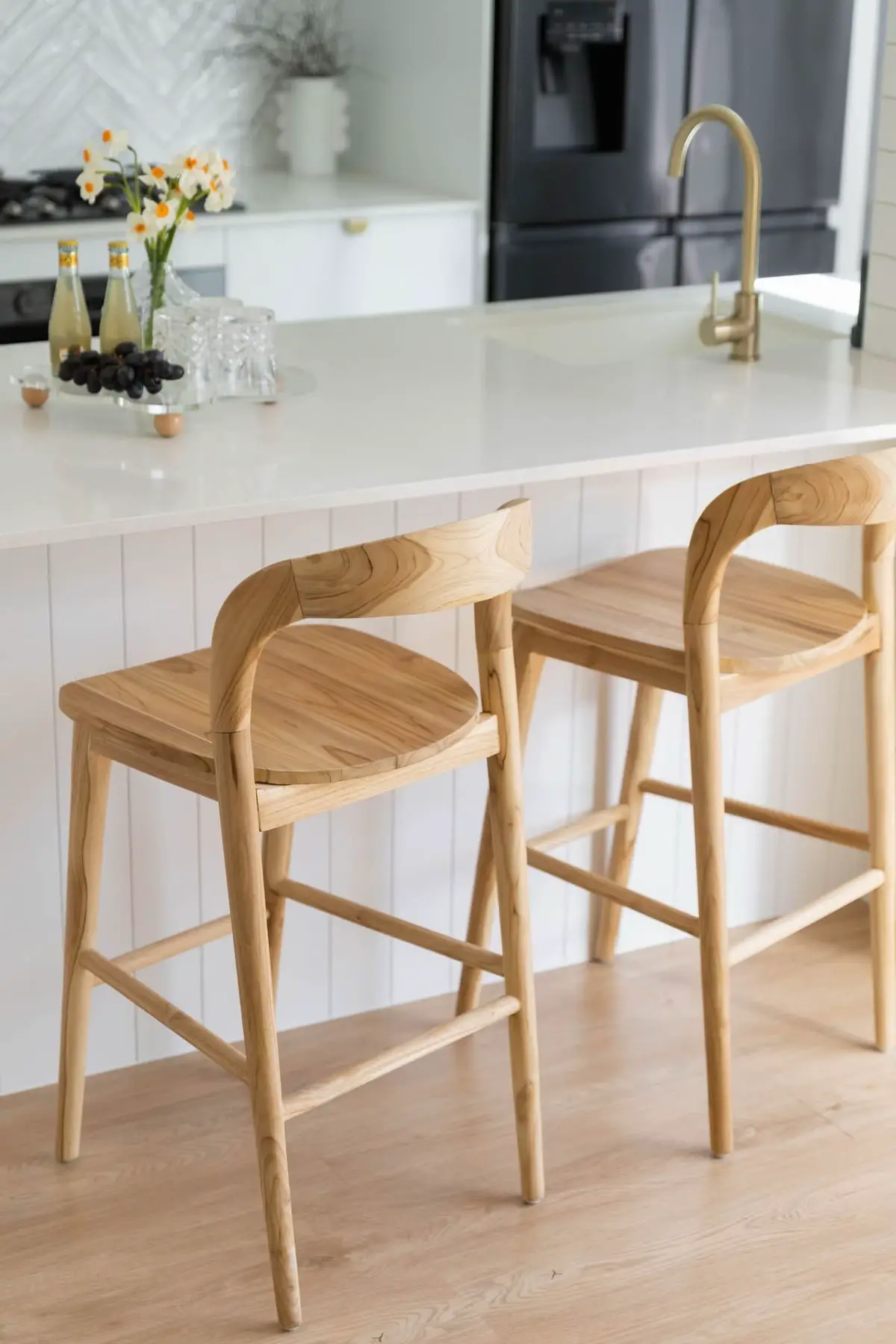
A pair of stools turns an unused counter into a spot for breakfast, homework, and quick conversation.
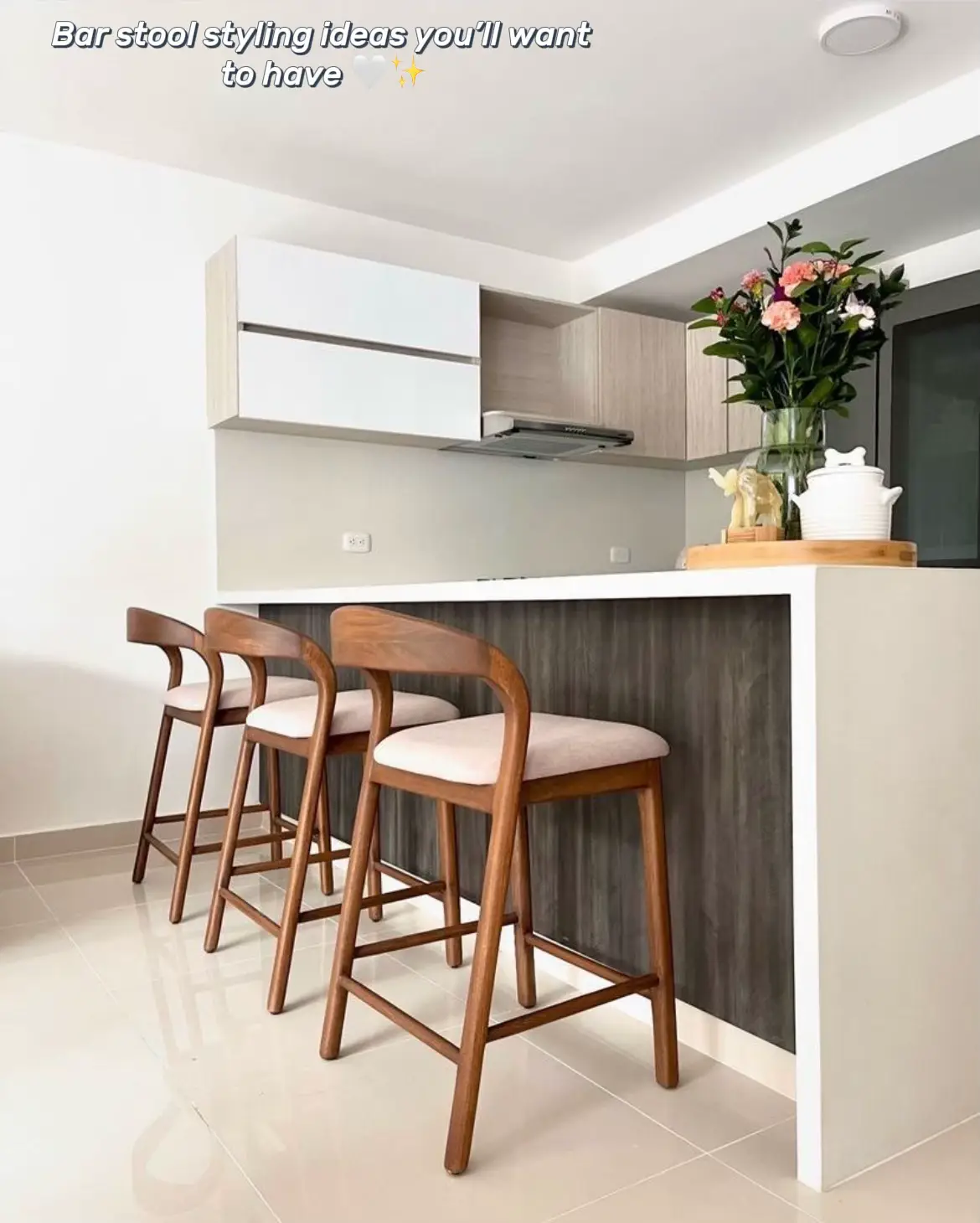
Bar stools do a lot for very little money. They add casual seating without taking up floor space the way a dining set does, they make an open kitchen feel sociable, and they put that counter or island to work — for quick breakfasts, kids’ homework, morning coffee, or somewhere for a guest to sit while you cook.
Because they’re compact and relatively affordable, they’re also the easiest way to refresh a kitchen’s look without a renovation. Swap tired stools for a set in a new material or colour and the whole space feels updated.
02 · The most important step
Get the Height Right — This Is Where Almost Everyone Goes Wrong
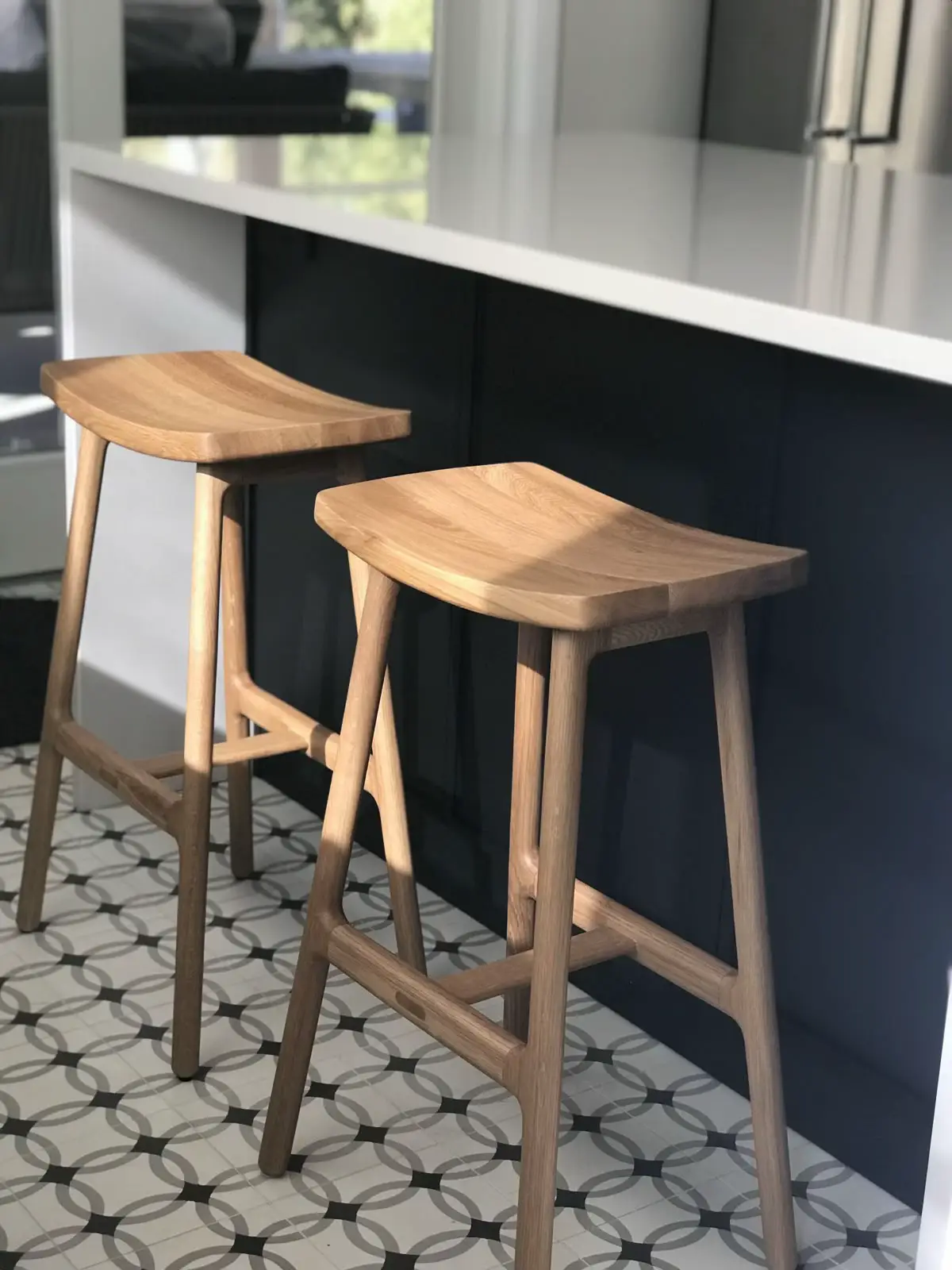
Measure from the floor to the underside of your counter, then leave 25–30 cm for legroom.
The single most common bar stool mistake is buying the wrong height. A stool that’s too tall leaves knees jammed against the counter; too short and you’re eating with your chin near the counter top. There are three standard heights, and which you need depends entirely on your counter.
03 · Comfort vs space
Backrest or Backless?
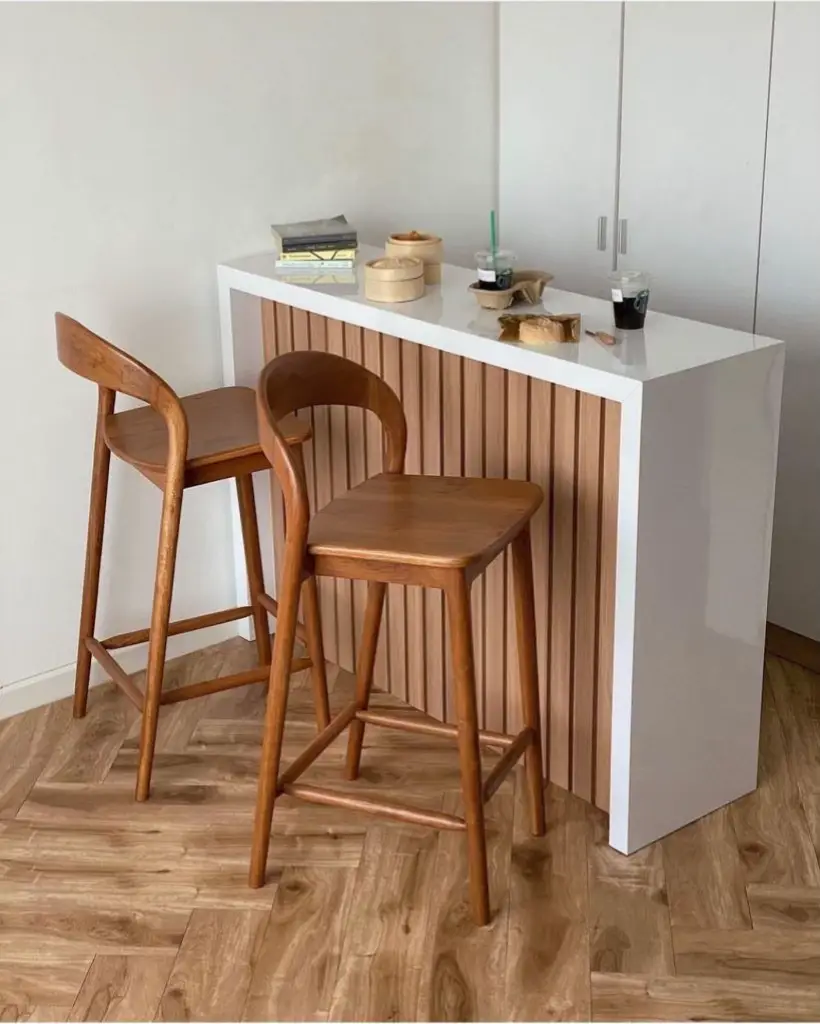
Backrest stools are comfier for long sitting; backless stools tuck fully under the counter to save space.
This choice comes down to how you’ll use the stools. Stools with backrests are more comfortable for longer sitting — meals, working, lingering conversations. Backless stools slide fully under the counter when not in use, which keeps the kitchen looking clean and open, and they’re often cheaper.
Choose backrest if…
- You’ll sit for meals or work
- Comfort matters more than space
- Older family members will use them
- The stools are always on show
Choose backless if…
- Your kitchen is small or narrow
- You want them tucked away neatly
- Seating is short and casual
- You’re working to a tighter budget
04 · Materials
Wood, Metal or Upholstered — What Suits a Kenyan Kitchen
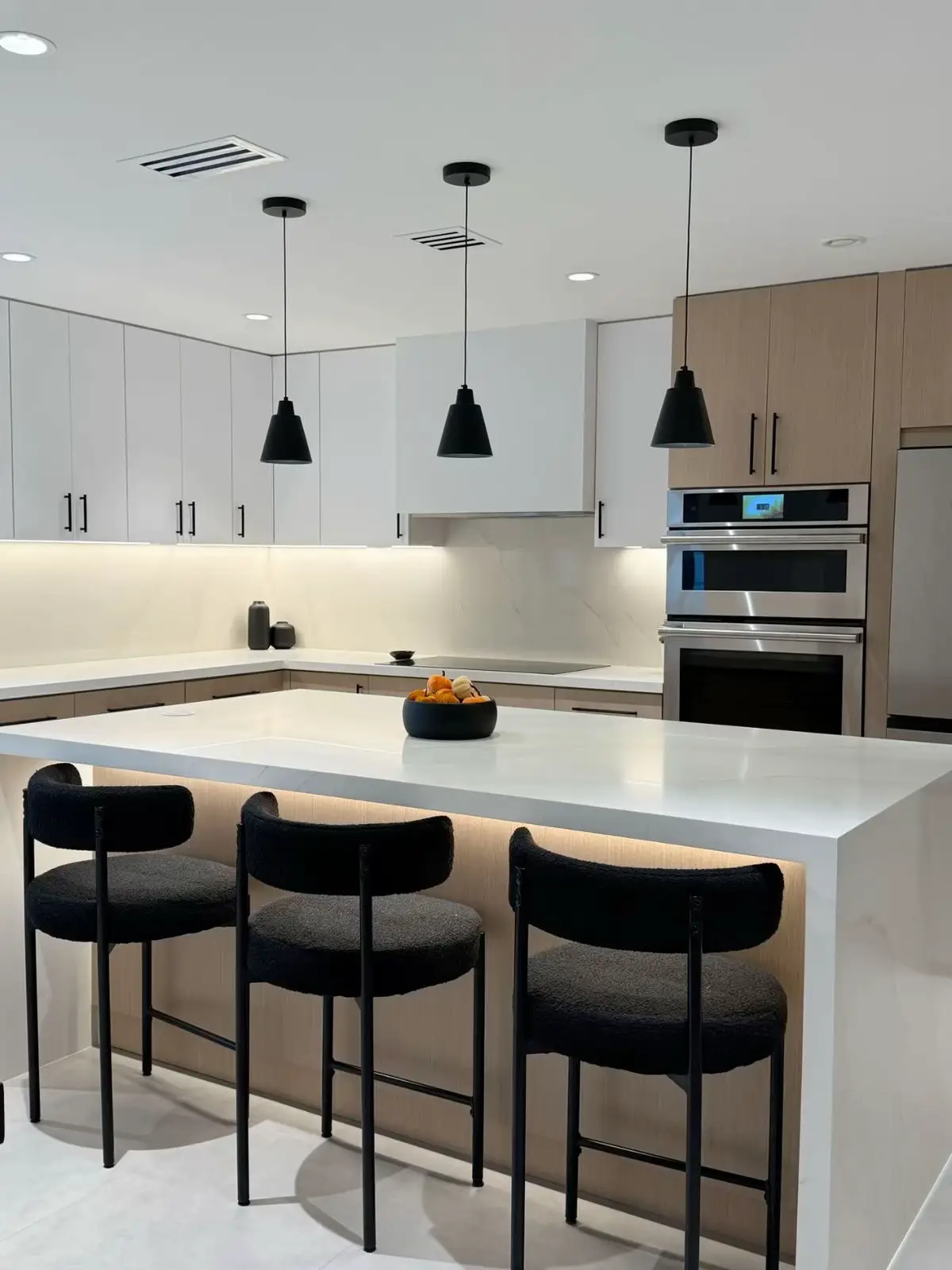
Wood feels warm, metal is durable and easy to clean, upholstered adds comfort and colour.
Wooden stools bring warmth and a natural, timeless look that pairs beautifully with the wood tones already common in Kenyan kitchens. Metal stools — often with a chrome or powder-coated frame — are hard-wearing, very easy to wipe clean, and lean modern or industrial. Upholstered or leather-topped stools add comfort and a pop of colour, but fabric tops need more care around kitchen spills; PU leather wipes clean and is the practical middle ground.
05 · Features
Swivel & Adjustable: Worth It or Not?
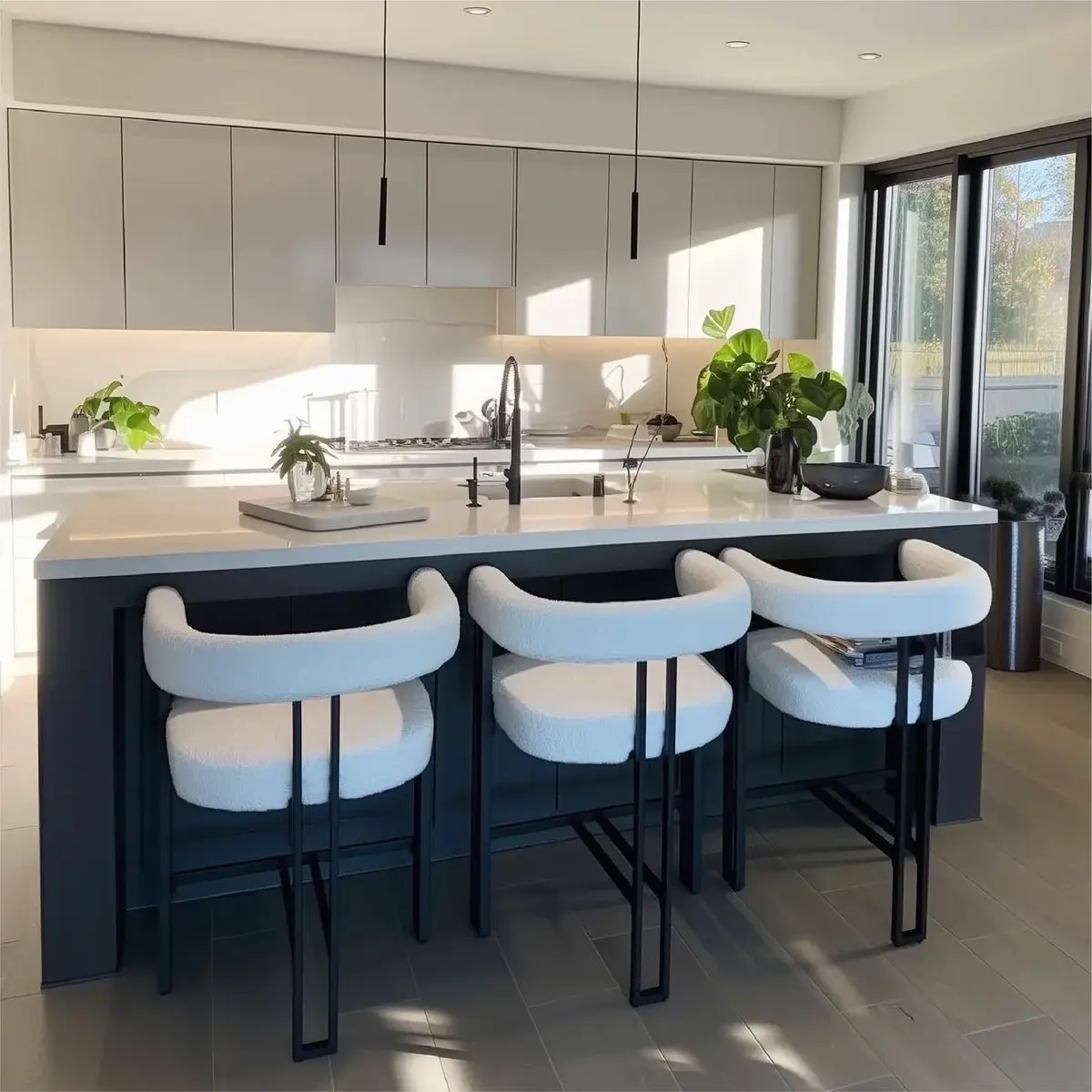
Adjustable gas-lift stools solve the height problem; swivel seats make getting in and out easy.
Adjustable (gas-lift) stools raise and lower to fit any counter — a smart choice if you’re unsure of your exact height, or want stools that can move to a different counter later. Swivel seats rotate, making it easy to slide in and out and to turn toward whoever you’re talking to. Both add convenience, though fixed stools are sturdier and usually cheaper, and their height is guaranteed to stay put.
One feature worth having regardless: a footrest. On a stool that lifts your feet off the floor, a footrest is what makes it comfortable to sit for more than a few minutes.
06 · Quantity & spacing
How Many Stools Do You Need?
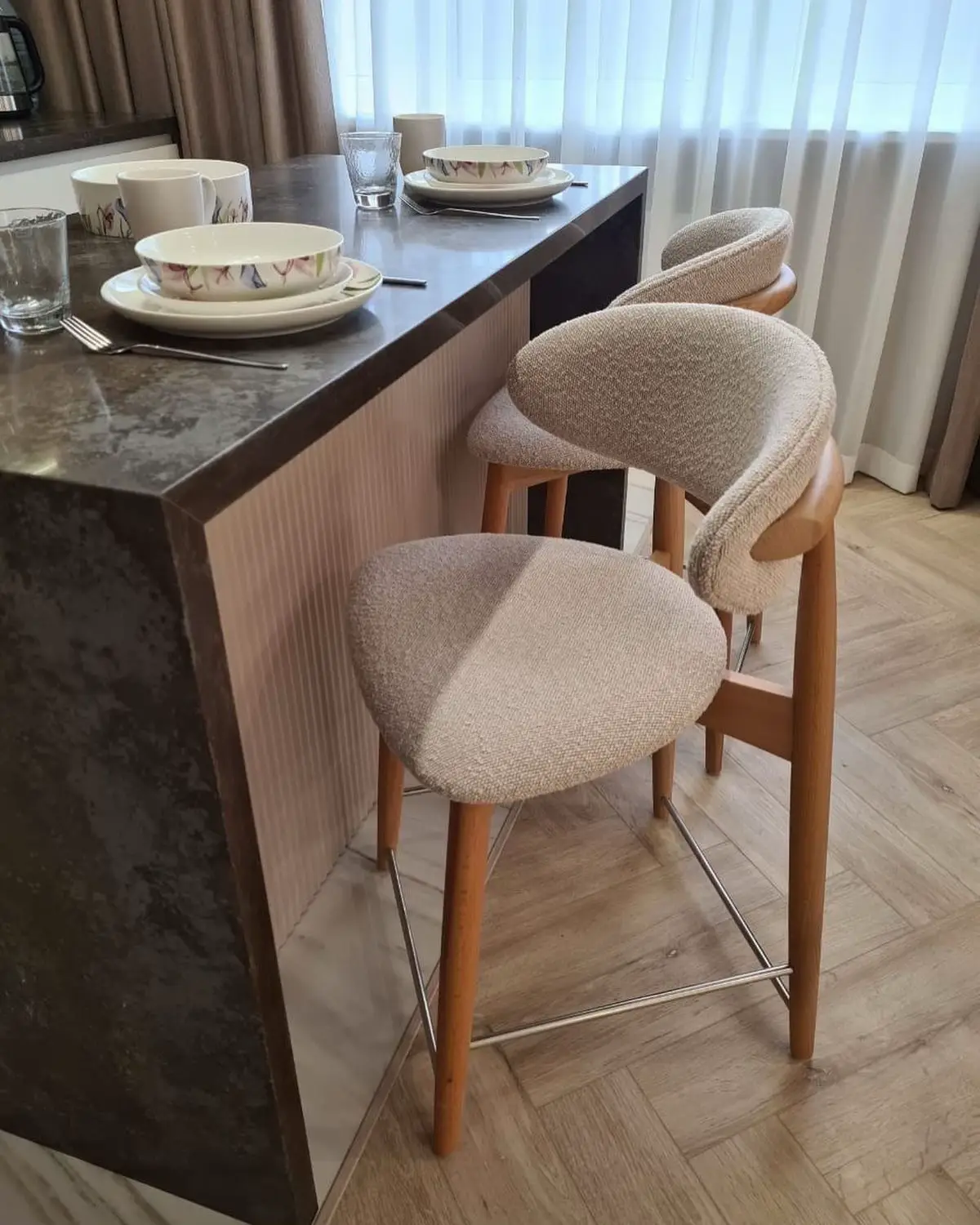
Allow about 60 cm of counter width per stool so elbows don’t collide.
The rule is simple: allow roughly 60 cm of counter width per stool. That gives each person enough elbow room without stools bumping together. Measure your counter’s usable length (avoid placing a stool right at a corner or over a cabinet leg) and divide by 60.
So a 120 cm counter comfortably seats two, a 180 cm counter seats three, and so on. It’s better to have one fewer stool with breathing room than to cram in an extra that no one can use comfortably.
07 · Colour & style
Colours and Styles That Work
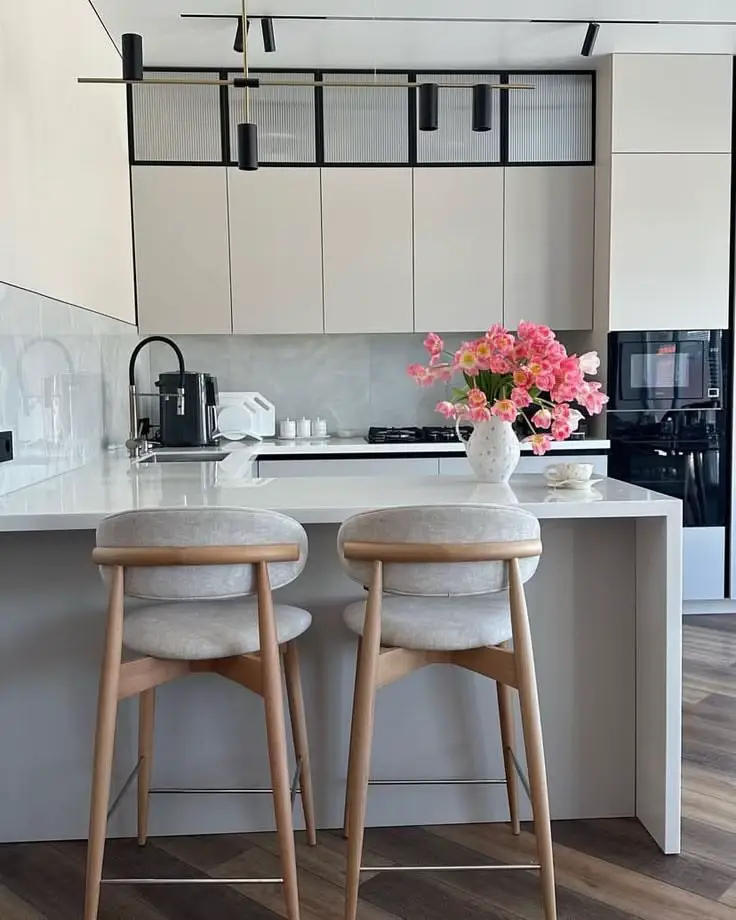
Neutral stools blend in; a bold colour makes the counter a feature — both work if done deliberately.
You have two good routes. Neutral stools — black, grey, natural wood, cream — blend into almost any kitchen and stay timeless. Or make the stools a deliberate accent — a set in mustard, forest green, terracotta, or navy turns the counter into a focal point. Both work; what doesn’t work is a random colour that matches nothing else in the room.
Tie the stools to something already in your kitchen — the cabinet handles, a splashback, a nearby dining set, or the wood tone of your floor — and the whole space feels considered rather than assembled piece by piece.
08 · Finishing touches
Styling Your Counter
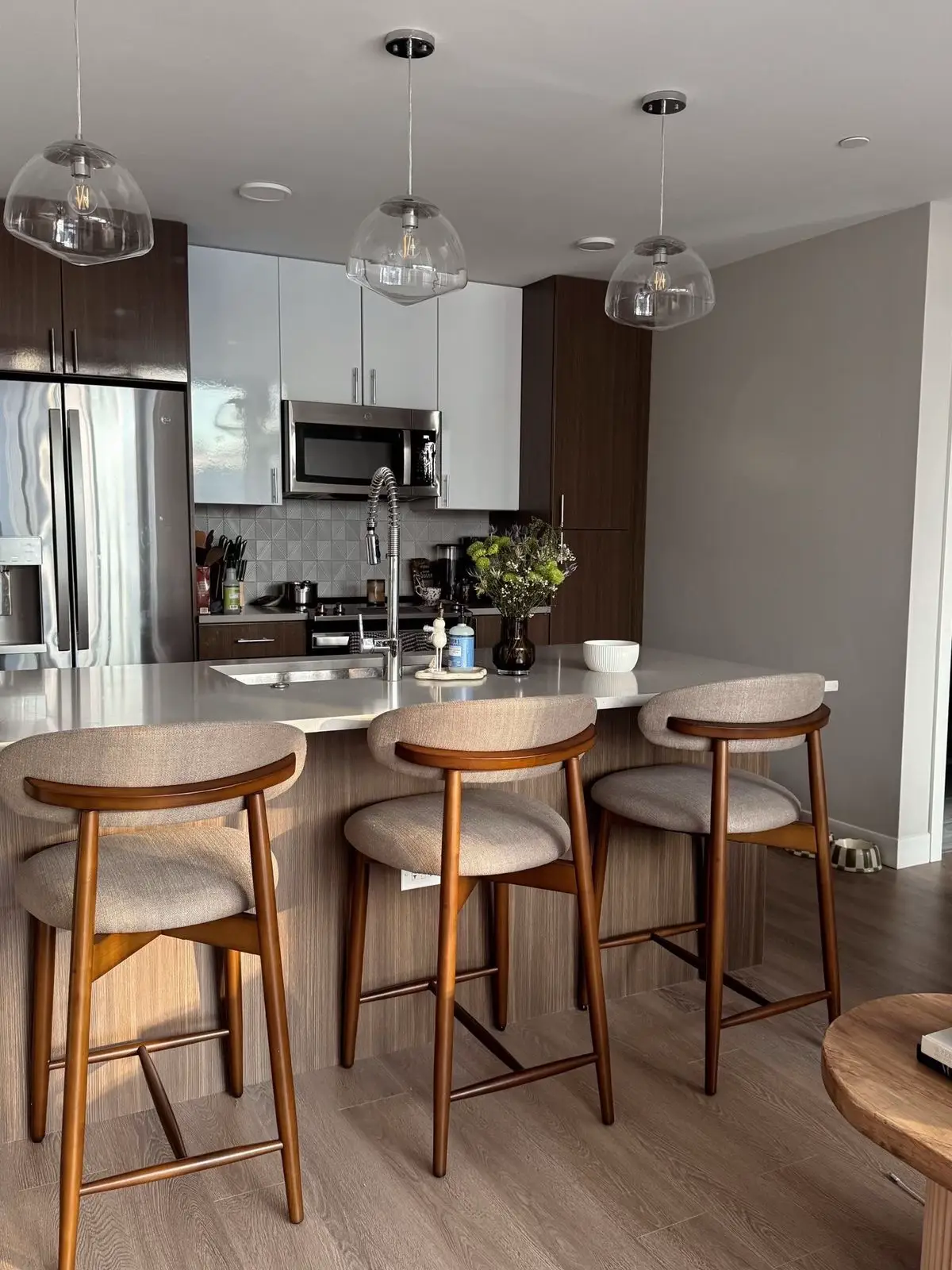
Matching stools, pendant lights overhead, and one simple counter accent complete the look.
A few small moves make a counter look finished: keep the stools matching (an even, uniform set reads as more designed than a mix); hang pendant lights above the counter to define the zone and add warmth; and keep the counter itself clear apart from one simple accent — a fruit bowl, a small plant, or a board. Restraint is what separates a stylish counter from a cluttered one.
09 · Price guide
Bar Stool Prices in Kenya (2026)
Prices depend on material, features, and build quality. Here’s a realistic guide to what you’ll pay per stool in the Kenyan market — treat these as typical ranges, not fixed quotes.
| Type | What you get | Price each (KSh) |
|---|---|---|
| Basic metal / plastic | Simple backless, fixed height | 1,500 – 4,000 |
| Standard home stool | Metal frame, wood or PU seat, backrest | 5,500 – 8,500 |
| Adjustable / swivel | Gas-lift height, swivel seat, footrest | 7,000 – 12,500 |
| Upholstered / leather | Padded seat, premium finish, backrest | 9,500 – 15,000 |
| Designer / solid wood | Solid timber or premium imported design | 15,000 + |
The 6-Point Buying Checklist
Run through these before you order — they prevent every common bar stool regret.
Measured your counter height — and subtracted 25–30 cm for seat height.
Chosen backrest or backless — based on how long you’ll sit.
Picked a practical material — easy to wipe, suited to a kitchen.
Counted the right number — about 60 cm of counter per stool.
Checked for a footrest — essential comfort on a tall stool.
Confirmed weight & stability — sturdy base, quality frame, warranty.
Find Your Bar Stools at Monsoon Furniture
We stock and build bar stools and counter stools to suit Kenyan kitchens — the right heights, materials, and colours, sold as matched sets. Visit our showroom in Ngara, Nairobi, or send us your counter height on WhatsApp and we’ll recommend the perfect fit.
Frequently Asked Questions
How much do bar stools cost in Kenya?
Bar stools in Kenya typically cost between KSh 5,500 and KSh 12,500 each for a good-quality home stool. Basic metal or plastic stools start around KSh 1,500, while upholstered, designer, and solid-wood stools range from KSh 9,500 to over KSh 15,000. Buying a matched set is usually cheaper per stool.
What height bar stool do I need for my kitchen counter?
Measure from the floor to the underside of your counter and subtract about 25–30 cm — that is your ideal seat height. Standard kitchen counters (around 90 cm) suit counter-height stools with a 60–65 cm seat; raised breakfast bars (around 105–110 cm) need bar-height stools with a 70–75 cm seat. Adjustable stools fit any counter.
How many bar stools fit at my counter?
Allow about 60 cm of counter width per stool so people have enough elbow room. A 120 cm counter comfortably seats two stools, a 180 cm counter seats three. Measure the usable length of your counter and divide by 60 to get the right number.
Are bar stools with or without a backrest better?
Stools with backrests are more comfortable for longer sitting, such as meals or working at the counter. Backless stools tuck fully under the counter to save space and keep a small kitchen looking open, and they are usually cheaper. Choose based on how long you will sit and how much space you have.
What material is best for kitchen bar stools?
For a busy Kenyan kitchen, a metal frame with a wooden or PU-leather seat offers the best balance — durable, easy to wipe clean, and warm-looking. Solid wood is timeless but costs more; fabric-topped stools are comfortable but need more care around spills.

Add a review
Your email address will not be published. Required fields are marked *